
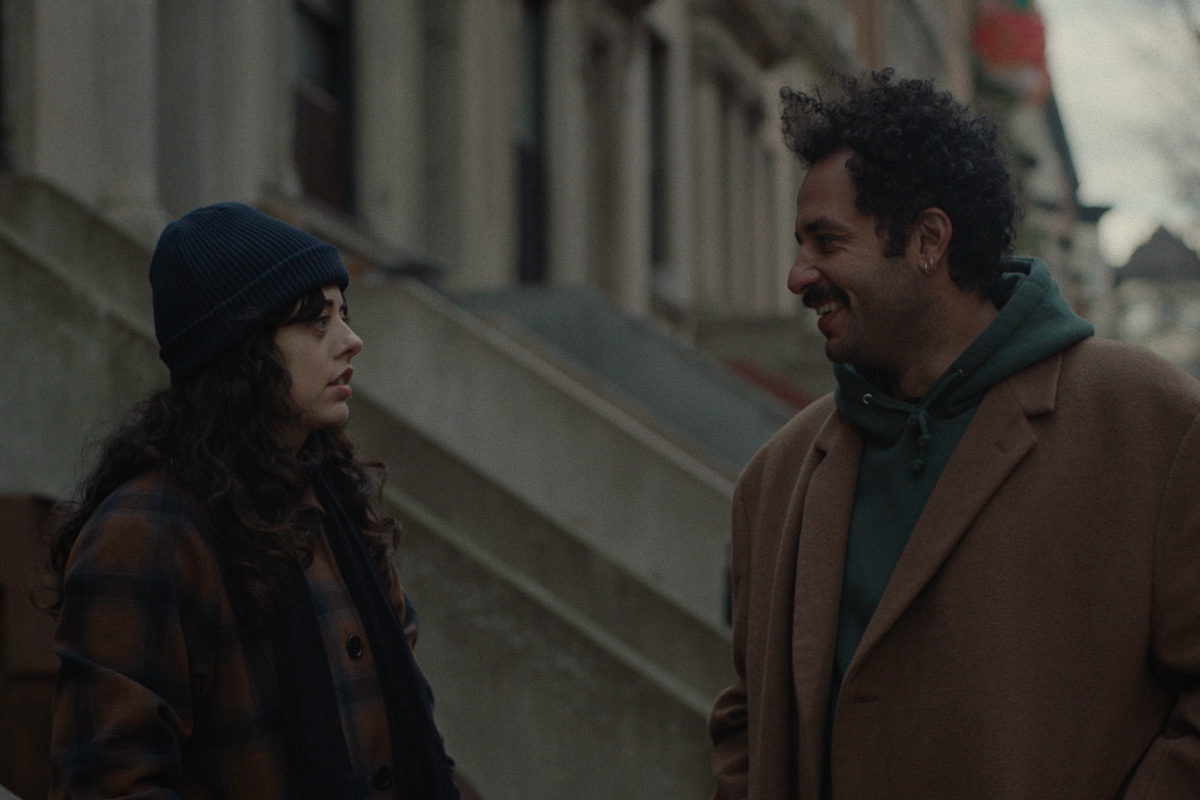
Olivia (Mary Neely, left) and Amir (Kareem Rahma) are strangers who meet at the apartment of a man who owes each of them money. (Photos courtesy of Factory 25)
By Richard Ades
In 1995, director Richard Linklater came out with Before Sunrise, the tale of a man and a woman who meet on a train and decide to spend an eventful night exploring Vienna. Laced with philosophical discussions and flirtatious banter, the achingly romantic film explored possibilities that remained unfulfilled, as the two had commitments that forced them to go their separate ways in the morning.
Before Sunrise was such a success that Linklater reunited the characters in two sequels: Before Sunset (2004) and Before Midnight (2013). The former was even more romantic than its predecessor, but the final film was rather sour-natured, depicting the lovers in a stagnant relationship marked by constant bickering.
I bring all this up because Or Something, a film by first-time director Jeffrey Scotti Schroeder, is obviously inspired by the flick that launched Linklater’s lauded trilogy.
Like Before Sunrise, it brings together two strangers and forces them to spend a day wandering the streets of a big city—in this case, New York. At first, they struggle to get along, but soon they’re sharing opinions on subjects of increasing depth, even including religion and God. Finally, they begin revealing some of their darkest secrets.
The open-ended script is well suited to a low-budget production that reportedly was shot on location in only six days. It also gives the lead actors plenty of room to flesh out their characters—not surprisingly, since it was written by the actors themselves.
Mary Neely plays the tense and closed-off Olivia, whom we first meet when she’s trying to raise cash by selling some of her clothes to a thrift shop. Kareem Rahma plays the more outgoing Amir, who needs money for personal reasons that eventually come out.
The two first meet outside the apartment of a mutual acquaintance, Teddy (Brandon Wardell), who coincidentally owes each of them $1,200. The film is a bit vague on just why he owes them that exact amount, but it makes it clear that Teddy is either unable or unwilling to pay it.
Instead, he tells Olivia and Amir to get the money from someone named Uptown Mike, though he can’t tell them how to contact this mysterious figure other than directing them to a certain corner in Harlem. Thus begins a crosstown trek that will throw the two strangers together for the next several hours.
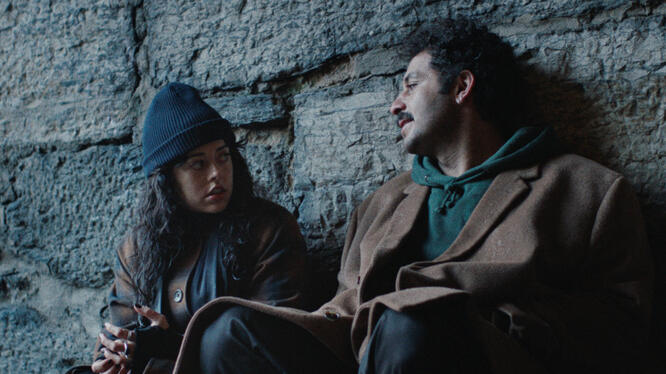
Much of the conversation that follows is entertaining and character-defining, such as the argument that arises when Olivia asserts that men are nice to women only when they want to have sex with them. On the other hand, some of the more cerebral topics arise less organically and less convincingly.
Still, Neely and Rahma play well off each other, keeping viewers vested in their characters’ fledgling relationship right up until the script makes two unfortunate detours.
The first leads Olivia and Amir into a karaoke bar at what seems like an unlikely moment. The second, and far more devastating, detour is a development that apparently is thrown in for shock value. It’s neither what we expected nor—especially for fans of Before Sunrise—what we wanted.
Look at it this way: Richard Linklater took 18 years to throw a sour note into his romantic “Before” saga, but Schroeder did it in only 82 minutes. If the director and his screenwriting stars want to redeem themselves, they need to bring Olivia and Amir back for a sequel.
Rating: 3 stars (out of 5)
Or Something (no MPA rating) opened Aug. 22 at the Quad Cinema in New York City and is scheduled for a special engagement Sept. 14 at Brain Dead Studios in Los Angeles. Additional screenings or VOD outlets have yet to be announced.

 Reel Time With Richard Ades