

An animated sequence depicts Pelagia Radecka, a young resident of Gniewoszów, Poland, searching for survivors of antisemitic violence in 1945.
By Richard Ades
My community is getting ready for the annual Columbus Jewish Film Festival, but a local theater is beating it to the punch with one of the most powerful Holocaust-related documentaries you’re likely to see this year.
Among Neighbors, directed by Yoav Potash (Crime After Crime), is about the tragic and lasting effects World War II had on the town of Gniewoszów, Poland. The film is at once a history lesson, a tale of survival and a portrait of humanity at its best and its absolute worst.
It’s also a mystery, one whose solution isn’t provided until the film’s final moments.
Because the documentary does so much, and because Potash waits so long to connect seemingly disparate parts, it sometimes comes off as disjointed. But the dramatic end justifies the director’s suspense-building means, and the film is never less than compelling along the way.
Using a combination of contemporary interviews, archival footage and eloquent hand-drawn animation, Potash introduces us to Gniewoszów both past and present.
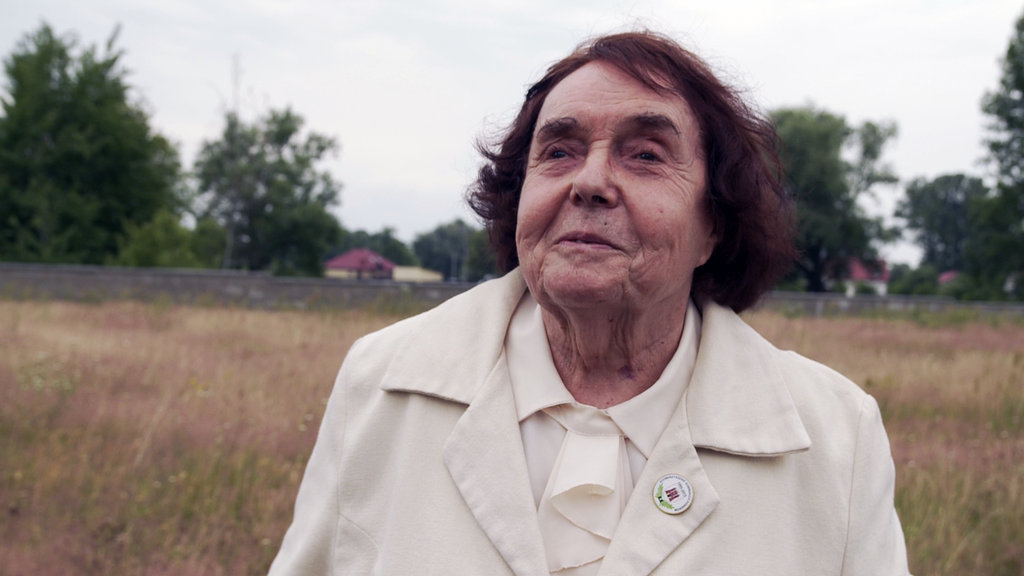
Pelagia Radecka, a Catholic resident of Gniewoszów, witnessed an act of antisemitic violence after the Nazis left her town.
In the past, Jews and Catholics lived together as neighbors and sometimes as friends, just as they had for centuries. But that all changed when Nazi Germany invaded Poland at the beginning of World War II and began instituting antisemitic restrictions that eventually evolved into roundups and death camps.
In response, a few Poles came to their Jewish neighbors’ defense, but more went along with the restrictions and even benefited from them. And some adopted the Nazis’ antisemitic and violent ways, even after the Germans had been driven out.
As a result, Gniewoszów became a town whose Jewish residents have disappeared along with all traces of their former presence in the community. And most of its current residents are reluctant to talk about what happened to them, particularly since a 2018 law makes it illegal to suggest that Poles were in any way complicit in the Holocaust.
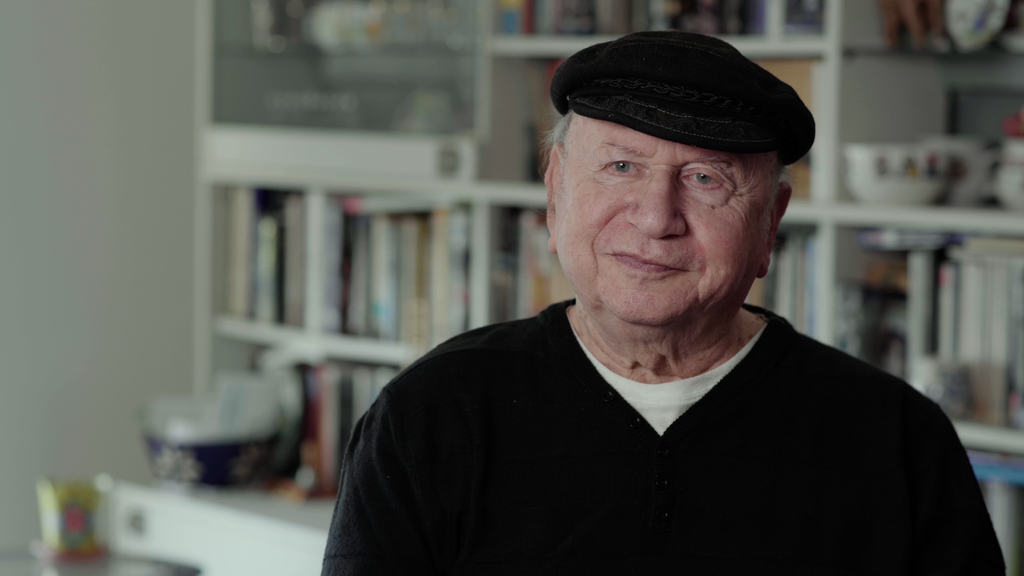
Yaacov Goldstein, a Jewish resident of Gniewoszów, survived the Holocaust and later moved to Israel.
Luckily for Potash, he’s able to find a few elderly residents who were alive during World War II and can be coaxed into telling what they remember. Two of them stand out:
˖ Yaacov Goldstein, a Jew who was a boy during World War II and later moved to Israel, tells the harrowing story of his parents’ efforts to survive and to protect him and his younger brother from the Nazis.
˖ Pelagia Radecka, a Catholic resident who was a teenager during the war, recalls being friends with the Jewish shopkeepers and their son who lived across the street. She also recalls witnessing a shocking act of antisemitic violence that occurred after the Germans had been driven out.
Bravely, Radecka is eager to talk about this act, even though she’s kept it to herself ever since, and even though talking about it amounts to a violation of Polish law.
Besides being a portrait of the highs and lows humans are capable of, Among Neighbors is a critique of societies that attempt to erase their sordid pasts. For Americans, living at a time when our own government is attempting to do the same, it could not be more timely.
Rating: 4½ stars (out of 5)
Among Neighbors can be seen in select theaters, including Columbus’s Gateway Film Center, with screenings scheduled at 1:30 p.m. Oct. 25 and 26. For a list of other upcoming screenings, visit amongneighbors.com/screenings.
 Reel Time With Richard Ades