Shooting survivor fights back by going to the gym

Jeannette Feliciano is a personal trainer and bodybuilder who survived the 2016 Pulse nightclub shooting in Orlando, Florida. (Photos courtesy of Gravitas Ventures)

By Richard Ades

As a documentary about a woman who deals with trauma with the help of exercise, Jeannette reminds me of a movie I wanted to make years ago. The main difference is that my film never got made, probably because I didn’t know how to create a space in which the woman in question felt safe enough to tell her story.

Director Maris Curran, obviously, does know how. She partly accomplishes this by avoiding the kind of probing interviews one generally sees in documentaries. Instead, she allows her subject to simply live her life in front of the camera.

Curran’s subject is Jeannette Feliciano, a survivor of 2016’s horrific mass shooting at Pulse, a gay nightclub in Orlando, Florida.

Besides being a survivor, Jeannette is also a lesbian, a single mom, a Latina, a personal trainer and a competitive bodybuilder. All of these facets of her life are represented in the documentary’s one hour and 18 minutes, though some are given more space than others.

For example, we see a lot of Jeannette’s nurturing relationship with her son, Anthony, but little of her relationship with girlfriend Yaris. Presumably, that’s because Jeannette isn’t comfortable revealing that part of her life to strangers.

One thing Jeannette is not shy about revealing is the extent to which her near-death experience has continued to haunt her. When she’s in public, she admits at one point, she can’t help imagining what she would do if a similar incident were to arise.

It’s not surprising, as the Pulse shooting was a tragedy of immense proportions. Entering the club during “last call” on that fateful night, a single gunman was able to kill 49 people and wound 53 more.

Jeannette was an up-and-coming competitive bodybuilder prior to the 2016 shooting at an Orlando nightclub.

Even so, as the film demonstrates, Jeannette has fought back against fear and the kind of spiritual paralysis her ordeal could have created. This comes out most clearly in an early scene, when she invites fellow survivors to her local gym for a workout session aimed at strengthening their psyches as well as their bodies.

The doc’s slice-of-life style is well served by cinematographer Jerry Henry’s sensitive images. Nevertheless, its limitations are sometimes evident.

When a handgun-toting Jeannette visits a shooting range to take aim at a paper target, there’s no explanation of how she came to be there. Has she always been a gun owner, or did she become one in response to her traumatic experience?

Given the U.S.’s endless debate over guns, gun control and gun violence, it’s an interesting question, but it’s one the film never brings up.

Likewise, when Jeannette visits Puerto Rico to help out family members dealing with the devastation left by 2017’s Hurricane Maria, the documentary keeps the focus solely on her heroic efforts. It ignores the storm’s political fallout, including the Trump administration’s delayed relief efforts.

As the film goes on, it deals more and more with Jeannette’s attempt to return to the competitive bodybuilding she set aside following the Pulse attack. It all leads to a major contest at which she and other jacked-up women strike poses before an admiring crowd.

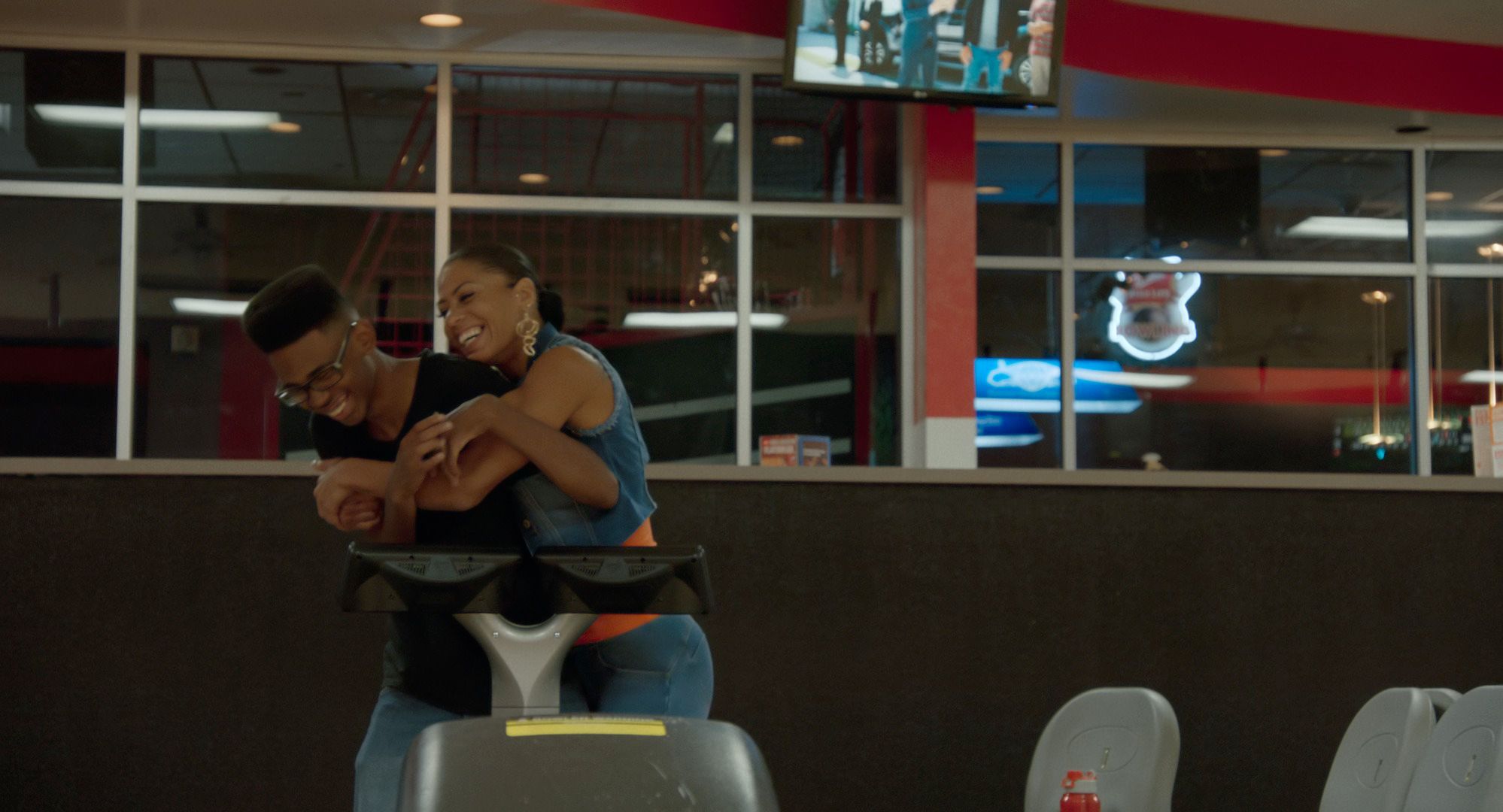
Jeannette shares a hug with her teenage son, Anthony.

If Curran had stopped the film there, it would have provided an ending worthy of a Hollywood sports drama. Interestingly, though, she instead follows Jeannette and Anthony to a bowling alley, where they enjoy a little mother-son rivalry.

The modest scene completes the doc’s depiction of Jeannette’s attempt to move beyond the trauma left over from the Pulse shooting. We understand that every attempt she makes to live a normal life—whether she’s trying to get back into competitive bodybuilding or simply going bowling with her son—is a way of fighting back.

If Curran’s film has a message, that’s it.

Rating: 3½ stars (out of 5)

Jeannette will be available through major VOD outlets beginning June 17. 

How the GOP keeps its White voters faithful—and scared

Republican strategist Steve Bannon talks politics in the documentary White With Fear.

By Richard Ades

When Donald Trump talked about immigrants eating people’s pets during a 2024 presidential debate, he was carrying on a longtime Republican campaign tactic: Win the votes of White Americans by scaring the hell out of them.

According to Andrew Goldberg’s documentary White With Fear, this strategy can be traced back at least as far as the 1968 presidential campaign. Even though the controversial Vietnam War was still raging, we learn, the campaign of Republican Richard Nixon focused mainly on race.

Among the film’s many interviewees is author Rick Perlstein (Nixonland), who explains that the GOP worked to recapture the White House by tapping into many White Americans’ hatred of Blacks. This was done largely through innuendo and dog whistles.

When Nixon pledged to support “law and order” and fight crime, for example, it was understood that he was talking specifically about Black crime. The candidate’s subtext was hard to miss when he made statements such as referring to Black-majority Washington, D.C. as “the crime capital of the world.”

 The fearmongering tactic apparently worked, as Nixon captured the presidency. And it obviously continues to work, the documentary points out, as the GOP has won the majority of White votes in every presidential election ever since.

Not that the targets of GOP fearmongering have always remained the same.

When Al-Qaeda-backed terrorists attacked the World Trade Center on Sept. 11, 2001, brown-skinned Muslim extremists became the new source of fear. Republican Vice President Dick Cheney fed the paranoia with warnings about sneak attacks involving “chemical agents,” and the fledgling Fox News catapulted to prominence by offering its own nonstop appeals to prejudice and mistrust.

Later, the advent of Barack Obama as a national figure allowed the GOP to launch a two-pronged attack that combined White Americans’ fear of Blacks with their fear of Muslims. Obama actually wasn’t Muslim, but the persistent rumor that he was ran hand in hand with the Trump-fed suspicion that he wasn’t even born in this country.

Then 2020 arrived along with the worldwide COVID pandemic, allowing Republicans to target yet another race: Asians. Falling back on his love for nicknames, Trump led the attack by persistently referring to the scourge as the “Chinese virus” or “kung flu.”   

Hillary Clinton is one of many voices from both the left and the right who are interviewed in White With Fear.

Several years earlier, according to White With Fear, the Grand Old Party had actually considered changing its racially divisive ways. This happened after Obama was elected to a second term in 2012, and Republicans realized it might be a good idea to win over some of the non-White Americans who would one day become the majority.

Their solution: Work to pass immigration reform. But when that proved unpopular with their most conservative representatives, Republicans instead went back to their old ways by launching an attack on immigrants.

Strategists such Steve Bannon came up with the tactic, and then-candidate Trump adopted it with a vengeance. Thus was born his endless attack on immigrants as rapists, murderers and drug dealers; as stealers of American jobs; as replacements for American voters; and, most surreally, as eaters of American pets. It all culminated in the expensive and court-defying effort to expel immigrants that has become a cornerstone of Trump’s second term in office.

One of the most interesting aspects of Goldberg’s documentary is that it tackles its provocative topic with the help of experts from both the left and the right.

There are the expected liberal voices such as Hillary Clinton, who has several incisive things to say about her 2016 presidential opponent. But there are also conservative voices, including some former Trump supporters who have since repented, and others—including Bannon himself—who remain among the MAGA faithful.

This diversity of viewpoints gives us not only a critique of the GOP’s race-baiting approach to politics but a behind-the-scenes look at how it came to be.

Rating: 4 stars (out of 5)

White With Fear will be available through VOD outlets beginning June 3.

Tale of love and loneliness set in massage parlor

Immigrants and massage parlor workers Amy (Ke-Xi Wu, left) and Didi (Haipeng Xu) share a happy moment in Blue Sun Palace.

By Richard Ades

When you’re living in a foreign land, human connections can be as precious as they are rare. Maybe that’s the message of Constance Tsang’s debut feature film, Blue Sun Palace.

Then again, maybe it’s not. Writer/director Tsang doesn’t force an interpretation on you, any more than she tells you what to think of her characters, all Chinese or Taiwanese immigrants eking out a living in Queens, New York. She merely invites you to sit back and watch their stories unfold.

In the case of one of them, their story doesn’t unfold nearly long enough.

We first meet a young woman named Didi (Haipeng Xu) when she’s sharing a restaurant meal with Cheung (Kang-sheng Lee), a somewhat older man who seems to be a good friend and maybe a future boyfriend. The two clearly enjoy each other’s company, and Didi even invites Cheung to spend the night after he misses the last bus home.

The next morning, however, the couple’s relationship seems less certain. When Cheung begins talking about possibly sharing a home someday, Didi jokingly shuts him down, saying her ultimate plan is to move to Baltimore and open a restaurant with her friend Amy (Ke-Xi Wu).

We then learn that Didi and Amy, along with two other immigrant women, manage and work at a massage parlor—a neighborhood business that claims it doesn’t offer sexual services even though we’ve seen evidence to the contrary. Since Cheung is one of the parlor’s clients, the exact nature of his relationship with Didi becomes even more nebulous.

What isn’t nebulous is that Didi is the heart and soul of the parlor’s little community, keeping the other women’s spirits up and organizing dinners that remind them of the traditions and families they left behind. This makes it all the more devastating when Didi suddenly disappears from the story due to a tragic development that thankfully is left off-screen.

Amy (Ke-Xi Wu) wonders what to do about the leaking ceiling in her Queens massage parlor.

From then on, the film changes its focus to Amy and Cheung and their struggles to deal with Didi’s departure. In the process, they reveal a little more about themselves. We learn, for example, that Cheung has a wife and daughter in Taiwan but seems either unable or unwilling to be reunited with them.

Tentatively, Amy and Cheung begin spending time together. Do they feel a real connection, or are they merely trying to fill the emptiness left by Didi’s loss? Tsang’s script neither judges the characters nor explains all their motives, but it does supply an ending that ties up enough loose ends to be satisfying.

A film that avoids overt sentimentality and proceeds at its own pace, Blue Sun Palace is not for every taste. But it has multiple charms, including a wonderful cast giving understated, naturalistic performances.

Mix in Sami Jano’s subtle musical score, Caitlin Carr’s unhurried editing and Norm Li’s elegant cinematography, and you end up with a calm viewing experience that may remind some of the great Japanese director Yasujiro Ozu.  

Who knows? Maybe someday people will be talking with equal reverence about the films of the great Chinese American director Constance Tsang.

Rating: 4 stars (out of 5)

Blue Sun Palace (no MPA rating) opens April 25 in New York and Los Angeles, with further screenings planned in subsequent weeks. It is scheduled to screen at 9:30 p.m. May 9 at the Gateway Film Center in Columbus.

Deneuve as a first lady out to reinvent herself

Catherine Deneuve stars as the title character in The President’s Wife, a fictionalized biopic of French first lady Bernadette Chirac. (Photo courtesy of Cohen Media Group)

By Richard Ades

What’s it like to be the wife of a leader who forces you to live in his shadow and ignores your political advice? The President’s Wife answers that question with its feminism-informed biography of former French first lady Bernadette Chirac.

But don’t expect a sober-minded piece of historical revisionism. The film, directed and co-written by Lea Domenach, refuses to take itself too seriously, and it’s clear from the first scene that we shouldn’t, either.

As Bernadette (the legendary Catherine Deneuve) makes her way to a confessional booth for a heart-to-heart with her priest, the church choir informs us that what we’re about to see is based only loosely on reality. In fact, the singers warn us, it’s a “work of fiction.” 

Still, it’s hard not to hope that what follows is least partly true, because it’s a delicious story of self-reinvention and political comeuppance.

We first meet Bernadette in 1995, when her husband, Jacques Chirac (Michel Vuillermoz), is on the verge of winning the presidency. A politician in her own right, Bernadette has worked hard to bring about this long-sought victory, but once the new administration takes office, she’s quickly pushed to the background.

With her dated wardrobe and occasionally loose lips, Bernadette is seen as a liability by both her husband and her younger daughter, Claude (Clara Giraudeau), who works as one of his chief aides. The two even go so far as to assign a communications adviser named Bernard (Denis Podalydes) to help Bernadette hone her image. The idea is to keep the first lady from embarrassing and upstaging the president.

However, the plan soon backfires.

After a series of events provide proof of (1) Bernadette’s political smarts and (2) Jacques’s marital unfaithfulness, Bernard switches his allegiance from the husband to the wife. Together, Bernard and Bernadette begin working to improve her image through such tacks as promoting charities, rubbing elbows with celebrities and, mostly, just being herself.

To put it mildly, their efforts prove fruitful for Bernadette and entertaining for the audience. (Watch for the trained bear!)

Anyone who’s less than fully knowledgeable about French politics might lose a reference here and there, but it’s just a slight inconvenience. Thanks to Domenach’s witty script and playful direction—and thanks to a great cast and especially to Deneuve’s droll and assured performance as Bernadette—The President’s Wife is one history class you won’t want to skip.

Rating: 4 stars (out of 5)

The President’s Wife opened April 18 in major cities and will expand to other markets beginning April 25. It is scheduled to open May 9 at Columbus’s Gateway Film Center.

West Bank tale doesn’t pull its punches

Basem (Saleh Bakri, right) offers comfort to distraught student Adam (Muhammad Abed Elrahman) in The Teacher. (Photos courtesy of MPI Media Group)

By Richard Ades

The Teacher takes on one of the most divisive issues in the world today: the struggle between Israel and the Palestinians. And it does it in a way that is thoughtful, provocative and dramatic.

The title character is Basem El-Saleh (Saleh Bakri), who teaches in a poor community in the West Bank. Anyone who’s seen the Oscar-winning documentary No Other Land—or the final episodes of the Netflix series Mo—won’t be surprised to learn that Basem’s students have more to worry about than passing tests.

Two of them, brothers Yacoub and Adam (Mahmoud Bakri and Muhammad Abed Elrahman), return from school one day just in time to see their home torn down by Israeli forces. “It was just their turn,” Basem explains to British social worker Lisa (Imogen Poots), noting that most houses in the village have been marked for demolition.

Adding to the residents’ worries are the Israeli settlers whose red-roofed homes can be seen multiplying in the distance. Though the settlers have moved to the occupied territory illegally, the residents know the government is likely to take the newcomers’ side if any dispute arises. 

And soon a dispute does arise, with tragic consequences. When a group of settlers sets fire to Palestinian-owned olive trees, Yacoub tries to intervene and is killed for his trouble. Community members vow to seek justice, but they know it may be beyond their reach.

Adam (Muhammad Abed Elrahman, left) shares a couch with his teacher (Saleh Bakri) after watching his home be demolished by Israeli troops.

Making her feature-length film debut, British-Palestinian writer-director Farah Nabulsi doesn’t shy away from showing the hardships West Bank residents face under Israeli occupation. Nor is she afraid to take the story into controversial areas.

A subplot that eventually melds with the main storyline involves an Israeli soldier being held hostage by a resistance group that hopes to exchange him for Palestinian prisoners. The soldier’s American parents (Stanley Townsend and Andrea Irvine) pressure the government to approve the exchange, but Israeli officials seem more interested in finding and punishing his kidnappers.

Leading the cast, Bakri is slightly hampered by director Nabulsi’s tendency to exploit his movie-star good looks (i.e., he takes off his shirt a lot). Still, he’s stalwartly effective as the teacher who tries to give his students the help that, as flashbacks reveal, he was unable to give his own son.

As Lisa, Basem’s colleague and possible love interest, Poots projects courage, sincerity and a useful amount of wiliness. As young Adam, who becomes increasingly distraught following his brother’s death, Elrahman provides some of the tale’s most unsettling moments.

Gilles Porte’s cinematography and composer Alex Baranowski’s score perfectly complement the film’s perilous setting and changing moods.

Though some may quibble that its ending is overly tidy, The Teacher is a brave and nuanced attempt to reveal the humanity lurking beneath one of the world’s most intractable political standoffs.

Rating: 4 stars (out of 5)

The Teacher opens April 11 in New York City and expands to other markets beginning April 18. It is scheduled to open April 25 at the Gateway Film Center in Columbus.

The songwriting teen who jolted society’s conscience

Singer/songwriter Janis Ian performs at a 1975 concert. (Photo by Peter Cunningham)

By Richard Ades

Janis Ian was only 14 when she wrote one of the most influential—and controversial—songs of a generation. The story behind the anthem is told in Varda Bar-Kar’s new biographical documentary, Janis Ian: Breaking Silence.

A Jewish girl growing up in a mostly Black New Jersey neighborhood, the then-Janis Fink was inspired after seeing a young interracial couple cuddling on a bus despite the disapproving glares of those around them. The result was “Society’s Child,” about a White girl whose romance with a Black boy sets her up for harassment and demands to “stick to your own kind.”

Recorded in 1965, the song touched on such a raw nerve that it almost didn’t get released. Ian’s producer, Shadow Morton, had anticipated the problem and suggested that she play it safe by changing its first line: “Pick me up from school, baby, face is clean and shining black as night.” When Ian refused, Morton was forced to pitch the song to more than 20 record labels before finding one that was willing to take a chance on it.

Even after the song’s belated 1966 release, as the documentary relates, many radio stations were afraid to play it. And when Ian tried to perform it at a concert, she was met with racist chants of “n—– lover” from audience members who apparently had bought tickets just to prevent her from singing it.

Recalling the incident in the film, Ian admits that her first response was to flee the stage in tears, only to be shamed for her cowardice by a concert official. When she gathered enough courage to return and finish the song, ushers quickly rounded up the 20 or so haters and escorted them out.

“It was a life-changing moment for me,” Ian says, as it taught her that music could make some people angry, but it could also inspire folks to stand up for what’s right.

Ian poses in 1973 with fellow musicians Bruce Springsteen (left) and Billy Joel (right), along with radio DJ Ed Sciaky. (Photo by Peter Cunningham)

This and other anecdotes from Ian’s years of teenage stardom will be fascinating to anyone old enough—or “woke” enough—to care about the role she played in the 1960s’ culture of protest and liberation. Helping to underscore her importance are cameos from luminaries such as Joan Baez and Arlo Guthrie.

Whether the bulk of the film will be equally fascinating depends on the viewer’s interest in a singer/songwriter who’s best known for just two major hits: “Society’s Child” and 1975’s “At Seventeen,” a touching lament about the pangs of growing up unpopular.

Besides revisiting these mileposts, Breaking Silence is basically a chronological synopsis of what Ian was doing when she was largely out of the public eye. There were romantic relationships with both men and women; there were professional liaisons and breakups; there was a concert tour to apartheid South Africa that Ian agreed to only after ensuring that her audiences would be racially integrated.

There was also a run-in with the pre-disgraced Bill Cosby, who accused the 16-year-old singer of being in a lesbian relationship and tried to have her blacklisted. He was wrong, Ian says, though decades later she did come out as a lesbian at the same time she released her appropriately titled 1993 album, Breaking Silence. Further cementing her status as a gay icon, Ian has written columns for The Advocate, and in 2003 she traveled to Canada to marry longtime girlfriend Patricia Snyder.

Ian is interviewed by Johnny Carson (right) on The Tonight Show in 1967, the year after “Society’s Child” was released.

All the while, as the documentary tells us, Ian has continued writing music, releasing albums and, until recently, giving occasional performances. One fact it neglects to mention is that she’s also become an avid science fiction fan and has written several genre stories of her own.

Otherwise, Janis Ian: Breaking Silence does an admirable job of answering the question: Whatever happened to that plucky teen who wrote a song about interracial dating and forced society to face its own prejudice?

Rating: 3½ stars (out of 5)

Janis Ian: Breaking Silence opens in select theaters March 28.

Can a lonely mom co-exist with her daughter’s ex?

Susan (Michaela Watkins, left) reluctantly takes in her daughter’s ex-boyfriend, Gage (Charlie Gillespie), in Suze.

By Richard Ades

Are you looking for a way to show your love for our neighbors to the north? Do you want to make it up to them for our president’s threats to either absorb them or tax them into oblivion?

Well, now you can, thanks to the new Canadian flick Suze. Written and directed by filmmaking spouses Dane Clark and Linsey Stewart, it’s an offbeat comedy with a Yukon-sized heart.

Title character Susan (Michaela Watkins) is a mid-level manager and mom who left her husband after finding him sharing bodily fluids with another woman. Fast forward five years, and she now has two new problems: the unwelcome arrival of perimenopause and the impending departure of her college-bound daughter, Brooke (Sara Waisglass).

Oh, and one more: Susan can’t stand Brooke’s himbo-esque boyfriend, Gage (Charlie Gillespie), because he’s not bound for college, has no prospects and therefore seems unworthy of her beloved offspring. As a result, Susan urges Brooke to drop him as soon as possible.

A few weeks go by, during which Susan has trouble concentrating at work because she’s frantic to get news from her absent and stubbornly uncommunicative daughter. Then, she finally gets news, but it’s from a surprising source—Gage’s father, Rick (Aaron Ashmore), who tells her his son injured himself jumping off a water tower because Brooke sent him a “Dear John” text.

Rick clearly blames Susan’s daughter for what happened and figures that entitles him to a big ask: Can Susan watch his distraught and possibly suicidal son for a few weeks while his work takes him out of town? Motivated by either guilt or just common decency, Susan reluctantly agrees and opens her home to the volatile teen who still pines for her daughter.

So what happens next? After putting a lonely, middle-aged woman and a hunky, lovesick youth under the same roof, there’s an obvious way this story could have gone. Fortunately for us, Clark and Stewart take a more interesting tack by focusing on the fact that these two vulnerable people have one thing in common: They both love and miss the same person. 

That’s not to say Suze never takes the obvious road. Waisglass’s Brooke and Ashmore’s Rick come across rather heavy-handedly as a spoiled brat and distant dad, respectively. And some scenes seem a little familiar, including one that could have been copied from a recent Jennifer Lawrence comedy (though it probably wasn’t).

But as long as the spotlight remains on the two central characters, none of that matters. Gillespie is often hilarious and always lovable as the outgoing Gage, while Watkins holds onto our sympathy even when Susan’s maternalistic needs lead her into cringe-worthy excesses.

Thanks to a sensitive script and these two wonderful leads, Suze is a treat. It might not take you where you expect to go, but once you get there, you’ll be glad you made the trip.

Rating: 4 stars (out of 5)

Suze (no MPA rating) opens Feb. 7 in theaters and on demand.

French widow adapts to her new life

The recently widowed Rose Goldberg (Francoise Fabian) heads to her next adventure in Rose. (Photos courtesy of Cohen Media Group)

By Richard Ades

After watching the widowed title character enjoy a surprising romantic adventure in Rose, a fellow viewer was confused. Did this really happen, she asked, or did Rose merely fantasize it?

The answer is that the adventure really happened, but it happened in a film that almost qualifies as a fantasy itself. Director/co-writer Aurelie Saada consistently sees her 78-year-old heroine’s life through what can only be called rose-colored glasses, resulting in a flick that tries a bit too hard to be upbeat and inspirational.

Originally released in 2021, the French drama previously made the rounds of American Jewish film festivals, including one in my own area. It’s now being given a wider release in U.S. theaters, perhaps as a lead-in to Valentine’s Day.

At its center is Rose Goldberg (Francoise Fabian), who’s spent the last 50 years as a devoted wife and mother. A homebody with no outside career of her own, she’s led a rather isolated existence.

As a result, she retreats into herself when her beloved husband suddenly succumbs to a medical condition that’s been hidden from her. Despite her grown children’s entreaties, she reacts to his unexpected death by refusing to leave her apartment or even bathe.

A breakthrough finally comes when daughter Sara (Aure Atika) convinces Rose to accompany her to a dinner party. Most of the guests are her daughter’s age, but the last to arrive is a lively senior named Marceline (Michele Moretti) who quickly makes herself the center of attention.

Rose (Francoise Fabian) samples a little pot while attending a dinner party with her daughter, Sara (Aure Atika, left).

Seeing this aging free spirit seems to have an immediate effect on Rose, who is inspired to cast aside her own inhibitions. Before the party is over, the former teetotaler is indulging in alcohol and even taking a few hits off a communal joint.

Still more changes follow the event, including the aforementioned romantic adventure. Rose apparently has decided to enjoy life to the fullest, even though it’s a life that previously was completely foreign to her. 

In contrast, Rose’s three children all appear to be stuck in their own lives. Sara is hung up on her long-estranged husband; married son Pierre (Gregory Montel) carries a torch for a former flame; and single son Leon (Damien Chapelle) is still living with his mother, in addition to being in trouble with the law.

The contrast between the unhappy children and their suddenly joyous mother would be touching if the former’s situations and the latter’s transformation had been fleshed out more.

Though the tale could be stronger dramatically speaking, it benefits from a fine cast and especially from Fabian’s luminous portrayal of the evolving Rose. It also benefits from Martin de Chabaneix’s warm cinematography and director Saada’s lively musical score, which reflects the title character’s Jewish heritage and Tunisian roots.

It all adds up to a film whose joy would be contagious if it were just a bit more convincing.

Rating: 3 stars (out of 5)

Rose (no MPA rating) opens Jan. 24 in New York and Los Angeles and expands to other markets in subsequent weeks, including Columbus’s Gateway Film Center on Feb. 14.

Risks, bravery pay off in trio of 2024 masterworks

A motion-captured Jonno Davies plays a simian version of British pop star Robbie Williams in Better Man. (Photo courtesy of Paramount Pictures)

By Richard Ades

This is the time of year when critics get a chance to catch up on recent flicks they might have missed, courtesy of studios in search of buzz and, hopefully, award nominations. While I don’t claim to be clairvoyant when it comes to the latter, I can confidently say this: If the Oscars and other competitions gave out prizes for bravery, these three films and their creators would win hands down.

One filmmaker displays creative courage by breaking the mold in a familiar genre, while the others put their liberty and even their lives at risk in order to bring their truths to the screen.

Let’s look at them one by one.

Biopic with a difference

By now, we all know the drill when it comes to film biopics: The would-be celeb claws his or her way to the top, but success comes at a steep cost. Friends are abandoned, spouses are cheated on, and alcohol and/or drugs are abused.

Better Man, based on the life of British pop superstar Robbie Williams, follows that general pattern, but with a difference. The entire story unfolds through the eyes (and narration) of Williams himself, who emerges as someone who desperately wants fame but is convinced he doesn’t deserve it.

And, oh yes: Williams is portrayed by a CGI-generated chimpanzee (a motion-captured Jonno Davies). It sounds weird—and, frankly, it is—but it also makes sense in a brilliant and emotionally satisfying way.

Even as a child, Williams suffers from self-doubt, self-loathing and what he later comes to identify as depression. By making him the lone ape in a world of humans, the film has found a clever way of symbolizing Williams’s fear that he’s an imposter unworthy of the success he seeks.

Directed with theatrical flair by Michael Gracey (The Greatest Showman), Better Man is marked by gee-whiz, over-the-top production numbers and surreal fantasy sequences, in addition to its simian protagonist. But what really sets it apart is its honesty and warmth.

Despite being depicted as an ape, Williams comes off as a recognizably flawed human who earns our sympathy, as well as the heart-on-its-sleeve sendoff the film gives him. Director Gracey’s gamble has paid off with a flick that’s as moving as it is massively entertaining.

Rating: 4½ stars (out of 5)

Better Man (rated R) opened Dec. 25 in select theaters and expands nationwide Jan. 10.

National unrest and a missing gun upset the lives of Iranian student Rezvan (Mahsa Rostami, center), her mother (Soheila Golestani, left) and sister (Setareh Maleki) in The Seed of the Sacred Fig.

Criticizing—and then escaping—Iran

As an attack on Iran’s government and justice system, The Seed of the Sacred Fig is the kind of film that can’t be made in that country. And yet veteran writer/director Mohammad Rasoulof succeeded in making it—in secret—before fleeing to Europe for his own safety.  

The thriller concerns Iman (Missagh Zareh), who aspires to be a judge but learns that the path to success will force him to ignore his moral compass. He lands a position that requires him to sentence people to death without being given a chance to consider the evidence.

As it turns out, the position endangers more than just his conscience. Because of the job’s controversial nature, he and his wife, Najmeh (Soheila Golestani), and their family are forced to live in secrecy. Meanwhile, daughters Rezvan and Sana (Mahsa Rostami and Setareh Maleki) become embroiled in the widespread unrest that erupts after a young woman is beaten and killed for not sufficiently covering her head.

Then the gun that Iman keeps for protection turns up missing, and the national turmoil threatens to spread to his household as he searches for the culprit. Interrogations ensue, along with a car chase and a tense finale that may remind some of a certain horror film set in a snowbound hotel. 

Considering it was made in secret and by a director who’d already gotten in trouble for earlier works, The Seed of the Sacred Fig should fill viewers with admiration for Rasoulof’s resourcefulness, as well as his courage. The film deserves an Oscar nomination, but it probably won’t get one, because who would nominate it? Certainly not Iran.

Rating: 4½ stars (out of 5)

The Seed of the Sacred Fig (PG-13) can be seen in select theaters and is scheduled to open Jan. 30 at Columbus’s Gateway Film Center.

Palestinian activist Basel Adra (left) joins forces with Israeli journalist Yuval Abraham in the documentary No Other Land.

Palestinian, Israeli expose West Bank abuses

Basel Adra has spent years documenting the Israeli army’s systematic attacks on his West Bank community, Masafer Yatta. In No Other Land, he continues that work along with Israeli journalist Yuval Abraham and fellow writer/directors Hamdan Ballal and Rachel Szor.

The result is an eye-opening expose of the abuses Adra and his Palestinian neighbors have had to endure living in the occupied territory. Houses and other buildings are destroyed on the shortest of notices and flimsiest of excuses, such as that the army needs the land for training exercises. Those who want to rebuild are told to get permits that they know are unobtainable.

Much of the film consists of footage taken with amateur video equipment or cellphones. It shows locals trying in vain to reason with soldiers, government officials and, in some cases, illegal Israeli settlers, all of whom are clearly trying to force them to abandon their rural community.

Other footage, shot by Szor, centers on the growing friendship between the Palestinian Adra and Israeli journalist Abraham, who are allied by their concern over the situation but separated by their approaches to dealing with it. Abraham is frustrated that his muckraking stories have had so little impact, but Adra counsels patience, saying a solution could take years or even decades.

The differing approaches reflect the men’s vastly different backgrounds. While Abraham is relatively new to the situation, Adra has been dealing with it for much of his life. In the face of constant, officially sanctioned abuse, he and his neighbors have no recourse but to greet it with steadfast determination and even flashes of dark humor.

Made under the most difficult of circumstances, No Other Land is a portrait of courage that is, in and of itself, an act of courage.

Rating: 5 stars (out of 5)

No Other Land is available through VOD outlets and can be seen at select theaters beginning Jan. 31.

Estranged cousins reunite for Holocaust-related tour

Benji Kaplan (Kieran Culkin, left) and his cousin David (Jesse Eisenberg) get reacquainted while touring Polish Holocaust sites in A Real Pain. (Photos courtesy of Searchlight Pictures)

By Richard Ades

When Jesse Eisenberg made his debut as a writer/director with 2022’s When You Finish Saving the World, some found its depiction of familial squabbles heavy-handed and its characters insufferable.

Now Eisenberg is back with another comedy-drama about family relations, and he seems to have taken the criticisms to heart. A Real Pain’s two leading characters are flawed but likable, and its depiction of their squabbles is hardly heavy-handed. To the contrary, Eisenberg makes us work to figure out just what is behind them.

David Kaplan (played by Eisenberg himself) is a successful New Yorker with a wife and young son. His cousin Benji (Kieran Culkin) is single, jobless and lives in his mother’s upstate home.

Though the two were close boyhood friends, they’ve grown increasingly distant as adults, separated by their lifestyles and personalities as much as by geography. Now, however, they have a chance to reconnect thanks to their late grandmother, a Holocaust survivor who left them money specifically set aside for a visit to her native Poland.

So the cousins fly to Warsaw to join a multi-day tour of Holocaust-related sites led by a Brit named James (Will Sharpe). Also on the tour are a recently divorced American (Jennifer Grey) and a Rwandan-born Jewish convert (Kurt Egyiawan), among others. Each is briefly introduced, but Eisenberg keeps his main focus on the two cousins and their increasing discomfort with each other.

David, uptight and buttoned-down, watches with simmering resentment as the unrepressed Benji easily connects with other members of the group. For his part, Benji complains that David has made little attempt to see him recently, and he pushes him to smoke pot and otherwise reclaim some of the wildness that made them inseparable childhood companions.

Benji (Kieran Culkin) gives his cousin David (Jesse Eisenberg) a hug while following other members of their tour group.

As the tour goes on, the tension between the two grows due to Benji’s increasingly angry and erratic behavior. Whether it’s caused by the loss of his beloved grandmother or other, unidentified problems, it leaves David profoundly uncomfortable. The fact that it’s happening while the group is touring sites intimately connected to the last century’s worst atrocity only adds to the stress.

As an actor, Eisenberg doesn’t stretch himself, playing David much like he’s portrayed other socially awkward characters. As a director, on the other hand, he generously allows Culkin to imbue Benji with passion, unexpected quirks and unexplored depths.

What does it all mean? Eisenberg relies on the viewers to come up with their own explanations for the cousins’ difficult relationship and their disparate responses to the tragic history they’re revisiting. His approach is unobtrusive to a fault—with one exception.

An almost constant companion to the proceedings is a score consisting of works by 19th century piano virtuoso Frederic Chopin. Other than the fact that the composer was Polish, the music seems to have little to do what’s happening onscreen. What’s worse, the dramatic and often familiar passages sometimes upstage what’s going on.

For viewers struggling to find meaning in Eisenberg’s interesting but understated story, it’s an unwelcome distraction.

Rating: 3½ stars (out of 5)

A Real Pain (rated R) opens Nov. 15 in theaters nationwide.