Animated sequel explores teenage anxieties

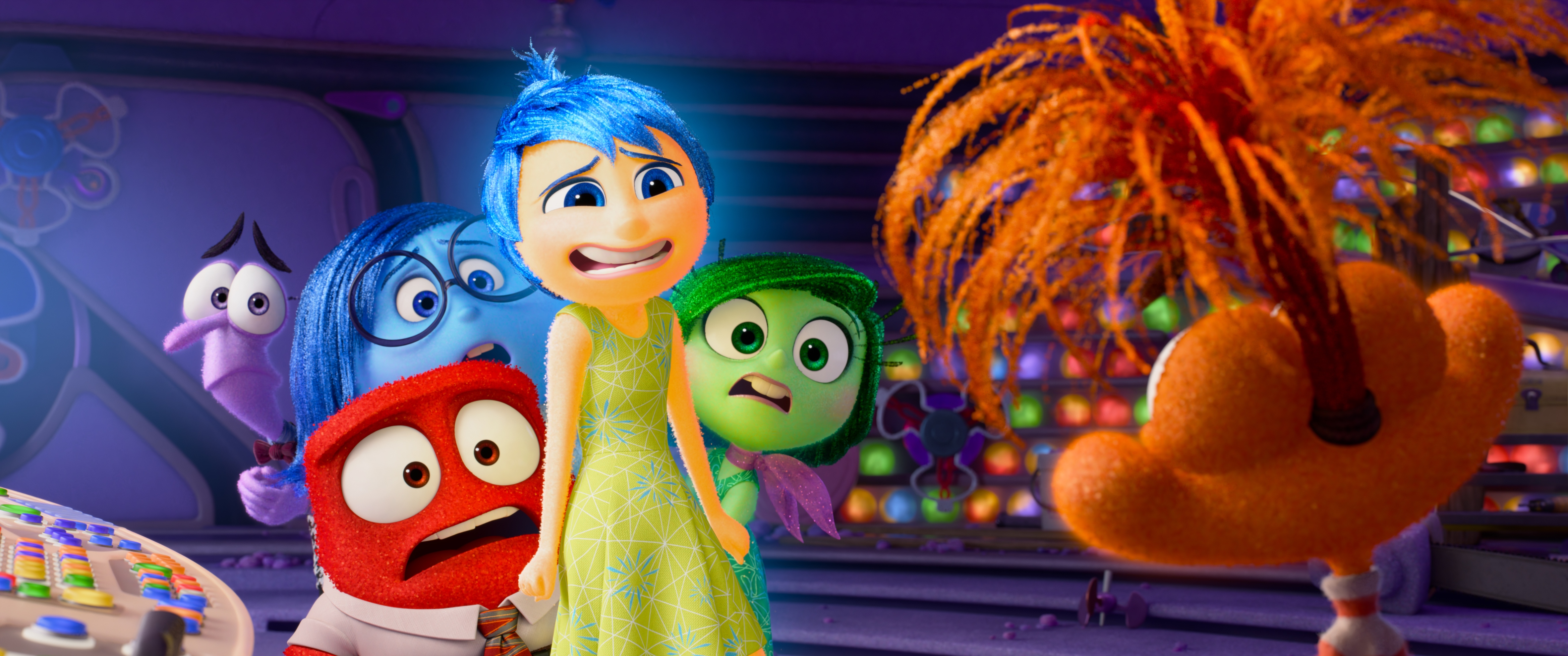
Joy (Amy Poehler, in green dress) and her fellow emotions encounter Anxiety (Maya Hawke), who suddenly appears when their host, Riley, becomes a teenager. (Photos courtesy of Disney/Pixar)

By Richard Ades

When we first met Riley in 2015’s Inside Out, she was a homesick 11-year-old whose family had just moved from Minnesota to San Francisco. True to its title, the Disney/Pixar pic mostly took place inside her head, where “Joy,” “Sadness” and other characters representing primary emotions struggled to help her deal with the seismic change.

It was an animated tour de force that brought psychological concepts such as personality, memory and sense of self to life with the help of endearing characters, imaginative landscapes and daredevil adventures.

Now we have Inside Out 2, which catches up with our hockey-playing heroine (voiced by Kensington Tallman) as a 13-year-old who seems to have settled into her new life. Once again, Joy (Amy Poehler), Sadness (Phyllis Smith) and their fellow emotions work tirelessly to keep Riley on an even keel.

All seems well until they come across a part of the growing girl’s psyche that they haven’t seen before: puberty. (Yes, the flick goes there.) Before they know it, they’re being evicted from the emotional “control room” and replaced by teen-appropriate newcomers such as Envy (Ayo Edebiri), Embarrassment (Paul Walter Hauser), Ennui (Adele Exarchopoulos) and their panic-prone leader, Anxiety (Maya Hawke).

Meanwhile, in the outside world, Riley is dealing with a series of disasters, starting with the realization that her changing body is suddenly in need of deodorant. What’s worse, she learns that her two best friends will be assigned to a different school next year.  

The upshot is that what originally seemed like good news—the hockey coach at her future high school invites her to take part in a “skills camp”—becomes a source of endless stress. Stuck in a “disgusting” body and soon to be separated from her BFFs, she pins all her happiness on making a good impression on the ice.
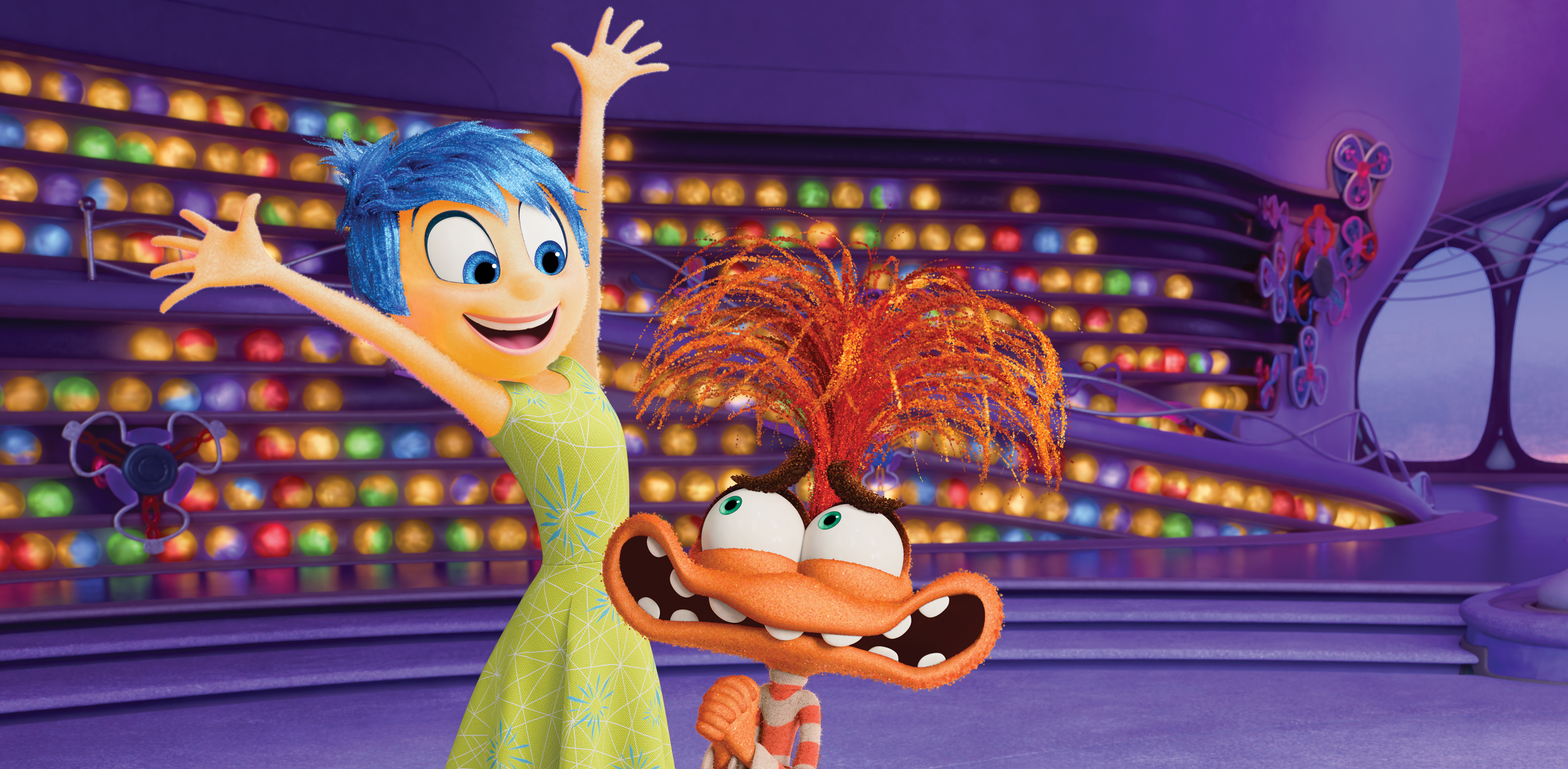
Joy (Amy Poehler, left) tries to make friends with Anxiety (Maya Hawke).

It’s obvious she’s headed for a meltdown, but Joy and the rest of her exiled emotional support group can only watch helplessly while Anxiety and the other newcomers fuel the girl’s misgivings.

Directed by Kelsey Mann from a funny, heartfelt and clever script by Dave Holstein and Meg LeFauve, Inside Out 2 is brilliant at depicting the fears and doubts swirling around the mind of a typical teenage girl. If there’s any disappointment at all, it’s that the Riley’s relationship with her friends hits a variation of a snag that we’ve seen countless times before.

On the other hand, we’ve never seen it depicted with such glorious visuals. In true Pixar fashion, the animation is beautiful, if sometimes a bit overwhelming. The same can be said for the sound design, especially if you see the film, as I did, in an IMAX theater.

Aided by an invested cast, it all leads to an engrossing and rewarding story that should appeal to teens and pre-teens, as well as anyone who remembers what it was like to go through that difficult time of life when everything was changing.

Rating: 4 stars (out of 5)

Inside Out 2 (rated PG) opens June 14 at theaters nationwide.

A kinder, funnier look at TV’s first power couple

Lucille Ball and Desi Arnaz, stars of the hit TV sitcom I Love Lucy, in a photo taken around 1953

By Richard Ades

Last year, Aaron Sorkin dramatized the lives of Lucille Ball and Desi Arnaz in Being the Ricardos. Now Amy Poehler is revisiting the television icons in the documentary Lucy and Desi.

The first thing you should know about the new flick is that it’s nothing like Being the Ricardos. While Sorkin’s tale is awash in interpersonal conflict, marital strife and political controversy, director Poehler takes a gentler approach that creates an affectionate yet clear-eyed portrait of the famous couple.

Being a comic herself, Poehler also recognizes something that apparently escaped Sorkin: If you’re doing a film about famously funny people, you really should include a few good laughs. In fact, Lucy and Desi has many laugh-out-loud moments, thanks largely to excerpts from Ball and Arnaz’s groundbreaking 1950s sitcom, I Love Lucy.

The doc begins by looking back on the pair’s early lives with the help of archival footage and interviews with people who knew them, including their daughter, Lucie Arnaz Luckinbill. We learn that both Ball and Arnaz faced financial struggles in their younger years.

Arnaz was born into wealth, but his Cuban family lost everything and was forced to flee following the island’s 1933 revolution. When he arrived in the U.S., the film points out, he was not an immigrant but a refugee.

Ball was raised by a loving grandfather who fell on hard times due to an unjust lawsuit. The family’s dire situation led her to leave home in her mid-teens and head for New York, where she struggled to break into show business until a lucky break sent her to Hollywood.

The doc covers some of the same territory as Sorkin’s drama, though it’s able to fill in more details because it doesn’t rely so much on breathless flashbacks.

This 1940 photo shows Desi Arnaz carrying his bride, Lucille Ball, over the threshold of his Roxy Theatre dressing room in New York. The couple had eloped and gotten married in Greenwich, Conn.

How did Ball and Arnaz meet? How did they become the first couple of television comedy? How did they branch out from TV stars into big-time producers? And, finally, what drove them apart at the height of their success? These questions and others are addressed, which should delight anyone who’s ever enjoyed I Love Lucy or any of the many other shows the pair helped to create.

In the process, the doc is decidedly more discreet and even-handed than Sorkin’s dramatized account, which spends much of its time trying to figure out whether Arnaz was faithful to his talented wife. Director Poehler, writer Mark Monroe and their interviewees are clearly less interested in casting blame than they are in understanding Ball and Arnaz and paying homage to the devotion they felt toward each other even after their divorce.

As Arnaz wrote in a tribute that was read when Ball was honored by the Kennedy Center only five days after his death, “I Love Lucy was never just the title.”

Rating: 4½ stars (out of 5)

Lucy and Desi (PG) is available beginning March 4 on Prime Video.