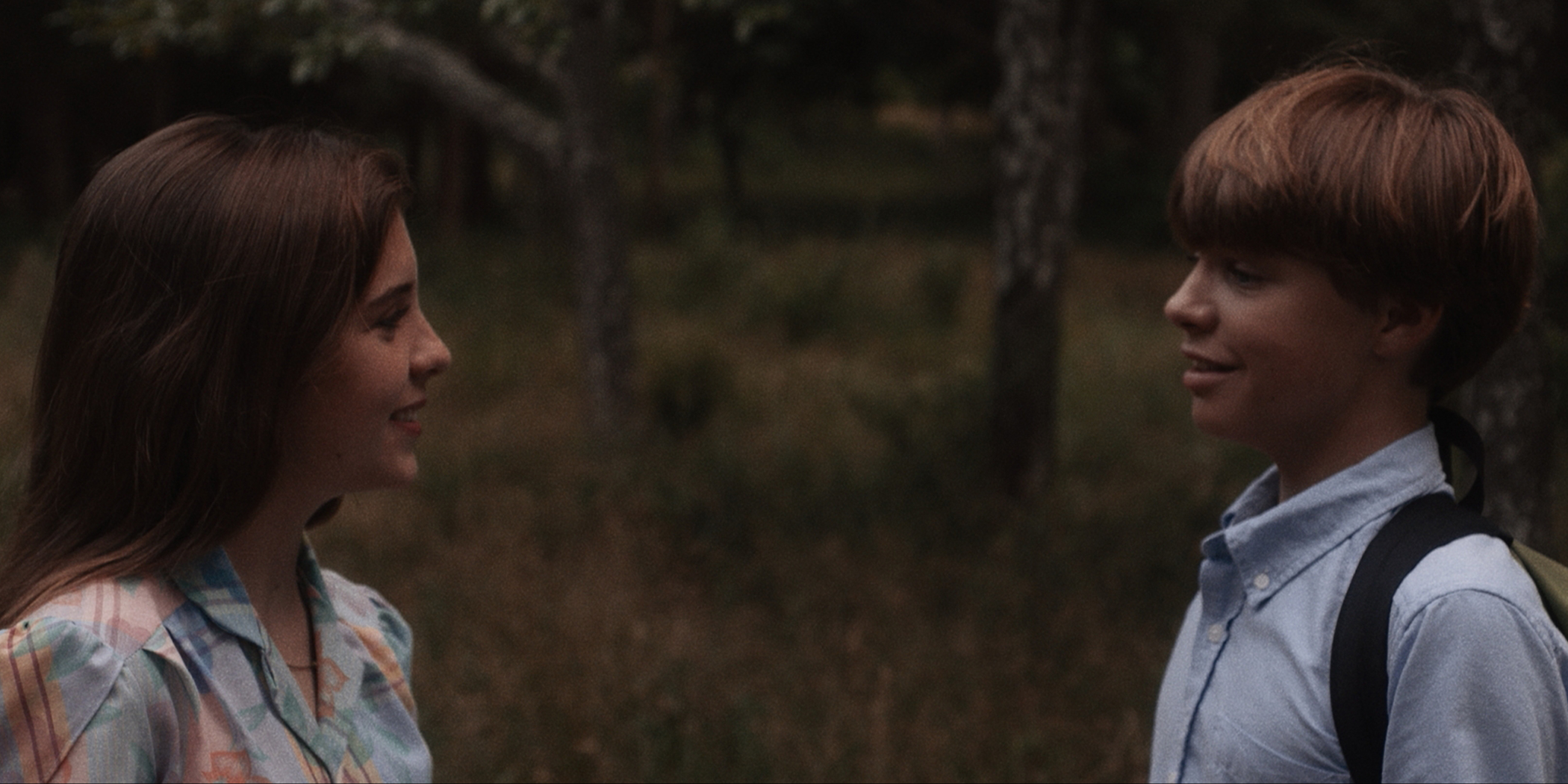
Teen’s hike with dad is subtly—and sadly—enlightening  

Sam (Lily Collias) explores the Adirondacks with her father and his best friend. (Photos courtesy of Metrograph Pictures)

By Richard Ades

When you’re hiking through nature, you miss a lot if you’re not paying attention. The same holds true when you’re viewing Good One, the story of a teenage girl’s hike through the Adirondacks with her dad and his best friend.

Seen mostly through the eyes of 17-year-old Sam (Lily Collias), the flick is full of telling moments, but few of them hit you over the head. Instead, writer/director India Donaldson expects you to watch and listen for clues about what Sam is going through.

Fortunately, Collias’s face registers the girl’s most fleeting thoughts, and cinematographer Wilson Cameron’s lens is right there to capture them.  

Taking place over three days, the film follows along as Sam goes on what seems to be a family tradition: an extended hike with her dad, Chris (James Le Gros). They were supposed to be accompanied by both Chris’s friend Matt (Danny McCarthy) and his teenage son, but the son bails out following a last-minute family argument.

This leaves Sam alone with two divorced, middle-aged men whose egos and life experiences sometimes make them difficult traveling companions.

They not only trade insults with each other, but they force her into a second-class status by, for example, relegating her to the back seat in the car or the floor in their shared hotel room. They also rely on her to take the lead on such stereotypically female tasks as cooking and cleaning.

Sam’s hiking companions are her father, Chris (James Le Gros, right), and his friend Matt (Danny McCarthy).

Sexual roles and outright sexism are understated themes here, but they’re not the only ones. An uncomfortable incident far into the journey forces Sam to question whether she can count on her father to be in her corner, or even to recognize what her corner is. It’s a sad, life-changing moment that filmmaker Donaldson delivers with her usual restraint.

Though the film is only 90 minutes long, its leisurely tempo might test some viewers’ patience. On the other hand, the pace allows us to enjoy the pristine Adirondak scenery, which is complemented by composer Celia Hollander’s evocative score.

More importantly, it allows us to appreciate Le Gros and McCarthy’s portrayals of two flawed but vulnerably human men, along with Collias’s portrayal of a young woman who is still on the cusp of adulthood and yet more mature than either of them.

Rating: 4 stars (out of 5)

Good One (rated R) can be seen in select markets and expands to theaters nationwide on Aug. 23.

Teenage perks seen on the distant horizon

Missy (Taylor Richardson, center) and her friends wait to be allowed into the local nightclub.

By Richard Ades

It’s impossible to watch 18 to Party without thinking of The Breakfast Club. That’s because it, like John Hughes’s 1985 classic, is about a group of troubled teens alternately connecting and sparring with each other.

However, the new film by writer/director Jeff Roda is darker, both literally and otherwise. Gathering outside on an evening in 1984, its youths often target each other with verbal potshots (that threaten to turn into actual potshots after one of them produces a pellet gun). The hostility stems partly from the fact that they’re eighth-graders, which puts them in an age group that’s awkward for boys and perhaps even more so for girls.

That, in fact, is the theme of the film. More than children but not yet old enough to enjoy the perks they expect to gain in high school, they exist in a kind of restless limbo. Their not-yet-arrived status is particularly obvious on this particular night, when they’re forced to wait outside a small-town nightclub that won’t let them in unless space remains after their elders have been admitted.

While they look forward to high school, on the other hand, their view of the future is not entirely optimistic. The community has experienced a series of student deaths, including a pair of suicides that hit close to home. These, along with reports of UFO sightings and a far-off mass shooting, suggest that their future is far from safe or secure.

The long-absent Lanky (James Freedson-Jackson) pays a visit.

And then there’s Lanky (James Freedson-Jackson), younger brother of one of the recent suicide victims. After being away in an apparent mental institution because he committed an act that’s never spelled out, he’s returned for a visit, at least. His mercurial presence threatens to disrupt an evening that already feels dangerously unsettled.

One more similarity with The Breakfast Club is that all of the characters are played by actors who turn them into distinctive individuals. Besides Lanky, several stand out.

At the center of much of the intrigue is Shel (Tanner Flood), a shy kid whose home life has suffered following the arrival of a strict new stepfather. His best friend and mentor is Brad (Oliver Gifford), an alpha male who’s prone to flashes of anger due to unacknowledged challenges in his own life.

Amy (Alivia Clark) and Shel (Tanner Flood)

Among the girls, the popularity-seeking Missy (Taylor Richardson) and the fiercely unconventional Kira (Ivy Miller) attack each other with malice that’s probably fed by their own insecurities. Meanwhile, Amy (Alivia Clark) pops by occasionally to talk to Shel, who is obviously and bemusedly the target of her affection.

With help from music by the Alarm, Velvet Underground and other bands, the kids’ individual traumas are depicted so expertly that it’s too bad Roda chose to close the proceedings with what seems like a tacked-on ending. Otherwise, this is a satisfyingly atmospheric portrait of young teens facing the future with a combination of hope, angst and dread.

Rating: 3½ stars (out of 5)

18 to Party (no MPAA rating) is available from VOD outlets beginning Dec. 1.