Song writer puts faith in hard-drinking has-been

By Richard Ades

The Neon Highway begins by giving its protagonist a glimpse of the success he craves.  

Wayne Collins (Rob Mayes) and his kid brother, Lloyd (T.J. Power), perform a country tune in a Nashville bar and are an immediate hit. Afterward, two industry execs offer Wayne a contract, but they add that they have no use for his guitar-picking sibling.

What’s a brother to do? Wayne is so eager to launch a music career that he appears ready to throw Lloyd under the bus. Then, while driving home, he almost literally does just that thanks to a highway accident.  

The tragedy seems to leave all thoughts of a music career in the rear-view mirror, as we next find Wayne working as a phone/internet installer in Georgia some seven years later. But then, as luck would have it, he’s sent to fix a line for a man who turns out to be one-time country icon Claude Allen (Beau Bridges).

Wayne shows Claude one of his original tunes, and in no time the two are driving to Nashville—where, the older man insists, they’ll be welcomed with open arms. In reality, the city proves to be far less hospitable.

By convincingly playing a washed-up country singer with an alcohol problem, Bridges is following in the footsteps of brother Jeff, who portrayed a similar character in 2009’s Crazy Heart. If we don’t root for him as much as we did for Jeff’s hopeful has-been, it’s partly because Claude is simply not very likable.

As depicted by Bridges, and as directed and co-written by William Wages, Claude is arrogant and obnoxious toward everyone around him, even those who love him. He’s also blatantly self-serving, to the extent that Wayne wonders whether the ex-idol can be trusted to look out for his best interests or is simply using him to stage a comeback.

All this could have made for some powerful drama and an interesting character study. As time goes on, Claude persuades Wayne to put a lot on the line, including his job and a good deal of cash, yet Wayne refuses to give up on him. Is he motivated by guilt over what happened long ago between him and his brother?

That would seem to be the situation the flick’s prologue set up, but the script never capitalizes on its potential. In fact, it doesn’t even make it clear whether Wayne is driven by his love of music or simply by his family’s financial challenges, including a broken dryer and a son in need of college tuition.

Mayes’s Wayne is as likable as Bridges’s Claude is unlikable, and both display authentic country singing voices. But their efforts are undercut by a script that drowns any potential drama in bland dialogue and superfluous characters.

Ultimately, the flick, like the people it portrays, is a study in lost opportunities.

Rating: 2 stars (out of 5)

The Neon Highway (PG-13) opens March 15 in select theaters.
Profiles in struggle: ‘Runner’ and ‘My Darling Vivian’

Runner
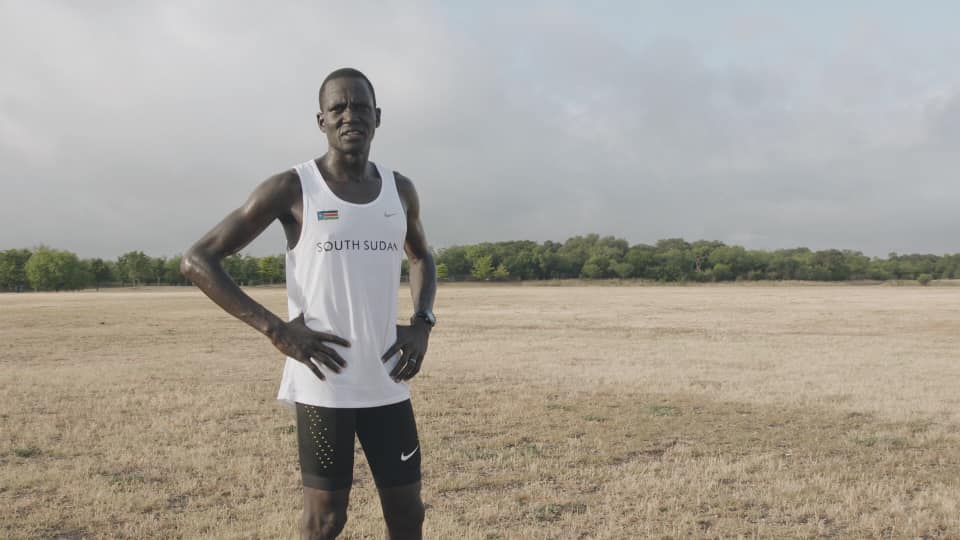
Guor Mading Maker, a refugee who became an Olympic athlete, in Runner

By Richard Ades

Two very different kinds of heroism are on display in documentaries coming out this weekend. One centers on a refugee-turned-Olympic athlete, the other on a celebrity wife and mother-turned-forgotten woman.

First up is Runner, the story of Guor Mading Maker, who was born in Sudan during a decades-long struggle between the Arabic/Muslim northern region and his own African/Christian south.

Director Bill Gallagher uses somber animation to depict Guor’s early years, when his parents reluctantly sent him away for his own safety. But “safety” is a relative term in the midst of a civil war, as he was captured by the enemy and, after escaping, spent four years of his boyhood totally on his own.

Guor’s fortunes finally changed due to a chance encounter with an aunt and uncle, who took him to the U.S. and settled in New Hampshire. There—as the documentary relates via interviews with former high school classmates and coaches—he discovered that running was not merely a survival tool but a sport and even the possible key to a college education and a promising future.

The bulk of the documentary deals with Guor’s Olympic aspirations, which were spread out over several years and were inextricably linked to the political situation in his homeland. He first opted to compete under an international banner, having no desire to run on behalf of the country that destroyed much of his family and nearly killed him. However, when a peace deal opened the possibility that southern Sudan would gain its independence, he had hopes of joining the new country’s first Olympic team.

Most sports fiction eventually leads to a rousing scene of hard-won triumph. Confined by reality, Gallagher’s film can’t do that, but it does deliver stark glimpses of the pain and frustration of competition, mixed with moving depictions of cultural pride and long-delayed reunions. Most of all, it introduces us to a man who has maintained his determination and integrity despite obstacles most of us can’t even imagine.

My Darling Vivian
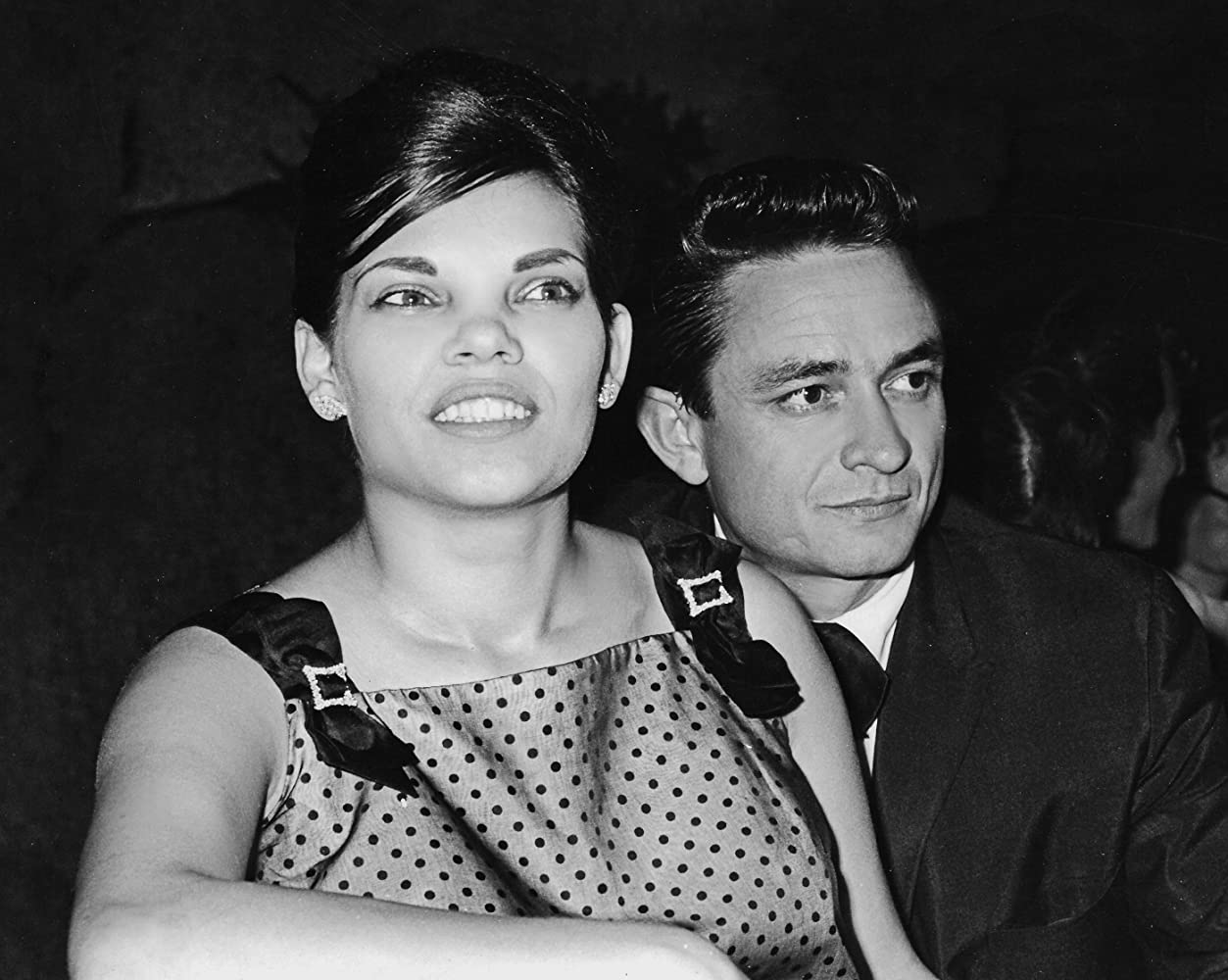
Vivian Liberto and Johnny Cash during the early, happy years of their marriage

This weekend’s other new documentary, My Darling Vivian, pays homage to the Catholic schoolgirl who became Johnny Cash’s first wife and bore most of his children. Directed by Matt Riddlehoover, it serves as a counterpoint to the 2005 Cash biopic Walk the Line, which some feel was a misrepresentation of who Vivian Liberto really was.

Riddlehoover’s main witnesses are Vivian’s four daughters: singer Rosanne Cash and younger sisters Kathy, Cindy and Tara. Interviewed separately and only occasionally disagreeing on minor details, they present a comprehensive picture of the difficult life their mother led as Cash’s wife, and of the nearly invisible existence she led as his ex-wife. Family photos and archival footage help bring the story to life.

Obviously, the film will appeal most to Cash fans, particularly early scenes that detail how the couple met, fell in love and engaged in a long-distance courtship while Johnny finished his military service. But the account of their difficult marriage, during which Vivian was left to watch over the girls and assorted animals while her husband was away on tour for months at a time, should awaken even non-fans’ empathy. And few will fail to see the injustice of what happened to Vivian after their divorce, when the public forgot her as Johnny and new wife June Carter Cash became the music scene’s new darlings.

The doc makes two things clear: (1) Johnny Cash was an impossible man to live with; and (2) Vivian loved him anyway and always would. It’s also clear that Vivian’s daughters loved her and were eager to undo the damage they felt Walk the Line and time itself had done to her reputation. My Darling Vivian gives them the chance to do just that.

Ratings:
Runner: 4½ stars (out of 5)
My Darling Vivian: 4 stars

My Darling Vivian is available from VOD outlets beginning June 19. For information on how to watch Runner, visit runnerdoc.com.