Painful memories of an eradicated past

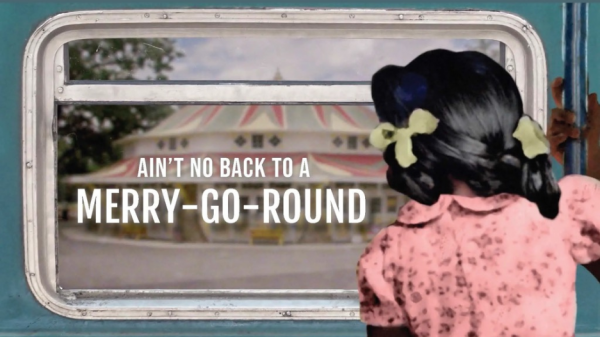
An animated sequence depicts Pelagia Radecka, a young resident of Gniewoszów, Poland, searching for survivors of antisemitic violence in 1945.

By Richard Ades

My community is getting ready for the annual Columbus Jewish Film Festival, but a local theater is beating it to the punch with one of the most powerful Holocaust-related documentaries you’re likely to see this year.

Among Neighbors, directed by Yoav Potash (Crime After Crime), is about the tragic and lasting effects World War II had on the town of Gniewoszów, Poland. The film is at once a history lesson, a tale of survival and a portrait of humanity at its best and its absolute worst.

It’s also a mystery, one whose solution isn’t provided until the film’s final moments.

Because the documentary does so much, and because Potash waits so long to connect seemingly disparate parts, it sometimes comes off as disjointed. But the dramatic end justifies the director’s suspense-building means, and the film is never less than compelling along the way.  

Using a combination of contemporary interviews, archival footage and eloquent hand-drawn animation, Potash introduces us to Gniewoszów both past and present.

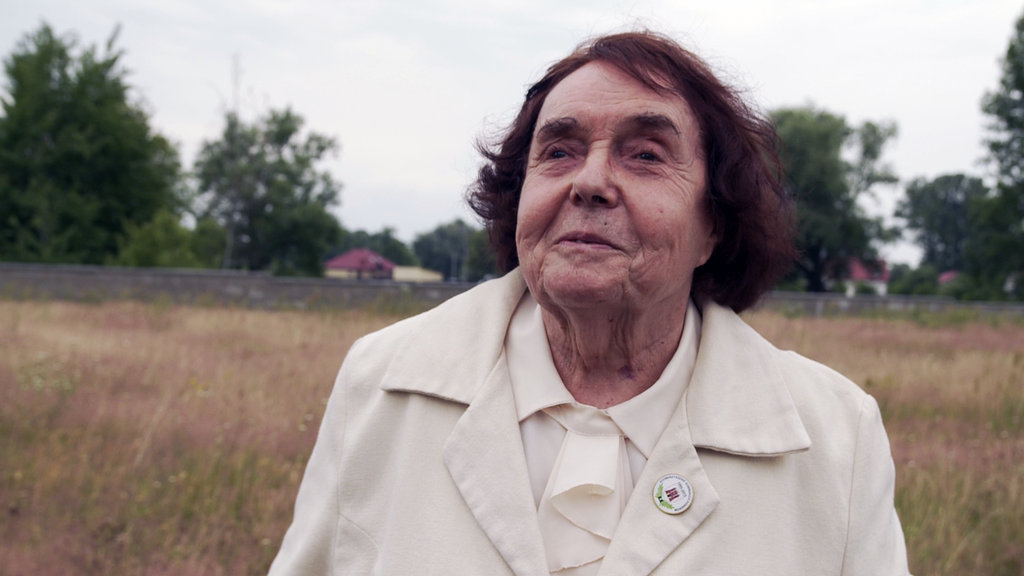
Pelagia Radecka, a Catholic resident of Gniewoszów, witnessed an act of antisemitic violence after the Nazis left her town.

In the past, Jews and Catholics lived together as neighbors and sometimes as friends, just as they had for centuries. But that all changed when Nazi Germany invaded Poland at the beginning of World War II and began instituting antisemitic restrictions that eventually evolved into roundups and death camps.

In response, a few Poles came to their Jewish neighbors’ defense, but more went along with the restrictions and even benefited from them. And some adopted the Nazis’ antisemitic and violent ways, even after the Germans had been driven out.  

As a result, Gniewoszów became a town whose Jewish residents have disappeared along with all traces of their former presence in the community. And most of its current residents are reluctant to talk about what happened to them, particularly since a 2018 law makes it illegal to suggest that Poles were in any way complicit in the Holocaust.

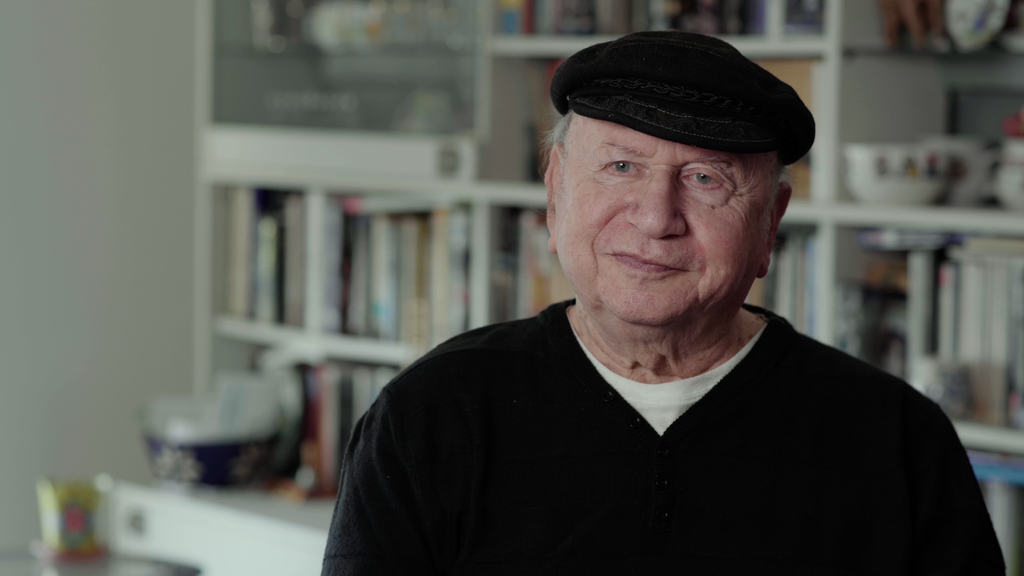
Yaacov Goldstein, a Jewish resident of Gniewoszów, survived the Holocaust and later moved to Israel.

Luckily for Potash, he’s able to find a few elderly residents who were alive during World War II and can be coaxed into telling what they remember. Two of them stand out:

˖ Yaacov Goldstein, a Jew who was a boy during World War II and later moved to Israel, tells the harrowing story of his parents’ efforts to survive and to protect him and his younger brother from the Nazis.

˖ Pelagia Radecka, a Catholic resident who was a teenager during the war, recalls being friends with the Jewish shopkeepers and their son who lived across the street. She also recalls witnessing a shocking act of antisemitic violence that occurred after the Germans had been driven out.

Bravely, Radecka is eager to talk about this act, even though she’s kept it to herself ever since, and even though talking about it amounts to a violation of Polish law.

Besides being a portrait of the highs and lows humans are capable of, Among Neighbors is a critique of societies that attempt to erase their sordid pasts. For Americans, living at a time when our own government is attempting to do the same, it could not be more timely.

Rating: 4½ stars (out of 5)  

Among Neighbors can be seen in select theaters, including Columbus’s Gateway Film Center, with screenings scheduled at 1:30 p.m. Oct. 25 and 26. For a list of other upcoming screenings, visit amongneighbors.com/screenings.

Pioneer left her mark on 1950s cheesecake photography

Model-turned-photographer Bunny Yeager poses with a tool of her trade. (Photos courtesy of Music Box Films)

By Richard Ades

Lots of women posed for Playboy when it first hit newsstands in the 1950s. Bunny Yeager was attractive enough to be one of them, but she instead opted to make her mark on the other side of the camera lens.

The story of this celebrated cheesecake photographer is told in Naked Ambition, a documentary directed by Dennis Scholl and Kareem Tabsch.

Featuring vintage film footage and interviews with people who knew her, the flick depicts Yeager as someone who played a big role in shaking up America’s puritanical attitudes toward sex and nudity.

Yeager was introduced to the craft of taking naughty pictures by posing for a few herself when she worked as a model beginning in the ’40s. The experience proved to be helpful when she decided to switch roles, the doc tells us, as it allowed her make her own models feel more at ease.

As someone who’d spent time in front of the camera herself, Yeager knew the women were mainly concerned about looking their best. By demonstrating that she understood them and was on their side, she turned each photo session into a collaborative effort.

The result: images that were not only sexy but joyfully so, and which allowed the personality of each individual woman to come through.

Bunny Yeager helped to turn Bettie Page into a popular pinup model.

While helping her subjects achieve centerfold celebrity—and helping Hugh Hefner turn his cheeky magazine into a success—Yeager achieved a fair amount of fame herself. She even made an appearance on the TV game show What’s My Line, where the panelists were unable to guess that her “line” was “cheesecake photographer.”

Among her friends and admirers who appear in the documentary is the late talk show host Larry King, who shares a long anecdote that is amusing but has little to do with Yeager herself. Mostly, though, directors Scholl and Tabsch properly keep the focus on the woman who became known as “the world’s prettiest photographer.”

Sadly, Yeager’s life had its share of challenges and tragedies. Ironically, the doc points out, one of the biggest challenges was brought about by the changing attitudes she helped to foster.

As society became more and more open to sexually oriented images, the images themselves became increasingly hard-core. By the mid-1970s, especially after the launch of Hustler magazine, the emphasis was on (porno-)graphic nudity rather than the kind of subtle artistry that was Yeager’s stock in trade.

Suddenly out of work, the photographer was forced to reinvent herself—which she did, again and again.

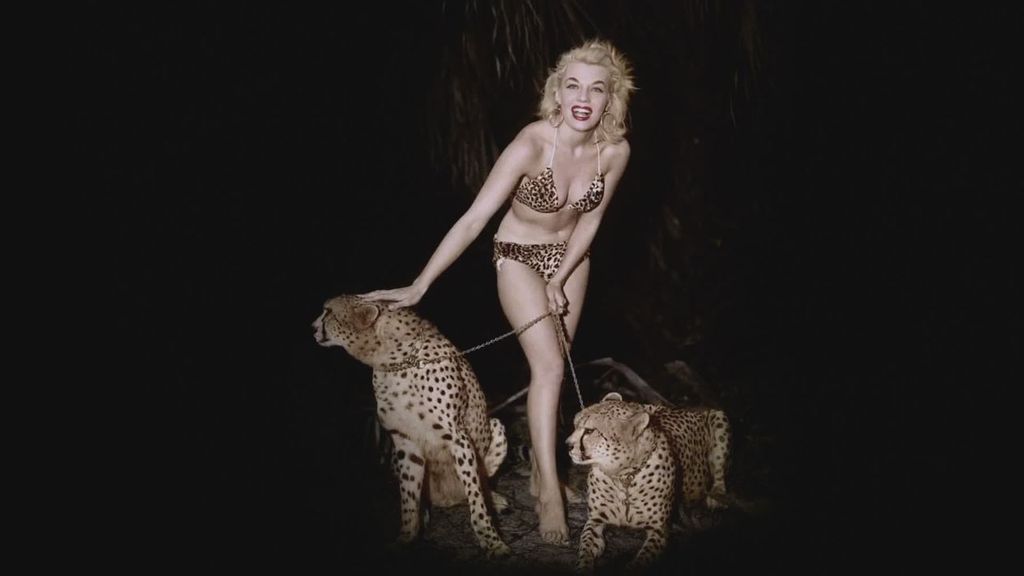
Maria Stinger poses with a pair of cheetahs during one of Yeager’s typically elaborate photo shoots.

As a woman who found success in a field dominated by men, Yeager could be seen as a feminist icon. But since she found that success by taking sexy pictures of women for men’s enjoyment, she’s viewed by some feminists with mixed feelings. Indeed, we learn, her own daughters still disagree over the value of her legacy.

One thing that can’t be argued is that Yeager was a pioneer who left her mark on society. Naked Ambition remembers and honors her for that very reason.

Rating: 4 stars (out of 5)

Naked Ambition opens Sept. 12 in New York, Chicago, Los Angeles and Ottawa, Ontario, with additional openings scheduled in coming weeks. For a full list of engagements, visit musicboxfilms.com/film/naked-ambition/.

Fight for freedom is fueled by revolutionary art

A woman demonstrates against repression in the documentary Sudan, Remember Us.

By Richard Ades

While much of the world is rightfully concerned about what’s going on in Gaza, the northeast African country of Sudan may be the site of even greater misery, if only because its population is far larger. After years of dictatorships, military coups, rebellion and civil war, its people—those who haven’t fled—find life a daily struggle.

The documentary Sudan, Remember Us is a record of the ways young Sudanese rebels tried to head off the current situation by fighting repression and pushing for change. These protesters are remarkable for the courage they display, but also for their creativity, as they often use poetry and other forms of art to make their points.

Written and directed by French-Tunisian filmmaker Hind Meddeb, the doc begins with scenes of military strife in Khartoum in 2023, representing the beginning of the civil war that still engulfs the country. It then flashes back four years to the spring of 2019, when a rebellion has ended the long reign of dictator Omar Al-Bashir.

The victory leaves the rebels, all young and many of them female, filled with optimism and resolve. With signs, murals, chants, songs, poems and sit-ins, they push for the freedoms they were denied under Al-Bashir’s rule.

Unfortunately, Sudan’s window of opportunity for change is short-lived. On the last night of Ramadan, soldiers attack a sit-in demonstration, leaving many of the protesters dead and ushering in a military crackdown.

The main frustration of watching Meddeb’s documentary is that it’s so embedded in Sudan’s struggles that it makes little attempt to explain them to outsiders. We’re seldom told what the political situation is at any particular moment, though the film makes it clear just how the changes affect the gutsy rebels.

After the initial crackdown in 2019, they continue protesting via poetry, songs and other means, but at one point the atmosphere becomes even more ominous. We’re told that the internet has been shut down and that political arrests are now carried out in secret by unidentified men in plain clothes.

This development is guaranteed to send chills down the spines of Americans who’ve noticed the parallels in our own country: the attempts to silence and even defund critical media voices, as well as the expanding army of masked agents who seize people off the streets or at their jobs, often ignoring their rights or legal status.

An important difference is that Sudan doesn’t have America’s history of democracy, though so far it has failed to stop the executive branch’s adoption of an autocratic playbook. On the other hand, Sudan seems to have an unusual affinity for inspirational music, poetry and other art, which buoyed rebels’ spirits and determination when their quest seemed increasingly hopeless.

Any American who was alive back in the 1960s knows that we once had a similar appetite for revolutionary art. Maybe it’s time we got it back.

Rating: 4 stars (out of 5)

Sudan, Remember Us can be seen at select theaters and will open Aug. 15 at the Gateway Film Center in Columbus.

Shooting survivor fights back by going to the gym

Jeannette Feliciano is a personal trainer and bodybuilder who survived the 2016 Pulse nightclub shooting in Orlando, Florida. (Photos courtesy of Gravitas Ventures)

By Richard Ades

As a documentary about a woman who deals with trauma with the help of exercise, Jeannette reminds me of a movie I wanted to make years ago. The main difference is that my film never got made, probably because I didn’t know how to create a space in which the woman in question felt safe enough to tell her story.

Director Maris Curran, obviously, does know how. She partly accomplishes this by avoiding the kind of probing interviews one generally sees in documentaries. Instead, she allows her subject to simply live her life in front of the camera.

Curran’s subject is Jeannette Feliciano, a survivor of 2016’s horrific mass shooting at Pulse, a gay nightclub in Orlando, Florida.

Besides being a survivor, Jeannette is also a lesbian, a single mom, a Latina, a personal trainer and a competitive bodybuilder. All of these facets of her life are represented in the documentary’s one hour and 18 minutes, though some are given more space than others.

For example, we see a lot of Jeannette’s nurturing relationship with her son, Anthony, but little of her relationship with girlfriend Yaris. Presumably, that’s because Jeannette isn’t comfortable revealing that part of her life to strangers.

One thing Jeannette is not shy about revealing is the extent to which her near-death experience has continued to haunt her. When she’s in public, she admits at one point, she can’t help imagining what she would do if a similar incident were to arise.

It’s not surprising, as the Pulse shooting was a tragedy of immense proportions. Entering the club during “last call” on that fateful night, a single gunman was able to kill 49 people and wound 53 more.

Jeannette was an up-and-coming competitive bodybuilder prior to the 2016 shooting at an Orlando nightclub.

Even so, as the film demonstrates, Jeannette has fought back against fear and the kind of spiritual paralysis her ordeal could have created. This comes out most clearly in an early scene, when she invites fellow survivors to her local gym for a workout session aimed at strengthening their psyches as well as their bodies.

The doc’s slice-of-life style is well served by cinematographer Jerry Henry’s sensitive images. Nevertheless, its limitations are sometimes evident.

When a handgun-toting Jeannette visits a shooting range to take aim at a paper target, there’s no explanation of how she came to be there. Has she always been a gun owner, or did she become one in response to her traumatic experience?

Given the U.S.’s endless debate over guns, gun control and gun violence, it’s an interesting question, but it’s one the film never brings up.

Likewise, when Jeannette visits Puerto Rico to help out family members dealing with the devastation left by 2017’s Hurricane Maria, the documentary keeps the focus solely on her heroic efforts. It ignores the storm’s political fallout, including the Trump administration’s delayed relief efforts.

As the film goes on, it deals more and more with Jeannette’s attempt to return to the competitive bodybuilding she set aside following the Pulse attack. It all leads to a major contest at which she and other jacked-up women strike poses before an admiring crowd.

Jeannette shares a hug with her teenage son, Anthony.

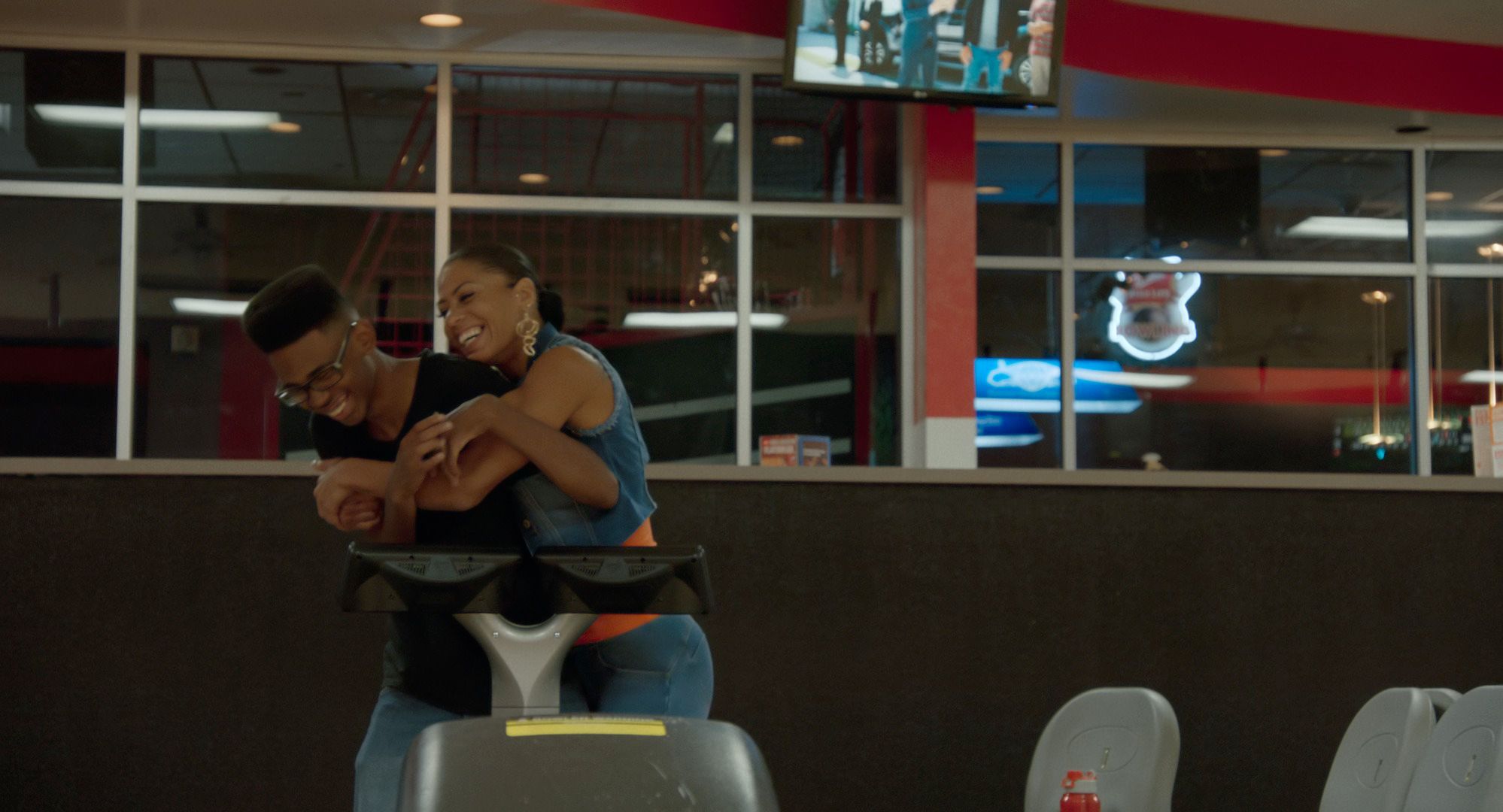
If Curran had stopped the film there, it would have provided an ending worthy of a Hollywood sports drama. Interestingly, though, she instead follows Jeannette and Anthony to a bowling alley, where they enjoy a little mother-son rivalry.

The modest scene completes the doc’s depiction of Jeannette’s attempt to move beyond the trauma left over from the Pulse shooting. We understand that every attempt she makes to live a normal life—whether she’s trying to get back into competitive bodybuilding or simply going bowling with her son—is a way of fighting back.

If Curran’s film has a message, that’s it.

Rating: 3½ stars (out of 5)

Jeannette will be available through major VOD outlets beginning June 17. 

How the GOP keeps its White voters faithful—and scared

Republican strategist Steve Bannon talks politics in the documentary White With Fear.

By Richard Ades

When Donald Trump talked about immigrants eating people’s pets during a 2024 presidential debate, he was carrying on a longtime Republican campaign tactic: Win the votes of White Americans by scaring the hell out of them.

According to Andrew Goldberg’s documentary White With Fear, this strategy can be traced back at least as far as the 1968 presidential campaign. Even though the controversial Vietnam War was still raging, we learn, the campaign of Republican Richard Nixon focused mainly on race.

Among the film’s many interviewees is author Rick Perlstein (Nixonland), who explains that the GOP worked to recapture the White House by tapping into many White Americans’ hatred of Blacks. This was done largely through innuendo and dog whistles.

When Nixon pledged to support “law and order” and fight crime, for example, it was understood that he was talking specifically about Black crime. The candidate’s subtext was hard to miss when he made statements such as referring to Black-majority Washington, D.C. as “the crime capital of the world.”

 The fearmongering tactic apparently worked, as Nixon captured the presidency. And it obviously continues to work, the documentary points out, as the GOP has won the majority of White votes in every presidential election ever since.

Not that the targets of GOP fearmongering have always remained the same.

When Al-Qaeda-backed terrorists attacked the World Trade Center on Sept. 11, 2001, brown-skinned Muslim extremists became the new source of fear. Republican Vice President Dick Cheney fed the paranoia with warnings about sneak attacks involving “chemical agents,” and the fledgling Fox News catapulted to prominence by offering its own nonstop appeals to prejudice and mistrust.

Later, the advent of Barack Obama as a national figure allowed the GOP to launch a two-pronged attack that combined White Americans’ fear of Blacks with their fear of Muslims. Obama actually wasn’t Muslim, but the persistent rumor that he was ran hand in hand with the Trump-fed suspicion that he wasn’t even born in this country.

Then 2020 arrived along with the worldwide COVID pandemic, allowing Republicans to target yet another race: Asians. Falling back on his love for nicknames, Trump led the attack by persistently referring to the scourge as the “Chinese virus” or “kung flu.”   

Hillary Clinton is one of many voices from both the left and the right who are interviewed in White With Fear.

Several years earlier, according to White With Fear, the Grand Old Party had actually considered changing its racially divisive ways. This happened after Obama was elected to a second term in 2012, and Republicans realized it might be a good idea to win over some of the non-White Americans who would one day become the majority.

Their solution: Work to pass immigration reform. But when that proved unpopular with their most conservative representatives, Republicans instead went back to their old ways by launching an attack on immigrants.

Strategists such Steve Bannon came up with the tactic, and then-candidate Trump adopted it with a vengeance. Thus was born his endless attack on immigrants as rapists, murderers and drug dealers; as stealers of American jobs; as replacements for American voters; and, most surreally, as eaters of American pets. It all culminated in the expensive and court-defying effort to expel immigrants that has become a cornerstone of Trump’s second term in office.

One of the most interesting aspects of Goldberg’s documentary is that it tackles its provocative topic with the help of experts from both the left and the right.

There are the expected liberal voices such as Hillary Clinton, who has several incisive things to say about her 2016 presidential opponent. But there are also conservative voices, including some former Trump supporters who have since repented, and others—including Bannon himself—who remain among the MAGA faithful.

This diversity of viewpoints gives us not only a critique of the GOP’s race-baiting approach to politics but a behind-the-scenes look at how it came to be.

Rating: 4 stars (out of 5)

White With Fear will be available through VOD outlets beginning June 3.

Risks, bravery pay off in trio of 2024 masterworks

A motion-captured Jonno Davies plays a simian version of British pop star Robbie Williams in Better Man. (Photo courtesy of Paramount Pictures)

By Richard Ades

This is the time of year when critics get a chance to catch up on recent flicks they might have missed, courtesy of studios in search of buzz and, hopefully, award nominations. While I don’t claim to be clairvoyant when it comes to the latter, I can confidently say this: If the Oscars and other competitions gave out prizes for bravery, these three films and their creators would win hands down.

One filmmaker displays creative courage by breaking the mold in a familiar genre, while the others put their liberty and even their lives at risk in order to bring their truths to the screen.

Let’s look at them one by one.

Biopic with a difference

By now, we all know the drill when it comes to film biopics: The would-be celeb claws his or her way to the top, but success comes at a steep cost. Friends are abandoned, spouses are cheated on, and alcohol and/or drugs are abused.

Better Man, based on the life of British pop superstar Robbie Williams, follows that general pattern, but with a difference. The entire story unfolds through the eyes (and narration) of Williams himself, who emerges as someone who desperately wants fame but is convinced he doesn’t deserve it.

And, oh yes: Williams is portrayed by a CGI-generated chimpanzee (a motion-captured Jonno Davies). It sounds weird—and, frankly, it is—but it also makes sense in a brilliant and emotionally satisfying way.

Even as a child, Williams suffers from self-doubt, self-loathing and what he later comes to identify as depression. By making him the lone ape in a world of humans, the film has found a clever way of symbolizing Williams’s fear that he’s an imposter unworthy of the success he seeks.

Directed with theatrical flair by Michael Gracey (The Greatest Showman), Better Man is marked by gee-whiz, over-the-top production numbers and surreal fantasy sequences, in addition to its simian protagonist. But what really sets it apart is its honesty and warmth.

Despite being depicted as an ape, Williams comes off as a recognizably flawed human who earns our sympathy, as well as the heart-on-its-sleeve sendoff the film gives him. Director Gracey’s gamble has paid off with a flick that’s as moving as it is massively entertaining.

Rating: 4½ stars (out of 5)

Better Man (rated R) opened Dec. 25 in select theaters and expands nationwide Jan. 10.

National unrest and a missing gun upset the lives of Iranian student Rezvan (Mahsa Rostami, center), her mother (Soheila Golestani, left) and sister (Setareh Maleki) in The Seed of the Sacred Fig.

Criticizing—and then escaping—Iran

As an attack on Iran’s government and justice system, The Seed of the Sacred Fig is the kind of film that can’t be made in that country. And yet veteran writer/director Mohammad Rasoulof succeeded in making it—in secret—before fleeing to Europe for his own safety.  

The thriller concerns Iman (Missagh Zareh), who aspires to be a judge but learns that the path to success will force him to ignore his moral compass. He lands a position that requires him to sentence people to death without being given a chance to consider the evidence.

As it turns out, the position endangers more than just his conscience. Because of the job’s controversial nature, he and his wife, Najmeh (Soheila Golestani), and their family are forced to live in secrecy. Meanwhile, daughters Rezvan and Sana (Mahsa Rostami and Setareh Maleki) become embroiled in the widespread unrest that erupts after a young woman is beaten and killed for not sufficiently covering her head.

Then the gun that Iman keeps for protection turns up missing, and the national turmoil threatens to spread to his household as he searches for the culprit. Interrogations ensue, along with a car chase and a tense finale that may remind some of a certain horror film set in a snowbound hotel. 

Considering it was made in secret and by a director who’d already gotten in trouble for earlier works, The Seed of the Sacred Fig should fill viewers with admiration for Rasoulof’s resourcefulness, as well as his courage. The film deserves an Oscar nomination, but it probably won’t get one, because who would nominate it? Certainly not Iran.

Rating: 4½ stars (out of 5)

The Seed of the Sacred Fig (PG-13) can be seen in select theaters and is scheduled to open Jan. 30 at Columbus’s Gateway Film Center.

Palestinian activist Basel Adra (left) joins forces with Israeli journalist Yuval Abraham in the documentary No Other Land.

Palestinian, Israeli expose West Bank abuses

Basel Adra has spent years documenting the Israeli army’s systematic attacks on his West Bank community, Masafer Yatta. In No Other Land, he continues that work along with Israeli journalist Yuval Abraham and fellow writer/directors Hamdan Ballal and Rachel Szor.

The result is an eye-opening expose of the abuses Adra and his Palestinian neighbors have had to endure living in the occupied territory. Houses and other buildings are destroyed on the shortest of notices and flimsiest of excuses, such as that the army needs the land for training exercises. Those who want to rebuild are told to get permits that they know are unobtainable.

Much of the film consists of footage taken with amateur video equipment or cellphones. It shows locals trying in vain to reason with soldiers, government officials and, in some cases, illegal Israeli settlers, all of whom are clearly trying to force them to abandon their rural community.

Other footage, shot by Szor, centers on the growing friendship between the Palestinian Adra and Israeli journalist Abraham, who are allied by their concern over the situation but separated by their approaches to dealing with it. Abraham is frustrated that his muckraking stories have had so little impact, but Adra counsels patience, saying a solution could take years or even decades.

The differing approaches reflect the men’s vastly different backgrounds. While Abraham is relatively new to the situation, Adra has been dealing with it for much of his life. In the face of constant, officially sanctioned abuse, he and his neighbors have no recourse but to greet it with steadfast determination and even flashes of dark humor.

Made under the most difficult of circumstances, No Other Land is a portrait of courage that is, in and of itself, an act of courage.

Rating: 5 stars (out of 5)

No Other Land is available through VOD outlets and can be seen at select theaters beginning Jan. 31.

Mobility-impaired Norwegian discovers life, love through gaming

As a boy dealing with a debilitating medical condition, Mats Steen often escaped into the virtual world of gaming. (Photo by Bjorg Engdahl Medieop/Netflix)

By Richard Ades

Growing up with a degenerative muscular disease, Mats Steen found it harder and harder to take part in everyday life. As a result, the young Norwegian spent most of his time playing video games.

“His world seemed so limited,” said his father, Robert.

Finally, at the age of 25, Mats succumbed to his condition. That’s when Robert and his wife, Trude, realized that their son’s world hadn’t been so limited after all.

The reason is revealed in Benjamin Ree’s unconventional documentary The Remarkable Life of Ibelin.

The film explains that Robert, after losing Mats in 2014, announced the sad news to followers of his son’s blog, “Musings of Life.” The grieving father expected that to be the end of it, but he soon was inundated with condolences from people around the world who had come to know Mats through their shared love of the video game World of Warcraft.

In the real world, the adult Mats had spent his days in a wheelchair, unable to take care of his most basic needs by himself. That much, his parents knew.

What they didn’t know was that once his wheelchair was pushed up to the computer, Mats had entered the virtual world and become Ibelin, a muscle-bound hero who busied himself sprinting through verdant landscapes, fighting monsters and forming bonds with his fellow avatars—bonds that eventually evolved into real-life friendships.

Ibelin (right), Mats Steen’s virtual alter ego, spends time with Rumour, the avatar of a Dutch girl named Lisette.

As in Ree’s 2020 documentary, The Painter and the Thief, the director tells this fascinating story in a way that surpasses genre conventions.

In the early moments, Mats’s boyhood and young adulthood are captured through a combination of home movies and interviews with his parents and sister, Mia. Nothing out of the ordinary here. Later, though, the film immerses itself in images and characters derived from Mats’s favorite video game.

With the help of material gleaned from World of Warcraft archives, Rees uses animation and voice actors to recreate scenes from Mats’s online life.

In some cases, they’re tender, as when he first meets the flirtatious Rumour, the avatar of a Dutch girl named Lisette. In other cases, they’re painful, as when Ibelin lashes out against other avatars. Determined to keep his health problems to himself, Mats hides the fact that his character’s flintiness stems from his own frustration over his worsening condition.

In his better moments, though, Mats’s virtual alter ego could be kind and thoughtful. Interspersed with the animated segments are interviews with Lysette and others that reveal the ways in which Mats affected their lives for the better. The result was that their make-believe relationships grew into actual friendships—friendships that became all the more passionate once Mats finally revealed his real-world challenges.

The Remarkable Life of Ibelin benefits greatly from Rasmus Tukia and Ada Wikdahl’s expressive animation and Tore Vollan’s subtle score. Combined with Ree’s innovative approach to documentary-making, they turn a unique story into a rewarding and moving experience.  

Rating: 4½ stars (out of 5)

The Remarkable Life of Ibelin (PG-13) will be available through Netflix beginning Oct. 25.

Survivors of conversion therapy tell their stories

Filmmaker Zach Meiners (right, in T-shirt) and former Mormon Elena Joy Thurston both underwent conversion therapy in an attempt to “cure” them of homosexuality. (Photos courtesy of Gravitas Ventures)

By Richard Ades

At the beginning of Conversion, a man tells the story of his first love—and first loss.

At 15, he had a boyfriend whose parents had put him through a doctor’s treatment program in an attempt to convert him to heterosexuality. After classmates discovered the two youths holding hands behind the school, the boyfriend said he was terrified that he’d be sent back into the program.

Later that night, he took his own life.

“Our love killed him,” the man remembers thinking at the time. But, of course, what really killed the boy was society’s problem with homosexuality, as well as the doctor’s attempt to “cure” him through what’s often called “conversion therapy.”

Though this practice is now widely condemned and even illegal in nearly half of U.S. states, thousands of LGBTQ people have been subjected to it down through the years. Three of them tell their stories in Zach Meiners’s new documentary.

One of them, in fact, is Meiners himself, who recalls that he first realized he was different from his male friends when puberty hit and they suddenly became interested in girls. Worried that others might discover he didn’t share their feelings, he started looking for ways to change himself.

Among his stranger experiences with conversion therapy were sessions with a therapist who demanded detailed accounts of his gay fantasies. Meiners eventually began to suspect the therapist was doing this for his own benefit rather than his client’s, as the man often became visibly aroused during their time together.

Dustin Rayburn is a conversion therapy survivor.

Other memories are shared by Dustin Rayburn, whose religious family blamed their child’s sexuality on a “gay demon”; and Elena Joy Thurston, who was a Mormon wife and mother when she realized she had lesbian longings. Though Rayburn and Thurston’s experiences with conversion therapy were very different, in each case someone wrongly tried to blame their gayness on sexual assaults they’d suffered as youths.

Conversion is a heartfelt effort to spread the word about a pseudoscience that has made life exponentially harder for thousands of young people and that has no doubt driven many to attempt suicide. If the film doesn’t have as much impact as it might, it’s partly because similar messages have been delivered by earlier efforts such as Gregory Caruso’s 2022 documentary of the same name and Joel Edgarton’s 2018 drama Boy Erased.

In addition, Meiner’s apparently limited budget shows at times, as when the same still images keep cropping up over and over. The film also weakens itself by occasionally lapsing into sappiness and by spending an inordinate amount of screen time interviewing a former advocate of conversion therapy.

The documentary regains its sense of purpose, however, when it warns that conversion therapy remains a threat. The phony science may disguise itself by using different names and terminology, we’re told, and it may hide in back channels of the internet, but it has never really gone away.

Rating: 3 stars (out of 5)

Conversion was released July 2 through VOD and cable outlets.

Holocaust escapee finds a home in pornography

Chelly Wilson does business out of her apartment in an old snapshot provided by the Wilson family. (Photos courtesy of Kory Miller/Obscured Pictures)

By Richard Ades

There have been many documentaries about Holocaust survivors. Queen of the Deuce is likely the only one about a survivor who went on to make her fortune in the porn industry.

Born into a family of Greek Jews in 1908, Chelly Wilson was quicker than most to recognize the rising threat Nazi Germany posed in the late 1930s. Temporarily leaving her son with her ex-husband and her daughter with a non-Jewish acquaintance, she hastily emigrated to New York, where she was soon making money selling hot dogs.

But Wilson’s real success came years later, when she began acquiring neighborhood movie theaters and devoting them to the increasingly popular genre of pornography. By the time soft porn began giving way to the hard variety, she was honchoing a business that ran a slew of theaters and even made its own features.

Directed and co-written by Valerie Kontakos, Queen of the Deuce tells Wilson’s story through interviews with her grown children and grandchildren, as well as people who worked with her over the years. Though she died in 1994, Wilson even makes an appearance herself thanks to home movies and interviews recorded by her family. In addition, an animated version of Wilson at various ages makes brief appearances to help us understand who she was and how she got that way.

An animated version of Chelly Wilson poses with some of her regular poker buddies in an image provided by Exile Films.

It all adds up to a portrait of an individual whose life was full of contradictions. For example:

⸱ She was a Jew who celebrated Christmas (which was also her birthday).

⸱ She was a lesbian but was married twice, including to a man she met in America.

⸱ She was a mother and grandmother who valued her family but sometimes kept them in the dark about her past.

A final contradiction is that, while many would label her a feminist thanks to her fierce independence, she made her living off a film genre that feminists of her era often considered misogynous.

In general, Wilson comes across as someone who proudly and unapologetically lived her life and was unafraid to thumb her nose at social norms. Director Kontakos does a good job of capturing her personality with major help from collaborators such as editor Rob Ruzic, composer Ken Myhr and lead animator Abhilasha Dewan.

As a bonus, Kontakos also captures the personality of New York in the 1960s and ’70s, before politicians such as Rudy Giuliani began working to reform its sex-, dirt- and crime-ridden image. Back then, the Big Apple might not have been as nice a place to visit as today’s cleaned-up version, but it obviously was the perfect home for a risk-taking entrepreneur named Chelly Wilson.

Rating: 4 stars (out of 5)

Queen of the Deuce previously made the rounds of several festivals, including the 2023 Columbus Jewish Film Festival. The film opens May 24 in select theaters and online through Amazon Prime Video and Apple TV.

He photographed folks the mainstream media ignored

Wearing a mask during the COVID pandemic, Corky Lee gets ready to take his next photo. (Photos courtesy of All Is Well Pictures)

By Richard Ades

As a child, Corky Lee enjoyed comic books about superheroes, which he later credited with giving him a “moral compass.” As a Chinese American, however, he never saw any superheroes who looked like him.

Despite this fact (or maybe because of it), Lee grew up to be a kind of superhero himself—one whose “superpower” was simply taking the kind of pictures no one else was taking. Walking around New York City with a camera bag over his shoulder, he spent five decades chronicling the lives of Asian Americans and Pacific Islanders, people whose struggles and celebrations were often ignored by the mainstream media.

Lee and his lifelong crusade of inclusion are the subject of Photographic Justice: The Corky Lee Story, a documentary being shown on PBS in observance of Asian American and Pacific Islander Month.

Directed by Jennifer Takaki and featuring a combination of contemporary interviews and vintage footage, the film is a low-key but loving portrait of the man who became a fixture in New York’s Asian community. Whenever members of its many varied cultures and nationalities threw a parade, held a party or joined a picket line, Lee could be counted on to be there.

Love of country and love of New York are obvious in this photo Corky Lee took of a 2006 parade celebrating Budha’s birthday.

After decades of such coverage, the documentary tells us, Lee amassed so much knowledge about local AAPI-related events that kids jokingly referred to him as “Corkypedia.”

Besides showing up for Asian holidays such as the lunar new year and Budha’s birthday, Lee also covered national holidays, when he concentrated on providing an Asian American viewpoint. On Veterans Day, for example, he focused his lens on AAPI vets to show that Asians are as much a part of U.S. society as their European American counterparts.

According to the documentary, Lee felt this lesson became especially important when the country was hit with the 9/11 attacks in 2001 and with COVID in 2020. Muslim Americans and Chinese Americans, respectively, were scapegoated for these national and international tragedies, and he did what he could to counteract the resulting prejudice.

Sadly, the latter effort turned out to be his last. After viewing Takaki’s documentary, you’ll realize just how much of a loss that was.

Rating: 4 stars (out of 5)

Photographic Justice: The Corky Lee Story can be seen in select theaters and will air on PBS stations beginning May 13. Its Central Ohio airtime is 4 p.m. Sunday, May 19 on WOSU.