Revisiting the election that broke the mold

James Fletcher’s documentary looks at what Donald Trump did right in 2016—and what Hillary Clinton did wrong.

By Richard Ades

The Accidental President is worth seeing, but the timing of its theatrical release is less than ideal. Does anyone want to see a documentary that rehashes the 2016 presidential race when we’re still trying to put the 2020 election behind us?

But for those willing to give it a try, James Fletcher’s flick is a lively and surprisingly even-handed history lesson that’s sure to provide nuggets of new understanding. Though it mainly relies on talking heads to examine the past, those heads belong to an eclectic and thoughtful group of journalists, commentators, political operatives, a prominent screenwriter (Aaron Sorkin) and even a cartoonist (Dilbert’s Scott Adams).

Writer/director Fletcher begins his look back with the 2016 primary season, which saw a record number of prominent Republicans vying for the top spot. The sheer volume made it hard for any candidate to stand out—any traditional candidate, that is. While his politically experienced opponents focused on ideas, Trump gained traction by becoming, as former White House communications director Anthony Scaramucci puts it, a “human wrecking ball.”

During the GOP debates, Trump targeted other hopefuls with a steady stream of insults and name-calling that kept his face front and center throughout the 24-hour news cycle. In short, the former reality TV star showed he knew how to work the media. While conservatives often claim news outlets have a liberal bias, one interviewee notes that they actually have a “conflict bias.” Thus, the political neophyte was able to garner millions of dollars’ worth of free publicity by creating one juicy kerfuffle after another.

At the same time that he was slaking the media’s thirst for conflict, Trump was stoking the anger many Americans felt over the perception that they’d been left behind by the modern economy. The documentary notes that Sen. Bernie Sanders benefited from some of this same dissatisfaction in his bid for the Democratic nomination, fueling an early lead over Hillary Clinton. It also notes that his fans’ anger was exacerbated when the party’s establishment was suspected of using “super delegates” to give Clinton an unfair advantage in the race.  

Time correspondent Molly Ball is one of several political observers featured in The Accidental President.

Speaking of Clinton, her diehard supporters probably won’t appreciate the section of the film that focuses on what she did wrong after becoming the Democratic candidate. Despite being vastly more qualified than Trump, she hobbled herself by avoiding the press and mostly ignoring the so-called “blue wall” states where Trump ultimately carved out slim leads. (One of them, Wisconsin, was snubbed altogether.) She also made verbal gaffes such as referring to Trump supporters as “deplorables,” thus alienating voters who felt looked down upon by the “coastal elite.”

Of course, Clinton also was handicapped by FBI director James Comey and his controversial decision to raise the issue of her emails yet again during the campaign’s final days. On the other hand, as Time political correspondent Molly Ball suggests, Clinton should have been so far ahead of her inexperienced opponent by that point that such a setback wouldn’t have mattered. In the end, she won the popular vote but lost in the Electoral College, which was the only vote that mattered.

The Accidental President also brings up other issues that played a role in 2016 and still bear consideration today: Why were Twitter and Trump such a perfect match? Do emotions beat out ideas on the campaign trail? And how was Trump able to weather the “October surprise” that was the Entertainment Tonight tape?

The 2016 race may be long over and Donald Trump may be out of office, but the forces that led to his surprising victory will continue to play a role in politics because they obviously worked. That makes The Accidental President a useful history lesson.

Rating: 4 stars (out of 5)

The Accidental President (no MPAA rating) is available through VOD outlets and will screen in limited U.S. theaters beginning June 21. It will soon be available on Starz.

Trans athletes fight for the right to compete

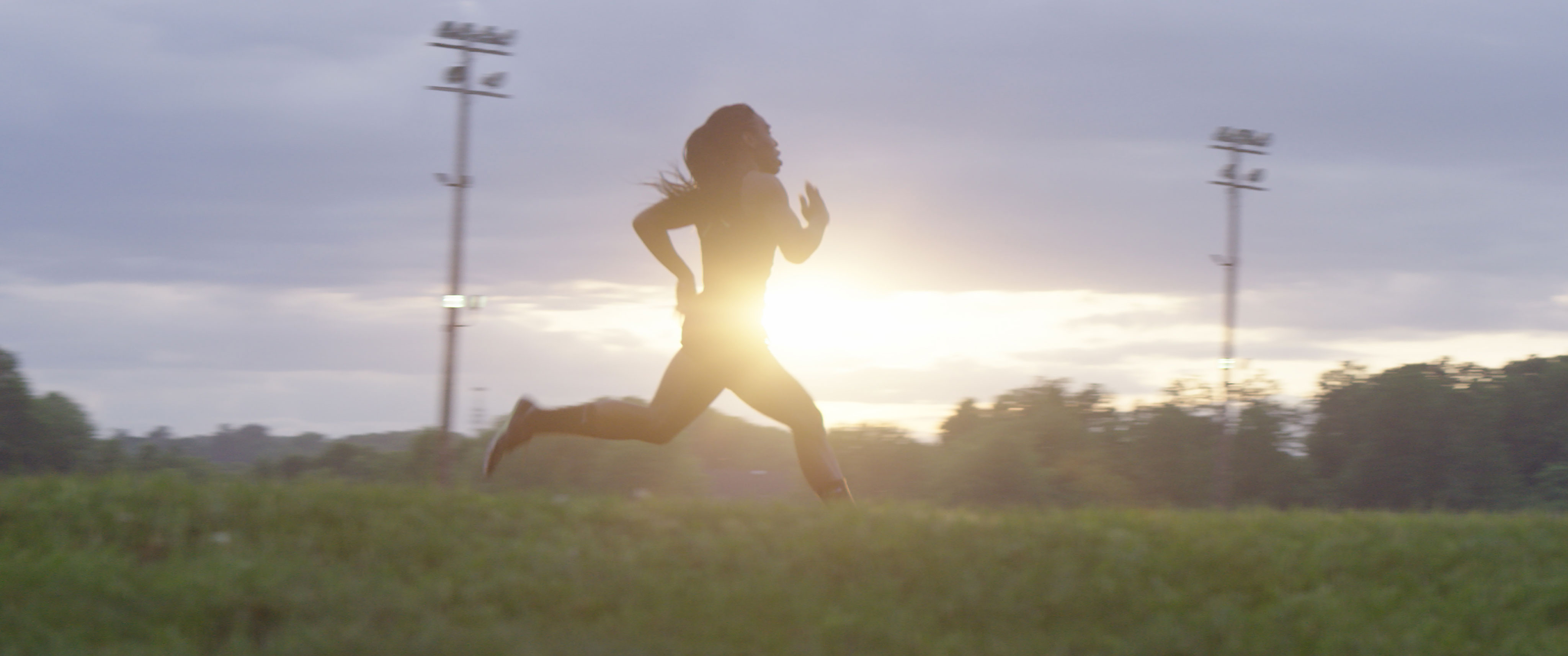
Andraya Yearwood is a trans female athlete from Connecticut whose success in track and field events has been cited as evidence by backers of efforts to ban trans girls and women from competing.

By Richard Ades

Mack Beggs has a problem. The Texas teen is an accomplished wrestler, but the state forces him to wrestle girls. That’s because Mack was born a female, and though he’s begun transitioning to male, Texas law requires young athletes to compete in the gender they were assigned at birth.

Mack is one of three teenagers portrayed in Changing the Game, a documentary directed by Mark Barnett that examines the controversial issue of trans athletes in a way that’s compassionate, thoughtful and evenhanded. It’s also comprehensive, as each of the youths lives in a different state, and each state has a different way of dealing with the issue. Also featured are:

• Sarah Rose Huckman, a competitive skier who lives in New Hampshire, which allows trans athletes to compete in their chosen gender, but only if they’ve undergone reassignment surgery.

• Andraya Yearwood, a track athlete who lives in Connecticut, which allows all athletes to compete in their preferred gender regardless of where they are in the reassignment process.

On the surface, Andraya is the most fortunate of the three since her state takes the most liberal attitude. However, the film reveals that law and public opinion don’t always jibe. When the tall and muscular Andraya wins a track victory, her success is marred by critics who feel she has an unfair advantage over her competitors. (In fact, backers of recent Ohio efforts to ban trans female athletes from competing have cited as evidence the success of Andraya and another trans Connecticut track star who also appears in the film.)

Mack Beggs is a trans male wrestler who’s forced to compete with girls due to restrictive Texas laws.

Like the states they live in, the three featured athletes are a study in contrast. Mack is shy and soft-spoken, while Sarah is an outgoing blogger who challenges her state’s trans rules. Finally, Andraya is a fierce competitor on the track but is uncomfortable over the criticism she receives, especially since she has a double-minority status as someone who’s both trans and African American.

Just as fascinating as the athletes themselves are the glimpses we’re given of the family members and friends who surround them. Many of them upend stereotypical expectations.

A case in point: Texas wrestler Mack is being raised by Southern Baptist grandparents who claim they’re as conservative as they come. In fact, grandmother Nancy is a deputy sheriff who owns several guns—and is prepared to use them to defend her grandson against anyone upset by his success on the mat. Meanwhile, grandfather Roy struggles to remember which pronouns to use with his grandson, but he apparently has a firm grasp of why Mack is who he is. “You gotta feel good about yourself,” Roy says.

The lesson seems to be that when someone has a personal connection to a trans person, political dogma and prejudice can’t help giving way to love and acceptance.

Just as impressive as the documentary’s portrayal of the athletes and their families is its depiction of their critics. While some deal in hateful stereotypes, others are more measured and logic-minded.

Those who think Mack shouldn’t be wrestling girls—something with which Mack himself agrees, of course—say his use of testosterone supplements makes it unfair. And people who argue that Andraya shouldn’t be competing with cisgender girls say it makes a mockery of Title IX rules that were designed to level the playing field for female athletes.  

Such criticisms can’t be dismissed as groundless, showing that the issue is far from black and white. Then again, no one who believes in equality can dismiss these trans athletes’ right to be true to who they are and to pursue their dreams just like their cisgender counterparts.

Far from being a clinical study of a hot-button sports issue, Changing the Game is illuminating, heartwarming and inspiring. It deserves a gold medal.

Rating: 4½ stars (out of 5)

Changing the Game is available on Hulu beginning June 1.

Father’s death prompts dangerous quest for justice

Paul Lima keeps in touch with his team as they plot to capture a killer in After the Murder of Albert Lima. (Photos courtesy of This Is Just a Test Media)


By Richard Ades

After watching the unbearably tense (and now Oscar-nominated) Quo Vadis, Aida?, I was ready for something a bit calmer. Instead, I stumbled onto After the Murder of Albert Lima.

The documentary follows an American named Paul Lima as he heads to Honduras in 2013 to seek out his father’s alleged killer. The man in question, Oral Coleman, has actually been convicted of the crime but remains at large, apparently having bribed enough officials to evade prison.

The murder, by the way, took place 13 years earlier. Since then, Lima has devoted his life to seeking justice, but it appears to be in short supply in the Central American country. As a result, he’s hired bounty hunters Art Torres and Zora Korhonen to accompany him to the island where the suspect lives.

The plan: Find Coleman, subdue him with drugs and restraints, and turn him over to the proper authorities for delivery to prison. The problem: Coleman is a prosperous businessman/gangster who’s always surrounded by bodyguards and ever-vigilant underlings.

Bounty hunters Art Torres and Zora Korhonen

Torres, the more assertive of the two bounty hunters, effects an air of self-confidence as he assures Lima that their plan is sound. But even he seems taken aback when he learns how well-protected Coleman is, and how lawless and hazardous life on the island can be. Nevertheless, the three set about gathering the supplies they need for their dangerous mission, including a pair of poorly maintained firearms.

Is Lima setting himself up for the kind of tragic end that befell his father? Are bounty hunters Torres and Korhonen as competent as they claim, or are they in over their heads? Director Aengus James encourages such questions while keeping the dread factor high with help from composer Adam Sanborne’s ominous score.

The only respite comes during interludes that explain why Paul Lima decided to undertake such an insane quest. We come to understand that his need for closure largely overrules his instinct for self-preservation. That’s because his life is stuck in limbo and will remain there unless he succeeds in bringing his father’s killer to justice.  

Like a condensed, real-life version of Herman Melville’s Moby-Dick, After the Murder of Albert Lima blends psychology and suspense in the tale of an obsession that both defines and endangers one man’s life. It’s quite a yarn.

Rating: 4 stars (out of 5)

After the Murder of Albert Lima is available beginning March 18 on Crackle, a free screening service.

The uphill battle to safeguard federal lands

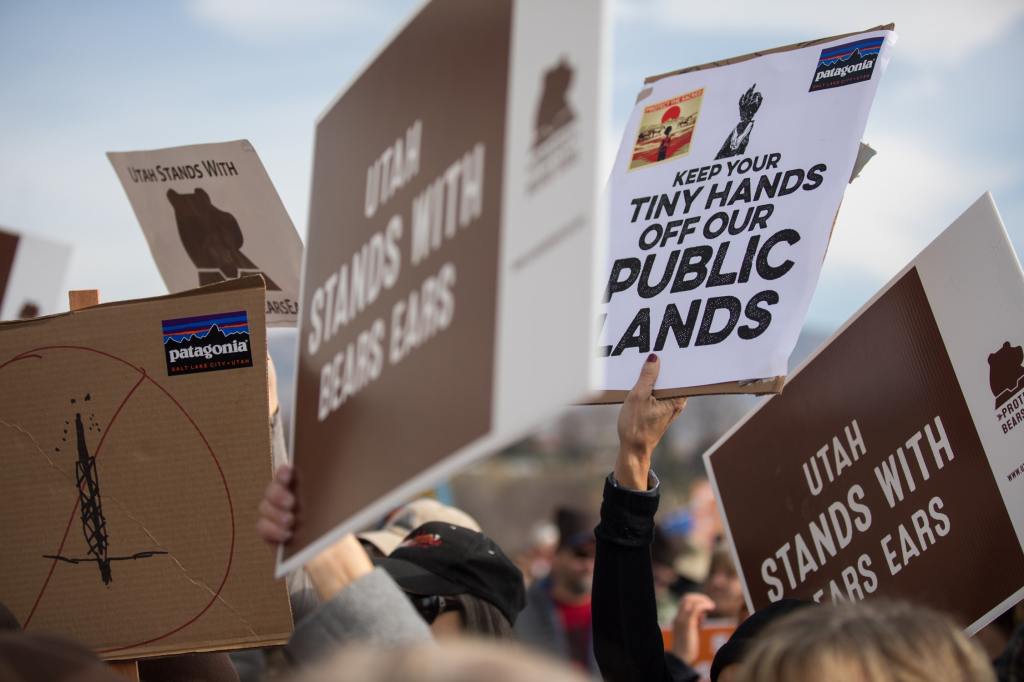
Local activists gather in Salt Lake City to protest the Trump administration’s boundary reductions to the Bears Ears and Grand Staircase-Escalante national monuments. (Photo by Andrew Burr)

By Richard Ades

As if the upcoming presidential election weren’t momentous enough, a new documentary offers evidence that American’s public lands are on the line.

David Byars’s Public Trust is a beautifully photographed homage to the 640 million acres of wilderness that belong to all of us, as well as a concise history of the struggle to keep them that way. That history is brought up to date with an account of the Trump administration’s moves to exploit some of the most pristine and vital areas for commercial development.

Though a wide spectrum of activists, ranchers, government officials and others appear during the film’s 98 minutes, the face that’s seen most often belongs to journalist Hal Herring. Herring says he spent his youth hunting and fishing in northern Alabama, but he later traded in his shotgun for a computer so he could warn people about forces that sought to turn federal lands into money-making opportunities.

Byars makes the case that protecting and even extending public lands was a bipartisan issue for much of the 20th century, with the possible exception of Ronald Reagan’s presidency. Even in the 21st century, Presidents George W. Bush and Barack Obama both added new protected areas by declaring them “national monuments.”

When Donald J. Trump took office, however, he made it clear that his sympathies lay elsewhere. Not only have his secretaries of the interior been men with multiple links to the energy industry, but he’s showed no compunction about overturning protective measures instituted by his predecessors.

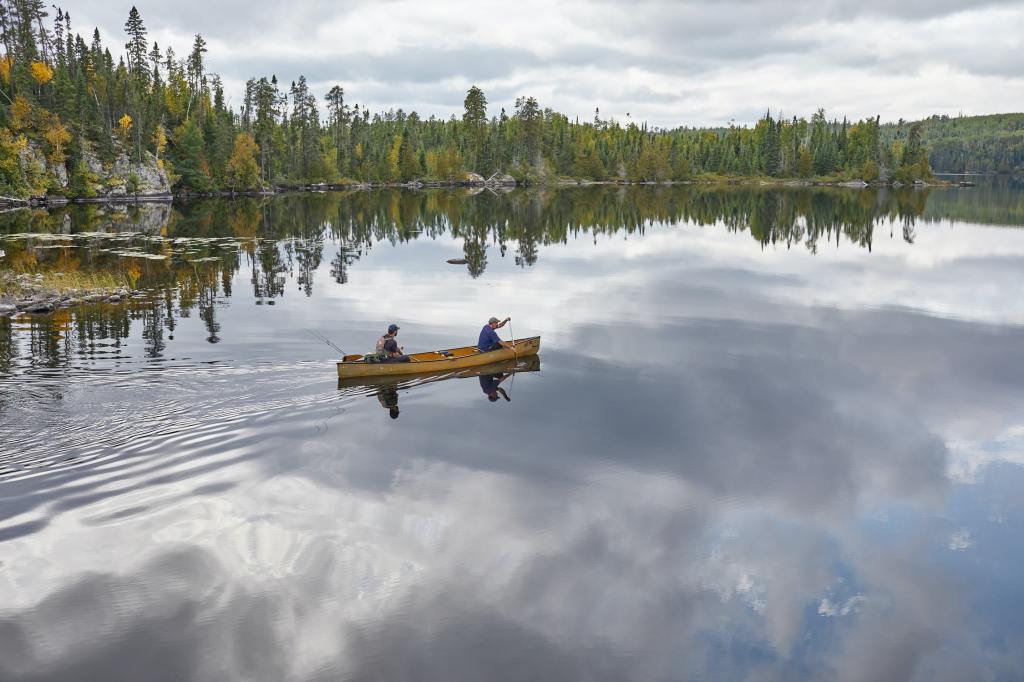
Spencer Shaver and Hal Herring paddle through the Boundary Waters Canoe Area Wilderness in Minnesota. (Photo by Jim Hurst)

The documentary gives three endangered areas special attention. One is Minnesota’s Boundary Waters, which attract canoers and other nature-lovers to the state and create thousands of local jobs. Another is the Bears Ears area of Utah, considered sacred by Native Americans. Finally, there’s the Arctic National Wildlife Refuge in Alaska, home to the caribou on which the Gwich’in people rely for their survival.

Each of these areas has its defenders, one of the most devoted being Bernadette Demientieff of the Gwich’in Nation. She and other activists are shown gathering support and debating critics in attempts to fight off intrusions by would-be exploiters with deep pockets. But their efforts begin to seem futile once the Trump administration puts its finger on the scales.

Educational, inspiring and, most of all, troubling, Public Trust is ultimately a call to arms against those who seek to steal our national heritage for the sake of a quick profit.

Rating: 4½ stars (out of 5)

Public Trust (no MPAA rating) is available via YouTube beginning Sept. 25, with more outlets to be added at a later date.

Teaching self-respect one drumbeat at a time

River City Drummers
Members of Louisville’s River City Drum Corp hold forth in a typically spirited number.

By Richard Ades

“Black arts matter!” Ed “Nardie” White declares early in River City Drumbeat. That’s the central message of the documentary, which focuses on the institution White created nearly three decades ago to help young African Americans forge their own future.

The River City Drum Corp teaches Louisville youngsters how to make and play drums in routines featuring African-inspired rhythms and spirited choreography. But the group’s real purpose, it’s clear, is to give them a sense of purpose and a sense of direction when it comes to mapping out their lives.

Several scenes explain the real dangers these kids face growing up in neighborhoods with a liquor store on each corner and nearly omnipresent gunfire. In the saddest of these, White recalls the granddaughter he was unable to save from a dangerous lifestyle that resulted in her senseless death.

Directed by Marlon Johnson and Anne Flatte, the 94-minute documentary unfolds in a style that sometimes seems slow and meandering. However, patient viewers will be rewarded with insights into the philosophy that inspired White through the years—and in turn has inspired many of the youngsters who fell under his influence.

River City Drumbeat White
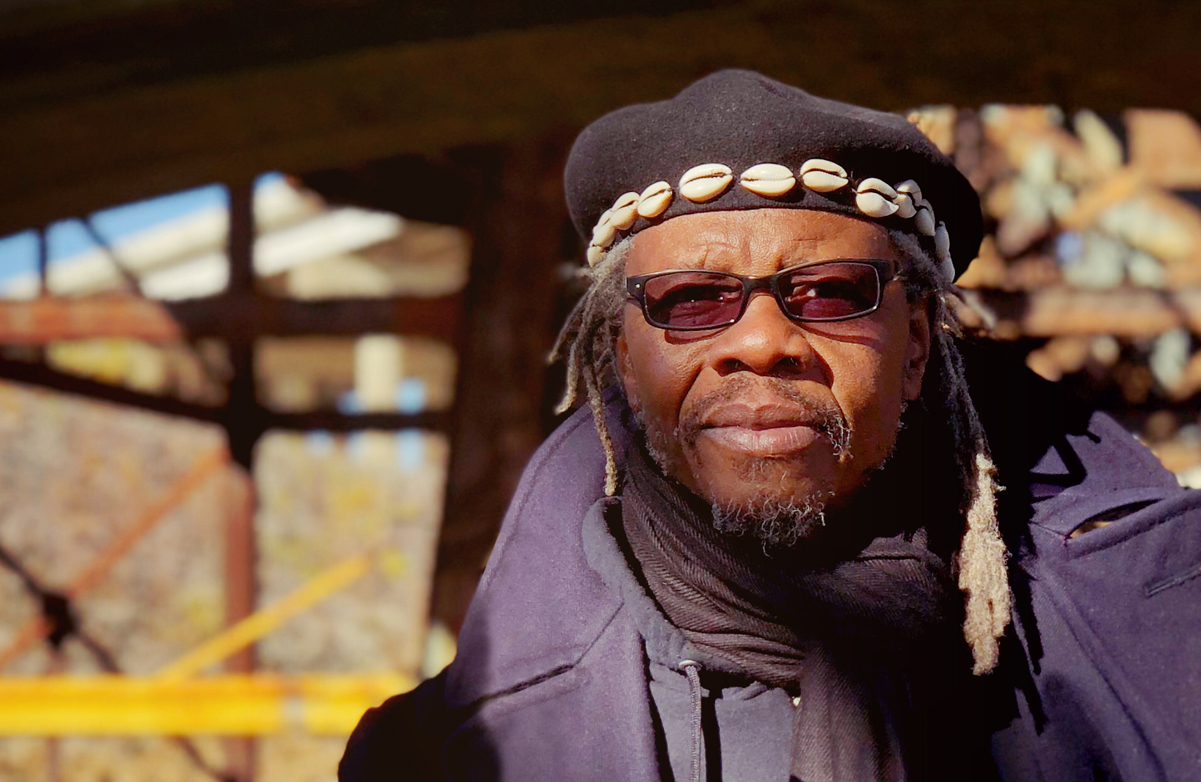
Ed “Nardie” White founded the River City Drum Corp nearly three decades ago.

Spread chronologically over several months, the film follows White as he prepares to turn over his leadership role to one of those grownup youngsters: Albert Shumake, a deejay who is willing to reorder his life to keep the group going. In the process, we learn about the important role White’s late wife, Zambia, played in both men’s lives. It was she who served as Albert’s cheerleader when a teacher told him he would never amount to anything, and it was she who convinced White that the drum group was too important to abandon.

By introducing us to some of the ensemble’s soon-to-be former members—all of them high school seniors with college in their sights—the film demonstrates that Zambia was right.

Rating: 4 stars (out of 5)

River City Drumbeat may be streamed from Aug. 14 through Sept. 10 via Columbus’s Wexner Center (wexarts.org). A 72-hour rental is $12. For other viewing opportunities, visit rivercitydrumbeat.com/screenings.

A burned-out town struggles to return to life

Rebuilding-Paradise-Movie
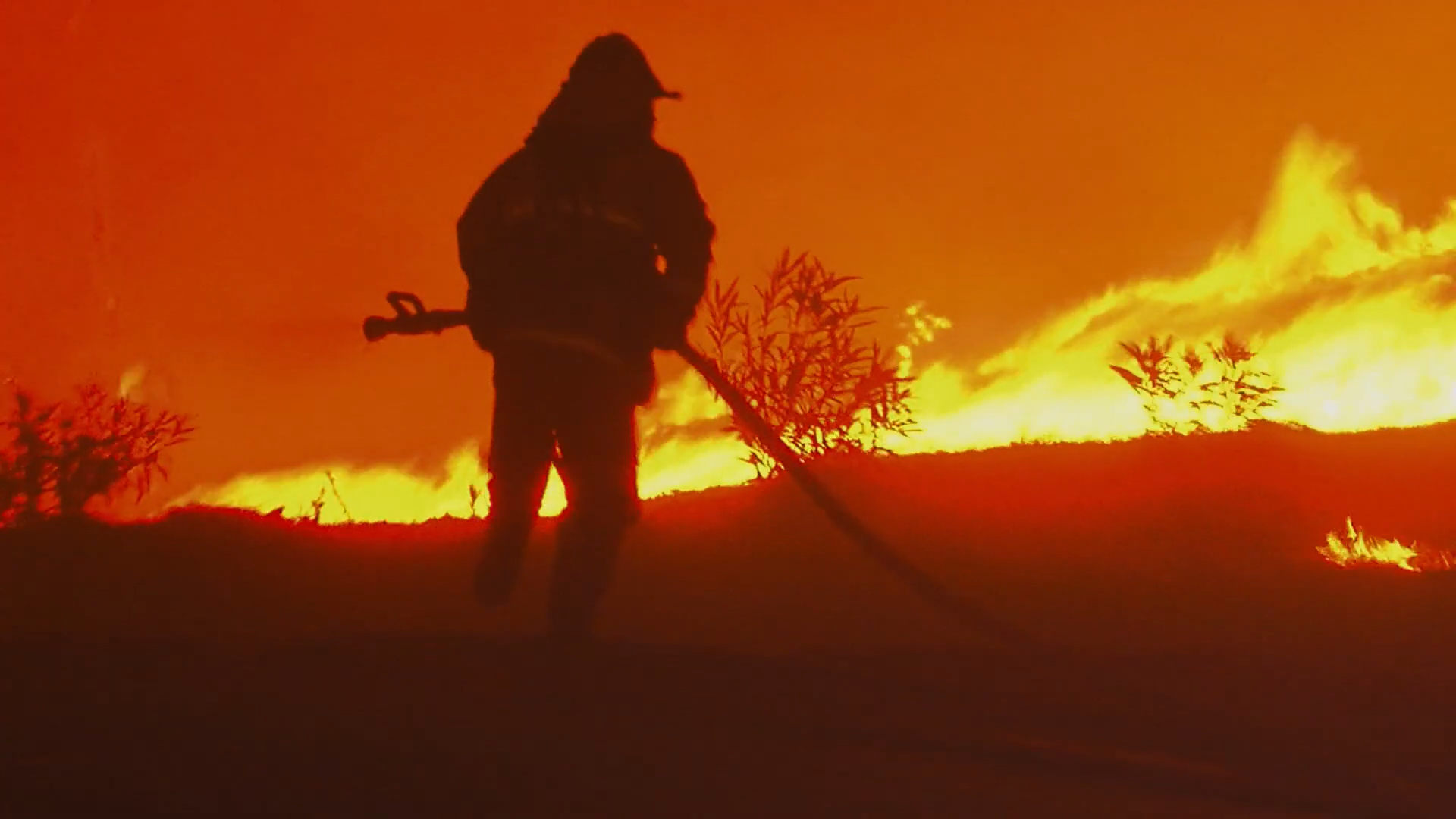
A firefighter faces the deadly Camp Fire in an early scene from Rebuilding Paradise.

By Richard Ades

The first 10 minutes of Rebuilding Paradise are harrowing.

Ron Howard’s documentary is mostly about the aftermath of the November 2018 “Camp Fire” in Paradise, California, but first it shows us the fire itself. With the help of cellphone and dashcam footage, it recreates people’s terror as they attempt to escape a wildfire that engulfed their town only minutes after originating on a nearby hillside.

In one particularly hair-raising moment, we find ourselves inside a vehicle barreling along a road that has turned into a fiery obstacle course. Meanwhile, the air is so filled with smoke that the day appears to have turned to night.

The danger is real, we learn. By the time the fire is brought under control, 85 residents of Paradise are dead. Of those who survive, most have lost their homes, along with schools, municipal buildings and services.

Following this terror-stricken beginning, Howard’s documentary evolves into a month-by-month account of attempts by residents and officials to revive a community that has been largely destroyed. The result is a film that’s sincere and warmhearted.

And, it must be said, just a little dull.

Part of the problem is Howard’s focus on what a close-knit and beautiful community Paradise was, which made its loss so tragic. Though it undoubtedly was beautiful, being located in the foothills of the Sierra Nevada Mountains, it’s hard for those of us who never lived there to share the residents’ nostalgia.

Then again, let’s face it: A big part of the film’s problem is its timing. Much as we want to be sympathetic to the day-to-day challenges faced by the survivors, we can’t help being reminded of our own day-to-day challenges due to a health disaster that shows no signs of winding down.

This is particularly difficult when the film focuses on the tireless efforts of school superintendent Michelle John to keep local classes in session and to give the 2019 seniors a bona fide graduation ceremony. With the benefit of hindsight, we can’t help thinking that it’s all for naught because the following school year will be 10 times as difficult in Paradise and everywhere else.

Howard also tries a bit too hard to show individuals’ community spirit and even heroism. Or maybe it just seems that way because of our own, mid-2020 perspective. Having witnessed some of our own fellow citizens refusing to even slap on a mask to promote the general good, we know all too well that not everyone reacts to disaster in a selfless way.

Is the film looking at the Camp Fire aftermath with rose-colored glasses? The question comes up in relation to one of its most heroic figures, Matt Gates, a police officer who works to raise spirits through efforts such as organizing a Christmas tree-lighting ceremony. Then, late in the film, we suddenly learn that Gates and his wife have separated. Why? We’re never told, maybe because Howard doesn’t want to tinge his warm portrait of the town with a hint of negativism.

In a break from the general positivity, Rebuilding Paradise points out that there are culprits here as well as victims. The main culprit is Pacific Gas & Electric, whose failure to maintain its power lines caused the spark that set off the deadly fire. More generally, the culprit is poor forest management, which makes the area vulnerable to wildfires due to young growth that burns quickly.

More generally still, as the film notes briefly, the culprit is climate change. Yet no fingers are pointed at those who’ve ignored the problem and have even gone out of their way to deny it exists.

To pick out the most obvious example: Donald Trump is shown talking about his post-fire visit to the town—which he accidentally calls “Pleasure”—but the film doesn’t report his odd theory that wildfires like this could be prevented if California just raked out the forest floors once in a while. Nor does it mention the administration’s ongoing attempts to undermine environmental regulations.

Perhaps the film’s sponsor, National Geographic, is afraid of unnecessarily aggravating the Trump administration. Or perhaps director Howard is more interested in the personal rather than the political. Whatever the reason, the result is a portrait of loss, courage and perseverance that—due to reasons both in and beyond the filmmaker’s control—comes off as needlessly bland.

Rating: 3 stars (out of 5)

Rebuilding Paradise (PG-13) is available beginning July 31 through VOD outlets or Columbus’s Gateway Film Center (gatewayfilmcenter.org).

Former ‘Moonie’ struggles to move on

Blessed Child Cara Jones 1
Cara Jones (center) is married in one of the Unification Church’s typical mass weddings. Her marriage later ended in divorce.

By Richard Ades

In the 1970s, the country was struggling to recover from the dual tragedies of the Vietnam War and the Watergate scandal that toppled the Nixon presidency. That helps to explain why so many Americans were attracted to the “Moonies,” a Korean-born cult that promised to unite and heal the world.

Blessed Child is a documentary by and about a woman who was raised in a Moonie family and found the religion a comfort and an inspiration—until it wasn’t. Then it became an impediment to her happiness and threatened to drive a wedge between her and her devout parents.

Directed by Cara Jones and filmed by her brother Bow, the doc is a gentle yet wrenching portrait of a family that was at first united and later divided by the Rev. Sun Myung Moon’s Unification Church.

An early voice-over explains the church’s unique ideology. Moon believed in the power of marriage to help the world overcome sin and prejudice. Accordingly, he regularly organized mass weddings of couples he’d personally “matched,” often with the express purpose of combining people from different ethnic and religious backgrounds. He also discouraged premarital relations, being convinced that sex was the “original sin” that had driven Adam and Eve from the Garden of Eden.

Moon’s belief system appealed to idealistic young people like Cara’s future father, Farley Jones, who converted in the ’60s. Farley then persuaded a Catholic girl named Betsy to join up, and the two married (after being matched by Moon) and proceeded to raise four sons and a daughter in the Unification Church.

Contemporary interviews and home movies reveal that the family became something akin to Moonie celebrities after Farley was named president of the faith’s American branch. So prominent were they that young Cara began to hope she eventually would be matched with one of Moon’s own sons. It’s probably not a coincidence that her faith began to wane when she wasn’t, instead being paired with a man who felt more like a younger brother than a husband. But by the time her marriage ended in divorce, it also had become clear that Moon wasn’t quite as pure and angelic as he’d seemed.

While it spends sufficient time explaining the eccentricities and shortcomings of the Unification Church, Blessed Child’s main theme is the lasting effect it’s had on former members like Cara. Long after leaving the church, many still struggle with feelings of failure and regret that make it difficult to get on with their lives. And it’s all the harder for people like Cara whose parents remain true believers.

If the documentary has one weakness, it’s that Cara’s central tale is almost overshadowed by that of her brother Bow. As a boy who realized early on that he was gay, Bow couldn’t feel at home in a faith devoted to heterosexual marriage. And yet he was—and apparently still is—as susceptible as anyone to its idealistic vision of a world united by love and acceptance.

Blessed Child takes us on an engrossing journey as it relates Cara’s efforts to heal old wounds and come to terms with her past. Even so, the closing credits may leave viewers with a nagging question: But what about Bow?

Rating: 4 stars (out of 5)

Blessed Child (no MPAA rating) is available beginning July 17 on iTunes, Google and Amazon.

Small moments define Oscar-nominated documentary

Honeyland 2-7-20
Beekeeper Hatidze Muratova tends to one of her hives while a young neighbor watches in a scene from Honeyland.

By Marilyn Fais and Richard Ades

Note: Guest critic Marilyn Fais helps review Honeyland, a film from North Macedonia that has been nominated for Academy Awards in two categories: Documentary and International Feature. Directed by Tamara Kotevska and Ljubomir Stefanov, the film originally was meant to be a short documentary about the land surrounding a river in the country’s central region. Then the filmmakers met Hatidze Muratova, a 50-something woman eking out a living as a beekeeper, and they ultimately decided to focus their lens on her unusual life.

If you decide to see Honeyland, don’t expect any big moments, but expect to be captivated by many small moments. Taking place in a remote area of North Macedonia, the film follows one woman, Hatidze Muratova, as she goes about her subsistence life as a beekeeper.

She’s in her mid-50s and lives with her ailing mother. They have no neighbors, and it appears they’re the only people around for miles.

Then they get neighbors—a large nomadic family led by Hussein and Ljutve Sam—and the interactions that follow add new complications to Hatidze’s difficult existence. Between her reactions to these newcomers and her brief but poignant talks with her mother, viewers gain new insights into Hatidze’s life and philosophy.

In the process, they also gain insights into the challenges faced by anyone attempting to live in harmony with the natural world. These make this unusual film both intensely personal and sadly universal.

Rating: 4 stars (out of 5)

Honeyland opens Feb. 7 at the Gateway Film Center in Columbus.