Risks, bravery pay off in trio of 2024 masterworks

A motion-captured Jonno Davies plays a simian version of British pop star Robbie Williams in Better Man. (Photo courtesy of Paramount Pictures)

By Richard Ades

This is the time of year when critics get a chance to catch up on recent flicks they might have missed, courtesy of studios in search of buzz and, hopefully, award nominations. While I don’t claim to be clairvoyant when it comes to the latter, I can confidently say this: If the Oscars and other competitions gave out prizes for bravery, these three films and their creators would win hands down.

One filmmaker displays creative courage by breaking the mold in a familiar genre, while the others put their liberty and even their lives at risk in order to bring their truths to the screen.

Let’s look at them one by one.

Biopic with a difference

By now, we all know the drill when it comes to film biopics: The would-be celeb claws his or her way to the top, but success comes at a steep cost. Friends are abandoned, spouses are cheated on, and alcohol and/or drugs are abused.

Better Man, based on the life of British pop superstar Robbie Williams, follows that general pattern, but with a difference. The entire story unfolds through the eyes (and narration) of Williams himself, who emerges as someone who desperately wants fame but is convinced he doesn’t deserve it.

And, oh yes: Williams is portrayed by a CGI-generated chimpanzee (a motion-captured Jonno Davies). It sounds weird—and, frankly, it is—but it also makes sense in a brilliant and emotionally satisfying way.

Even as a child, Williams suffers from self-doubt, self-loathing and what he later comes to identify as depression. By making him the lone ape in a world of humans, the film has found a clever way of symbolizing Williams’s fear that he’s an imposter unworthy of the success he seeks.

Directed with theatrical flair by Michael Gracey (The Greatest Showman), Better Man is marked by gee-whiz, over-the-top production numbers and surreal fantasy sequences, in addition to its simian protagonist. But what really sets it apart is its honesty and warmth.

Despite being depicted as an ape, Williams comes off as a recognizably flawed human who earns our sympathy, as well as the heart-on-its-sleeve sendoff the film gives him. Director Gracey’s gamble has paid off with a flick that’s as moving as it is massively entertaining.

Rating: 4½ stars (out of 5)

Better Man (rated R) opened Dec. 25 in select theaters and expands nationwide Jan. 10.

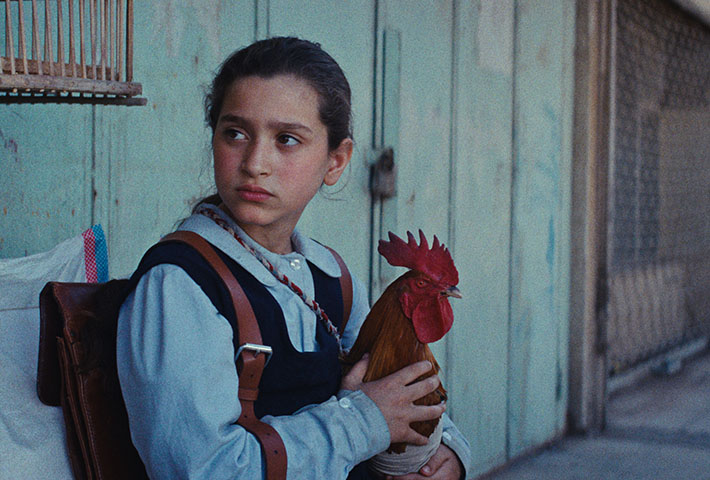
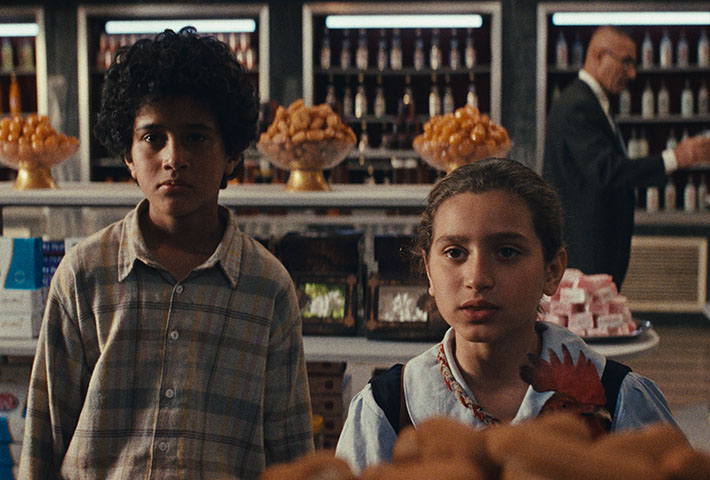
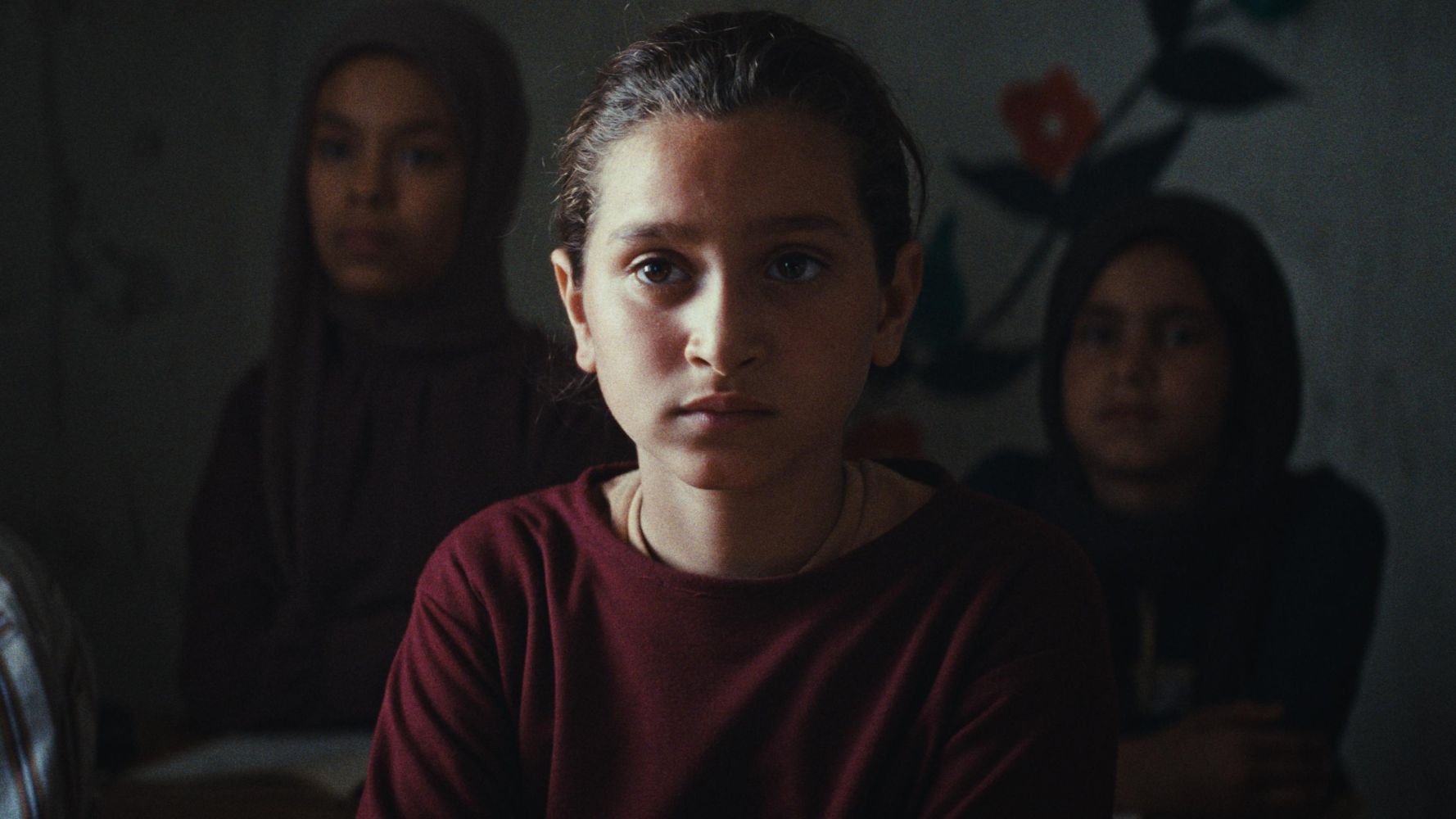
National unrest and a missing gun upset the lives of Iranian student Rezvan (Mahsa Rostami, center), her mother (Soheila Golestani, left) and sister (Setareh Maleki) in The Seed of the Sacred Fig.

Criticizing—and then escaping—Iran

As an attack on Iran’s government and justice system, The Seed of the Sacred Fig is the kind of film that can’t be made in that country. And yet veteran writer/director Mohammad Rasoulof succeeded in making it—in secret—before fleeing to Europe for his own safety.  

The thriller concerns Iman (Missagh Zareh), who aspires to be a judge but learns that the path to success will force him to ignore his moral compass. He lands a position that requires him to sentence people to death without being given a chance to consider the evidence.

As it turns out, the position endangers more than just his conscience. Because of the job’s controversial nature, he and his wife, Najmeh (Soheila Golestani), and their family are forced to live in secrecy. Meanwhile, daughters Rezvan and Sana (Mahsa Rostami and Setareh Maleki) become embroiled in the widespread unrest that erupts after a young woman is beaten and killed for not sufficiently covering her head.

Then the gun that Iman keeps for protection turns up missing, and the national turmoil threatens to spread to his household as he searches for the culprit. Interrogations ensue, along with a car chase and a tense finale that may remind some of a certain horror film set in a snowbound hotel. 

Considering it was made in secret and by a director who’d already gotten in trouble for earlier works, The Seed of the Sacred Fig should fill viewers with admiration for Rasoulof’s resourcefulness, as well as his courage. The film deserves an Oscar nomination, but it probably won’t get one, because who would nominate it? Certainly not Iran.

Rating: 4½ stars (out of 5)

The Seed of the Sacred Fig (PG-13) can be seen in select theaters and is scheduled to open Jan. 30 at Columbus’s Gateway Film Center.

Palestinian activist Basel Adra (left) joins forces with Israeli journalist Yuval Abraham in the documentary No Other Land.

Palestinian, Israeli expose West Bank abuses

Basel Adra has spent years documenting the Israeli army’s systematic attacks on his West Bank community, Masafer Yatta. In No Other Land, he continues that work along with Israeli journalist Yuval Abraham and fellow writer/directors Hamdan Ballal and Rachel Szor.

The result is an eye-opening expose of the abuses Adra and his Palestinian neighbors have had to endure living in the occupied territory. Houses and other buildings are destroyed on the shortest of notices and flimsiest of excuses, such as that the army needs the land for training exercises. Those who want to rebuild are told to get permits that they know are unobtainable.

Much of the film consists of footage taken with amateur video equipment or cellphones. It shows locals trying in vain to reason with soldiers, government officials and, in some cases, illegal Israeli settlers, all of whom are clearly trying to force them to abandon their rural community.

Other footage, shot by Szor, centers on the growing friendship between the Palestinian Adra and Israeli journalist Abraham, who are allied by their concern over the situation but separated by their approaches to dealing with it. Abraham is frustrated that his muckraking stories have had so little impact, but Adra counsels patience, saying a solution could take years or even decades.

The differing approaches reflect the men’s vastly different backgrounds. While Abraham is relatively new to the situation, Adra has been dealing with it for much of his life. In the face of constant, officially sanctioned abuse, he and his neighbors have no recourse but to greet it with steadfast determination and even flashes of dark humor.

Made under the most difficult of circumstances, No Other Land is a portrait of courage that is, in and of itself, an act of courage.

Rating: 5 stars (out of 5)

No Other Land is available through VOD outlets and can be seen at select theaters beginning Jan. 31.

Different century, same misery

Les Miserables 2
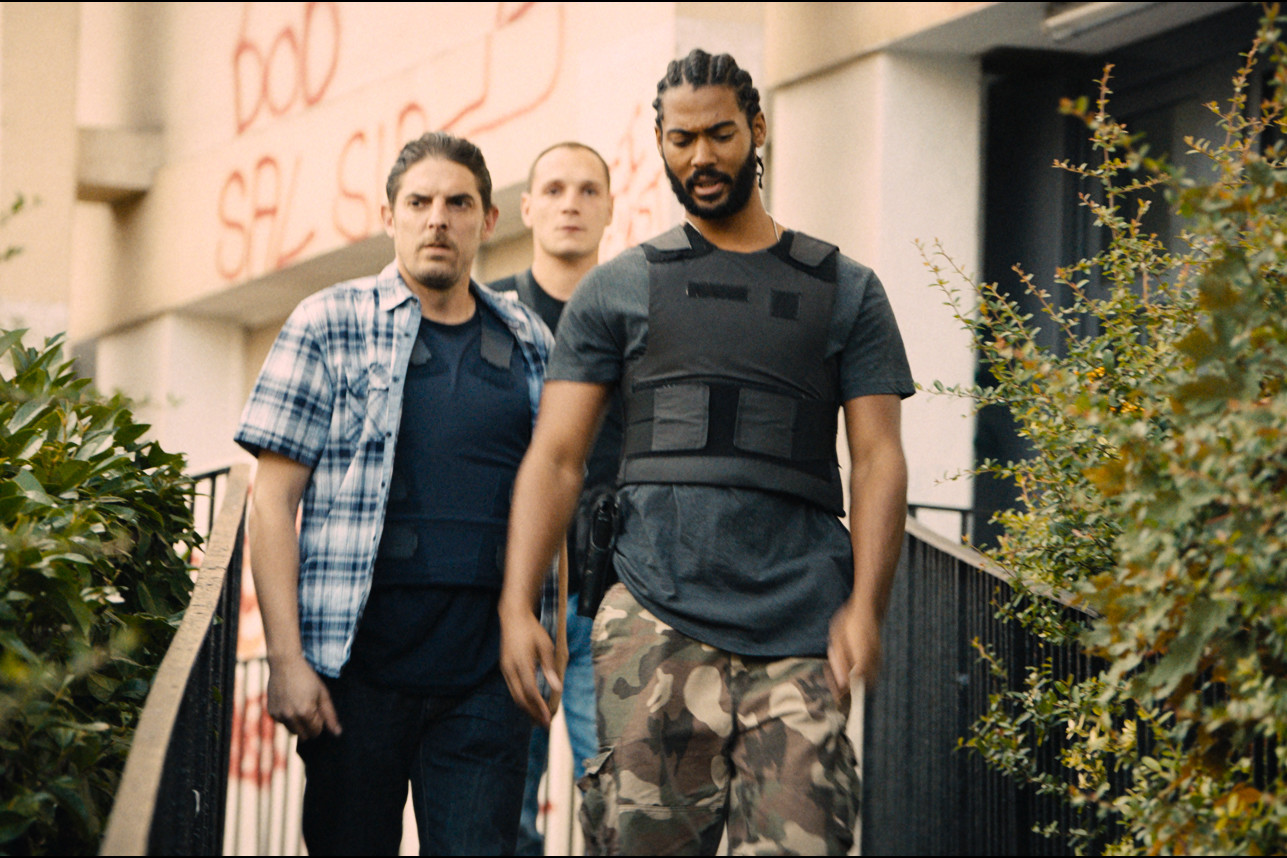
Three plain-clothes cops (Damien Bonnard, Alexis Manenti and Djibril Zonga, from left) patrol a poor Parisian neighborhood in Les Misérables. (SRAB Films/Rectangle Productions/Lyly Films)

By Richard Ades

As Les Misérables opens, a group of dark-skinned youths joyfully celebrate France’s 2018 World Cup championship by taking part in a public event that includes a mass rendition of “La Marseillaise.” Director Ladj Ly’s apparent message: Despite being immigrants or the children of immigrants, the boys consider themselves just as French as those around them.

As Ly’s camera follows them back to their segregated Parisian neighborhood, however, we realize they don’t enjoy the same opportunities as their countrymen. This isn’t Victor Hugo’s Les Misérables—there’s no Jean Valjean, no Javert, no idealistic revolutionaries. But there’s more than enough injustice to light the fuse of revolt, just as it did in Hugo’s tale.

The question is: Will it? Leading up to the answer is a harrowing dive into the lives of modern-day immigrants.

The Malian-born Ly, directing and co-writing his first full-length film, doesn’t create a one-sided portrait of discrimination. Those who take advantage of the local residents include a racist white cop named Chris (Alexis Manenti), but they also include the neighborhood’s black “Mayor” (Steve Tientchev), who uses his power to line his own pockets. There’s also a group of thugs who consort with the police to further their illegal activities.

We’re introduced to the resulting cauldron of resentment through the eyes of newcomer Stephane (Damien Bonnard), a divorced cop who’s moved to Paris to be closer to his young son. He’s assigned to ride along with Chris and his Malian-French partner, Gwada (Djibril Zonga), and soon becomes appalled by the liberties Chris takes with residents—for example, finding excuses to body-search teenage girls.

But before he can decide how to respond, Stephane and the others are thrown into the middle of potentially explosive situation brought on by a seemingly small crime: the theft of a lion cub from a traveling circus. This brings them into contact with two local boys—the trouble-prone Issa (Issa Perica) and the drone-flying Buzz (Al-Hassan Ly)—as well as a devout Muslim restaurateur named Salah (Almamy Kanoute). Thus begins a chain of events that results in unforeseen consequences for all concerned.

Why name this contemporary tale Les Misérables? That’s spelled out when the film ends with a quote from Hugo: “There are no such things as bad plants or bad men. There are only bad cultivators.”

Viewers may quibble about whether Ly has proved the maxim, just as they may differ on whether it should win the “International Feature Film” Oscar for which it’s been nominated. (Probably not, as South Korea’s Parasite seems a worthy shoo-in.) But they’re likely to agree that Ly has created an exciting cautionary tale and an impressive full-length debut.

Rating: 4 stars (out of 5)

Les Misérables (rated R) opens Jan. 24 at the Drexel Theatre and Gateway Film Center.