An animated sequence depicts Pelagia Radecka, a young resident of Gniewoszów, Poland, searching for survivors of antisemitic violence in 1945.
By Richard Ades
My community is getting ready for the annual Columbus Jewish Film Festival, but a local theater is beating it to the punch with one of the most powerful Holocaust-related documentaries you’re likely to see this year.
Among Neighbors, directed by Yoav Potash (Crime After Crime), is about the tragic and lasting effects World War II had on the town of Gniewoszów, Poland. The film is at once a history lesson, a tale of survival and a portrait of humanity at its best and its absolute worst.
It’s also a mystery, one whose solution isn’t provided until the film’s final moments.
Because the documentary does so much, and because Potash waits so long to connect seemingly disparate parts, it sometimes comes off as disjointed. But the dramatic end justifies the director’s suspense-building means, and the film is never less than compelling along the way.
Using a combination of contemporary interviews, archival footage and eloquent hand-drawn animation, Potash introduces us to Gniewoszów both past and present.
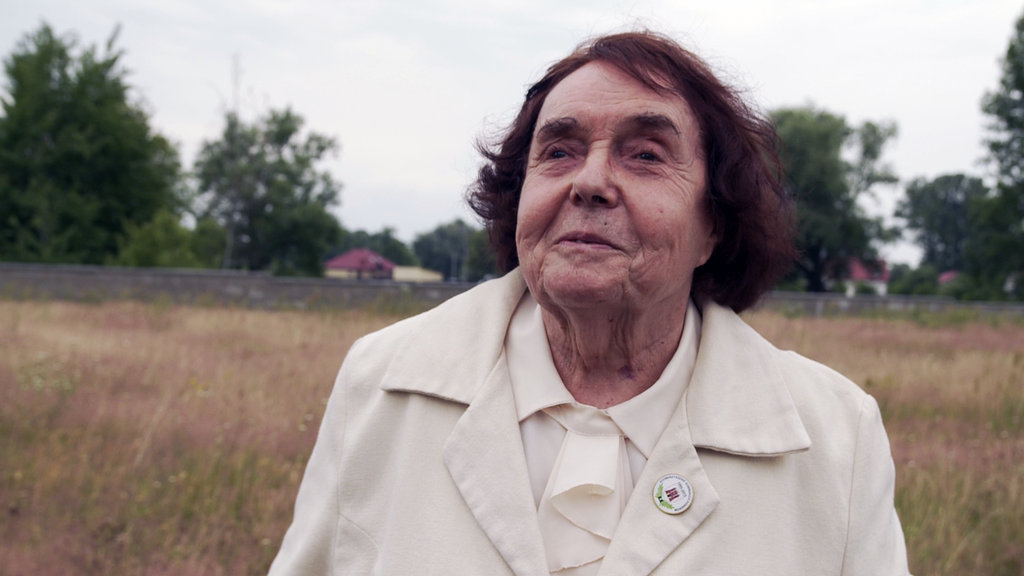
Pelagia Radecka, a Catholic resident of Gniewoszów, witnessed an act of antisemitic violence after the Nazis left her town.
In the past, Jews and Catholics lived together as neighbors and sometimes as friends, just as they had for centuries. But that all changed when Nazi Germany invaded Poland at the beginning of World War II and began instituting antisemitic restrictions that eventually evolved into roundups and death camps.
In response, a few Poles came to their Jewish neighbors’ defense, but more went along with the restrictions and even benefited from them. And some adopted the Nazis’ antisemitic and violent ways, even after the Germans had been driven out.
As a result, Gniewoszów became a town whose Jewish residents have disappeared along with all traces of their former presence in the community. And most of its current residents are reluctant to talk about what happened to them, particularly since a 2018 law makes it illegal to suggest that Poles were in any way complicit in the Holocaust.
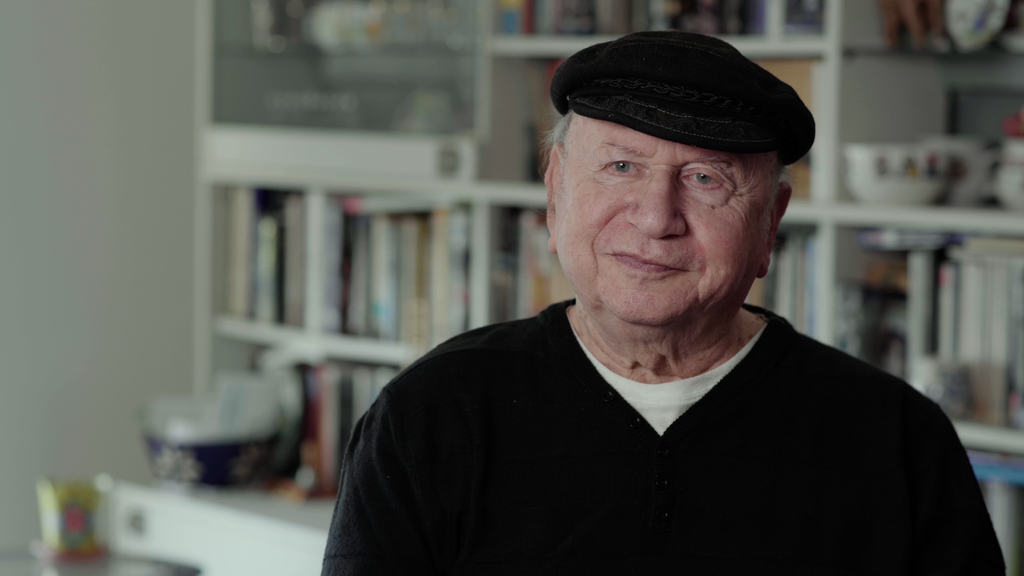
Yaacov Goldstein, a Jewish resident of Gniewoszów, survived the Holocaust and later moved to Israel.
Luckily for Potash, he’s able to find a few elderly residents who were alive during World War II and can be coaxed into telling what they remember. Two of them stand out:
˖ Yaacov Goldstein, a Jew who was a boy during World War II and later moved to Israel, tells the harrowing story of his parents’ efforts to survive and to protect him and his younger brother from the Nazis.
˖ Pelagia Radecka, a Catholic resident who was a teenager during the war, recalls being friends with the Jewish shopkeepers and their son who lived across the street. She also recalls witnessing a shocking act of antisemitic violence that occurred after the Germans had been driven out.
Bravely, Radecka is eager to talk about this act, even though she’s kept it to herself ever since, and even though talking about it amounts to a violation of Polish law.
Besides being a portrait of the highs and lows humans are capable of, Among Neighbors is a critique of societies that attempt to erase their sordid pasts. For Americans, living at a time when our own government is attempting to do the same, it could not be more timely.
Rating: 4½ stars (out of 5)
Among Neighbors can be seen in select theaters, including Columbus’s Gateway Film Center, with screenings scheduled at 1:30 p.m. Oct. 25 and 26. For a list of other upcoming screenings, visit amongneighbors.com/screenings.
Benji Kaplan (Kieran Culkin, left) and his cousin David (Jesse Eisenberg) get reacquainted while touring Polish Holocaust sites in A Real Pain. (Photos courtesy of Searchlight Pictures)
By Richard Ades
When Jesse Eisenberg made his debut as a writer/director with 2022’s When You Finish Saving the World, some found its depiction of familial squabbles heavy-handed and its characters insufferable.
Now Eisenberg is back with another comedy-drama about family relations, and he seems to have taken the criticisms to heart. A Real Pain’s two leading characters are flawed but likable, and its depiction of their squabbles is hardly heavy-handed. To the contrary, Eisenberg makes us work to figure out just what is behind them.
David Kaplan (played by Eisenberg himself) is a successful New Yorker with a wife and young son. His cousin Benji (Kieran Culkin) is single, jobless and lives in his mother’s upstate home.
Though the two were close boyhood friends, they’ve grown increasingly distant as adults, separated by their lifestyles and personalities as much as by geography. Now, however, they have a chance to reconnect thanks to their late grandmother, a Holocaust survivor who left them money specifically set aside for a visit to her native Poland.
So the cousins fly to Warsaw to join a multi-day tour of Holocaust-related sites led by a Brit named James (Will Sharpe). Also on the tour are a recently divorced American (Jennifer Grey) and a Rwandan-born Jewish convert (Kurt Egyiawan), among others. Each is briefly introduced, but Eisenberg keeps his main focus on the two cousins and their increasing discomfort with each other.
David, uptight and buttoned-down, watches with simmering resentment as the unrepressed Benji easily connects with other members of the group. For his part, Benji complains that David has made little attempt to see him recently, and he pushes him to smoke pot and otherwise reclaim some of the wildness that made them inseparable childhood companions.
Benji (Kieran Culkin) gives his cousin David (Jesse Eisenberg) a hug while following other members of their tour group.
As the tour goes on, the tension between the two grows due to Benji’s increasingly angry and erratic behavior. Whether it’s caused by the loss of his beloved grandmother or other, unidentified problems, it leaves David profoundly uncomfortable. The fact that it’s happening while the group is touring sites intimately connected to the last century’s worst atrocity only adds to the stress.
As an actor, Eisenberg doesn’t stretch himself, playing David much like he’s portrayed other socially awkward characters. As a director, on the other hand, he generously allows Culkin to imbue Benji with passion, unexpected quirks and unexplored depths.
What does it all mean? Eisenberg relies on the viewers to come up with their own explanations for the cousins’ difficult relationship and their disparate responses to the tragic history they’re revisiting. His approach is unobtrusive to a fault—with one exception.
An almost constant companion to the proceedings is a score consisting of works by 19th century piano virtuoso Frederic Chopin. Other than the fact that the composer was Polish, the music seems to have little to do what’s happening onscreen. What’s worse, the dramatic and often familiar passages sometimes upstage what’s going on.
For viewers struggling to find meaning in Eisenberg’s interesting but understated story, it’s an unwelcome distraction.
Rating: 3½ stars (out of 5)
A Real Pain (rated R) opens Nov. 15 in theaters nationwide.
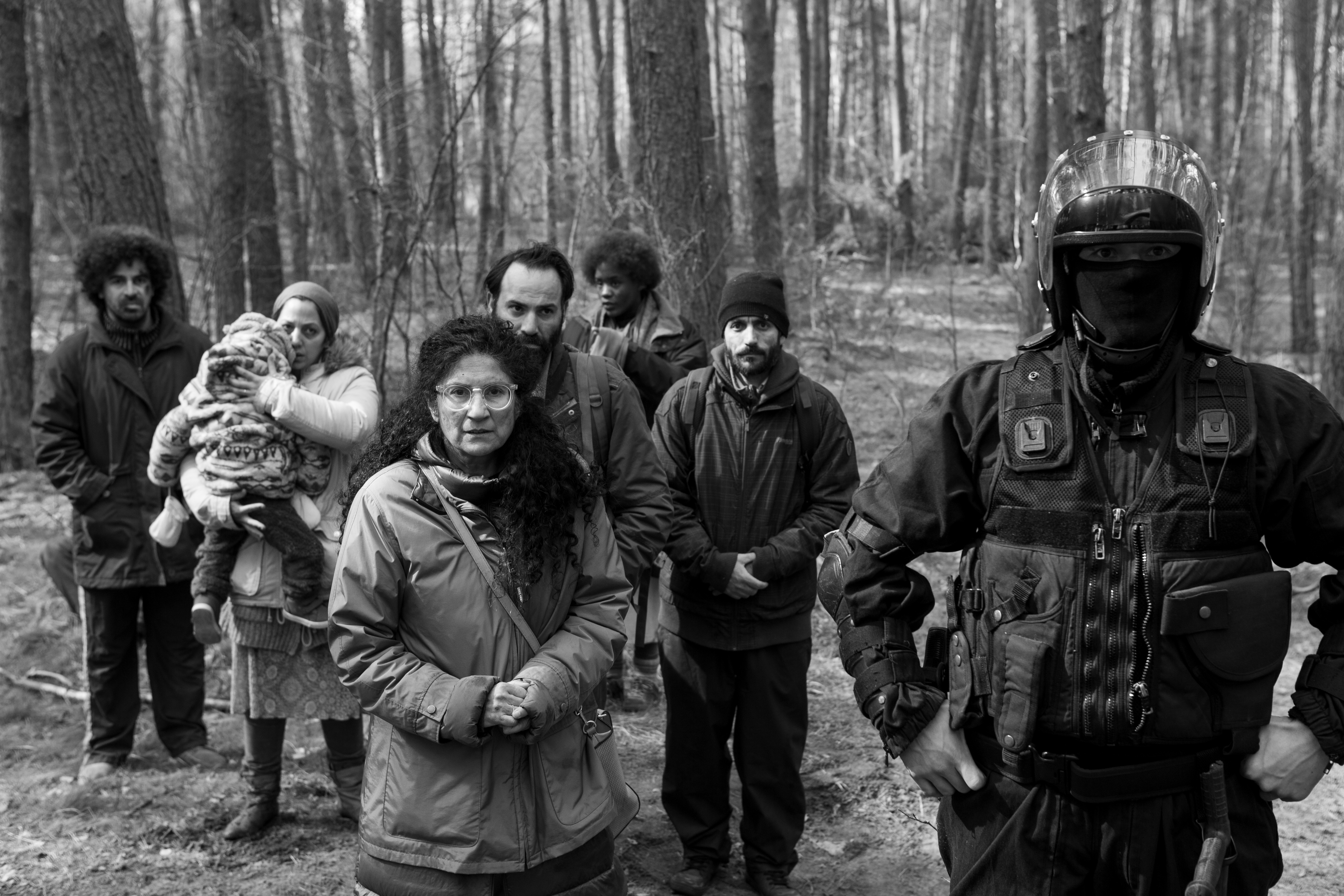
Leila (Behi Djanati Atai, glasses) and other migrants find themselves at the mercy of hostile border guards. (Photos courtesy of Kino Lorber)
By Richard Ades
The life of a migrant is an unending battle for survival.
That was the message delivered by 2023’s Io Capitano, the story of two Senegalese teens’ perilous attempt to reach Europe. And it’s a message that comes across even more terrifyingly in Agnieszka Holland’s Green Border.
The acclaimed director sets her tale in a specific time and place: the border between Poland and Belarus in 2021. The year is significant because that’s when Belarusian dictator Alexander Lukashenko encouraged desperate people from around the world to travel to his communist country, where they supposedly would be guaranteed safe passage to Poland and the rest of the European Union.
As the film opens, we meet several people who’ve taken advantage of Lukashenko’s offer by catching a flight to Belarus. Among them are Bashir and Amina (Jalal Altawil and Dalia Naous), a Syrian couple who are traveling with an older relative and three young children. There’s also Leila (Behi Djanati Atai), an Afghan teacher fleeing Taliban persecution.
Upon landing in Belarus, the Syrians allow Leila to share their prearranged ride to the Polish border. Once there, however, they realize that Lukashenko’s promise of safe passage was a hoax. After being forced to pay a bribe, they’re shoved through an opening in the barbed wire that separates the two hostile countries and left alone in a thick Polish forest with night coming on.
A young migrant girl peers through the barbed wire that separates Poland from Belarus.
But the real shock comes the next day, when they’re discovered by border guards who load them onto a truck and send them back to Belarus.
It soon becomes clear that neither country wants them and that they’re stuck in a kind of limbo, repeatedly being forced back and forth across the barbed-wire frontier. All the while, they’re cheated, derided and even brutalized by the guards and others they encounter.
Basically, this is a horror film, but one that replaces jump scares and gore with an unflinching look at the cruelty ordinary people can inflict on others whom they’ve dismissed as enemies and less than human. In such cases, not even children, elders or pregnant women are deemed worthy of compassion.
Working from a script she co-wrote with Maciej Pisuk and Gabriela Lazarkiewicz, Holland also looks at the migrants’ nightmarish situation from two additional viewpoints. One is through the eyes of Jan (Tomasz Wlosok), a young border guard who’s soon to be a father.
While attending a lecture given by his gung-ho superior, Jan is told that many of the migrants are pedophiles and other deviants, and that all amount to “live bullets” aimed at Poland by the dictator Lukashenko and his Russian buddy, Vladimir Putin. Despite this appeal to prejudice and patriotism, Jan is obviously torn as he goes about a job that frequently offends his sense of decency.
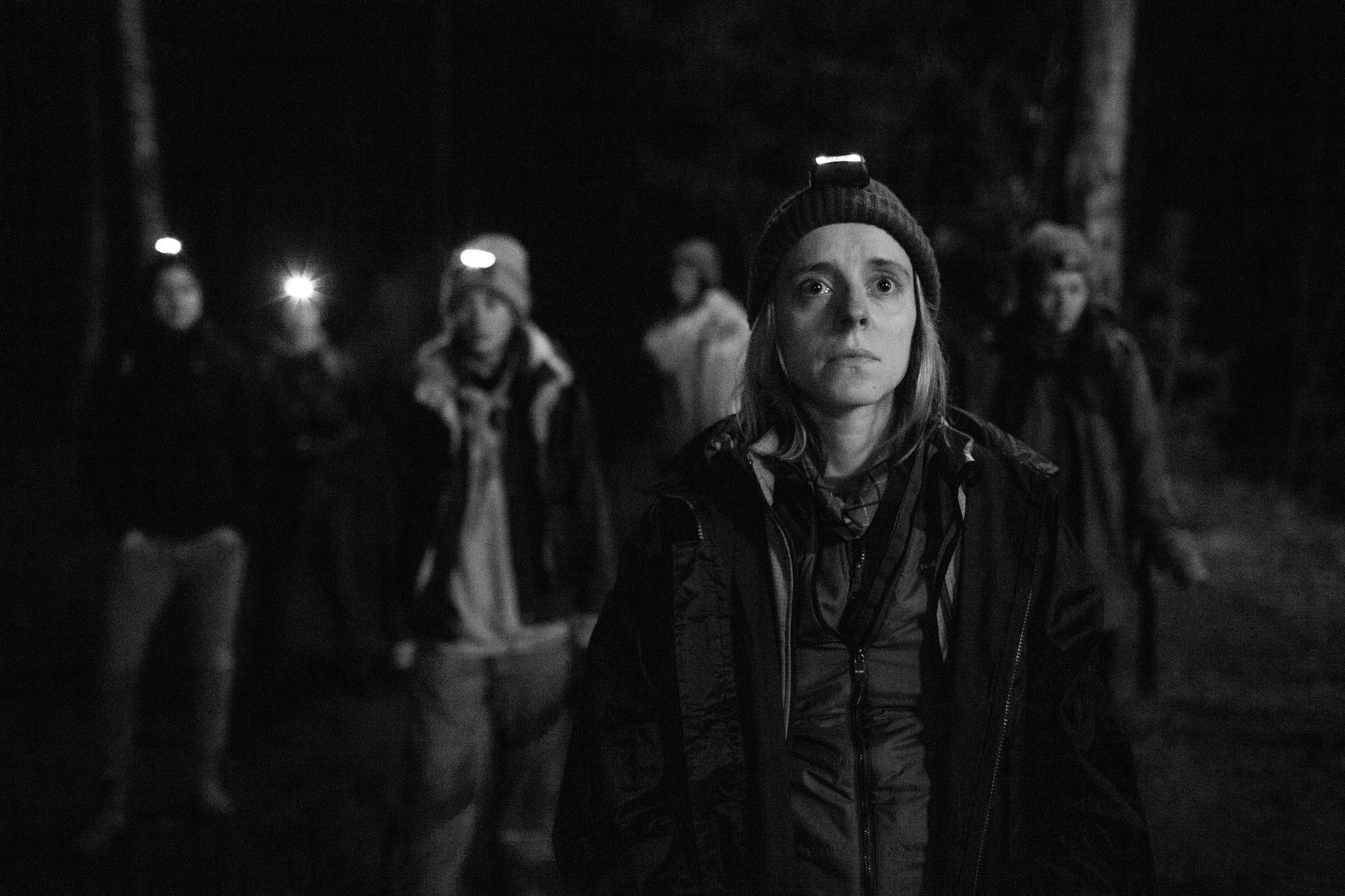
A group of Polish activists search for migrants caught in the no-man’s land between their country and Belarus.
The final viewpoint belongs to a group of activists who work undercover to aid the migrants. A widowed psychotherapist named Julia (Maja Ostaszewska) soon joins them, but she’s dismayed by their ineffectiveness and ultimately decides to take matters into her own hands.
All of the characters are portrayed with discipline and conviction by the cast, whose efforts are complemented by Tomasz Naumiuk’s black-and-white cinematography and Frederic Vercheval’s subtly expressive score.
Eventually, the stories of the migrants and others coalesce in ways that inject slivers of hope into the 2½-hour film. Otherwise, director/co-writer Holland offers few reasons for optimism about the plight of migrants in Europe or anywhere else.
Instead, she suggests that as long as governments can score political points by categorizing these desperate people as a subhuman threat, their suffering will continue.
Rating: 4½ stars (out of 5)
Green Border can be seen at select theaters, with more openings scheduled in the coming weeks. Columbus screenings are scheduled at 7 p.m. Friday, June 28 and 1 p.m. Saturday, June 29 at the Wexner Center for the Arts, and beginning July 5 at the Gateway Film Center. VOD screenings begin Aug. 20.
The widespread assumption is that Germany’s epic All Quiet on the Western Front will nab this year’s International Feature Oscar. For those in the mood for a less warlike viewing experience, however, the other four nominees are well worth considering. They range from a historically based courtroom thriller to somber tales involving, respectively, teenage boys, a pre-teen girl and a down-and-out donkey.
Here, in no particular order, are the other four nominees:
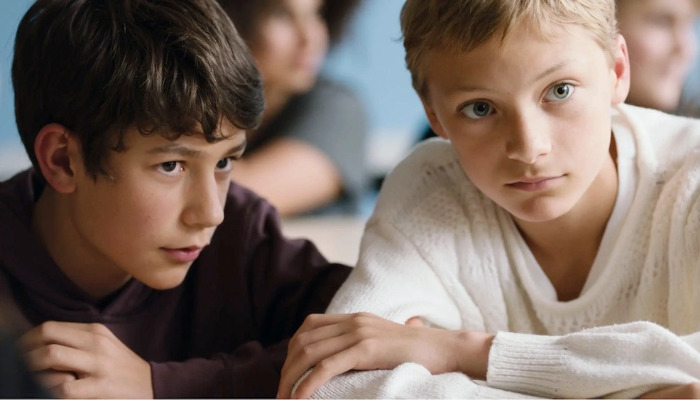
Remi (Gustav De Waele, left) and Leo (Eden Dambrine) are longtime friends in the Belgian film Close.
Growing up, growing apart
Close has an apt title, as the Belgian film is about the unusually tight friendship between two 13-year-old boys.
Leo and Remi (played without artifice by Eden Dambrine and Gustav De Waele) spend most of their days together, hanging out before, during and after school. Often, they even sleep together, sharing a bedroom with the blessing of their parents, especially Remi’s warm-hearted mother.
It’s all innocent and comforting fun until comments from fellow students force them to see their friendship through other people’s eyes. A girl asks if they’re “together,” while boys pummel them with gay epithets. None of this bothers Remi, but Leo responds by suddenly setting boundaries and branching out into activities that don’t involve his lifelong pal. The result is a development that’s heartbreaking, even if not entirely unexpected.
Director and co-writer Lukas Dhont handles all this with sensitivity and naturalistic restraint. It’s only in the aftermath of the aforementioned development that he turns restraint into a fault by delaying and underplaying the inevitable aftershocks. The result is that when they finally do arrive, they’ve lost much of their ability to move us.
Rating: 3 stars (out of 5)
Close (PG-13) is available from VOD outlets and will be screened Feb. 24-26 at Columbus’s Gateway Film Center.
The titular donkey sports a necklace made of carrots in Poland’s EO. (Photo courtesy of Aneta and Filip Gebscy)
Four-legged love story
Polish director Jerzy Skolimowski has made no secret of the fact that EO, his journey through the life of a lowly donkey, was inspired by the 1966 classic Au Hasard Balthazar. The differences couldn’t be starker.
While French director Robert Bresson told his own donkey-centered tale in a typically minimalistic manner, Skolimowski and cinematographer Michael Dymek ply us with images that are often ornate and sometimes surreal. There are strobe effects, infrared effects, POV shots, dreamlike flashbacks and nightmare-like sequences. There’s even a scene involving a mechanical dog that seems to appear out of nowhere.
Story-wise, the two films’ approaches are also different. While Bresson focused on people, the title donkey being merely an unwilling pawn in their difficult lives, Skolimowski turns his leading animal into a full-fledged protagonist.
Essentially, the new film is a love story between EO and Kasandra (Sandra Drzymalska), a woman who takes him under her wing while they’re working together in a traveling circus. After bankruptcy forces the circus to sell off its four-legged performers, the two are separated, but they never forget each other. In particular, EO is haunted by memories of happy moments he shared with Kasandra, which lead him to take actions that don’t always work out in his favor.
Like Bresson’s film, EO lends itself to larger questions about human nature, including our cruelty toward each other and toward the animals in our care. Both works also offer deep levels of allegorical meaning for those into religious, and particularly Christian, symbolism.
So which film is better?
Bresson’s is more perfect in its absolute simplicity, in contrast to which Skolimowski’s cinematic showmanship can be distracting. On the other hand, that showmanship frequently results in strikingly beautiful images. Along with its personable star, that gives EO viewers a lot to love.
Rating: 3½ stars (out of 5)
EO (no MPAA rating) will be available from VOD outlets beginning Feb. 21.
Ricardo Darin (left) and Peter Lanzani star in the fact-based courtroom drama Argentina, 1985.
Dictatorship’s abuse confronted
Argentina, 1985 is based on an actual attempt to bring to justice those who tortured, raped, murdered and “disappeared” thousands of Argentinians during the long reign of a right-wing dictatorship.
Ricardo Darin stars as Julio Cesar Strassera, who’s appointed to prosecute the officials responsible for the former regime’s acts of terror. It’s not a task he accepts gladly, as many of his friends and relatives supported such acts in the name of fighting communism. Among them are most of his colleagues, complicating his ability to form the legal team he needs to take on his monstrous assignment.
Coming to his rescue is Luis Moreno Ocampo (Peter Lanzani), a younger man who’s assigned to serve as Strassera’s deputy. Together, they put together a team consisting largely of idealistic students and instruct them to comb the countryside in search of people who can testify about abuses they suffered at the hands of government-sponsored thugs.
Director/co-writer Santiago Mitre handles this potentially explosive story in a surprisingly low-key manner and even adds touches of humor. That prevents the film from descending into melodrama, particularly when victims of the previous regime finally get the chance to tell their shocking stories in a nationally televised hearing.
One puzzling aspect of the case Strassera presents is that he seemingly makes little effort to connect these repulsive crimes with the suspects. It could be that Mitre simply left out that part of the testimony to underscore the fact that Strasser’s most important task is to convince the divided public that the crimes are worth prosecuting in the first place.
Or, as the prosecutor puts it so powerfully, “Nunca mas.” English translation: “Never again.”
Rating: 4 stars (out of 5)
Argentina, 1985 (rated R) is available through Amazon Prime Video.
Cait (Catherine Clinch, left) is greeted by Eibhlin (Carrie Crowley) after a long journey in Ireland’s The Quiet Girl. (Photo courtesy of EF Neon)
Lonely girl finds temporary reprieve
The Quiet Girl centers on Cait (Catherine Clinch), a 9-year-old who tends to keep to herself. She’s not happy at school, and she’s even less happy in her overcrowded home, where she gets little attention from her overworked mother or her philandering, heavy-drinking father.
Then her mother gets pregnant yet again, and Cait is sent off to live with relatives in another part of rural Ireland until things get back to normal. This turns out to be an unexpected blessing. Her mom’s cousin Eibhlin (Carrie Crowley) welcomes her with the kind of love and warmth she’s never known. And while Eibhlin’s husband, Sean (Andrew Bennett), is stand-offish at first, he puts her to work on their farm and soon begins to show signs of acceptance.
Directed in an appropriately quiet manner by Colm Bairead, who based the Irish-language script on a story by Claire Keegan, this is no maudlin, feel-good flick. We eventually learn that Eibhlin and Sean are hiding a secret whose effect on their lives is painful and intractable. And then there’s the question of Cait’s future: How long will her newfound happiness last if, as planned, she’s forced to return to her family?
Thanks to sensitive direction and fine performances all around, The Quiet Girl reveals its secrets and delivers its answers in a way that will likely leave a lump in your throat. After its Irish cousin, The Banshees of Inisherin, it’s my favorite film of 2022.
Rating: 4½ stars (out of 5)
The Quiet Girl (PG-13) opens in select theaters Feb. 24 and will be screened March 10-12 at Columbus’s Gateway Film Center.








 Reel Time With Richard Ades