Fight for freedom is fueled by revolutionary art

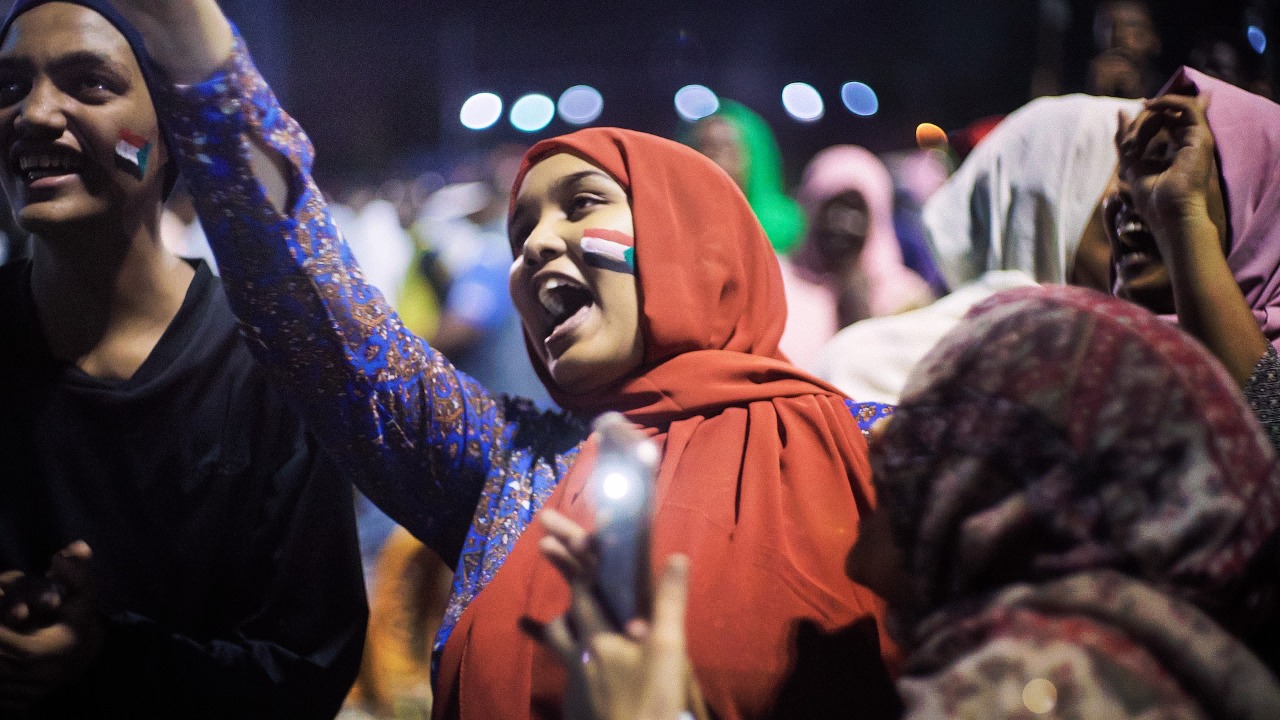
A woman demonstrates against repression in the documentary Sudan, Remember Us.

By Richard Ades

While much of the world is rightfully concerned about what’s going on in Gaza, the northeast African country of Sudan may be the site of even greater misery, if only because its population is far larger. After years of dictatorships, military coups, rebellion and civil war, its people—those who haven’t fled—find life a daily struggle.

The documentary Sudan, Remember Us is a record of the ways young Sudanese rebels tried to head off the current situation by fighting repression and pushing for change. These protesters are remarkable for the courage they display, but also for their creativity, as they often use poetry and other forms of art to make their points.

Written and directed by French-Tunisian filmmaker Hind Meddeb, the doc begins with scenes of military strife in Khartoum in 2023, representing the beginning of the civil war that still engulfs the country. It then flashes back four years to the spring of 2019, when a rebellion has ended the long reign of dictator Omar Al-Bashir.

The victory leaves the rebels, all young and many of them female, filled with optimism and resolve. With signs, murals, chants, songs, poems and sit-ins, they push for the freedoms they were denied under Al-Bashir’s rule.

Unfortunately, Sudan’s window of opportunity for change is short-lived. On the last night of Ramadan, soldiers attack a sit-in demonstration, leaving many of the protesters dead and ushering in a military crackdown.

The main frustration of watching Meddeb’s documentary is that it’s so embedded in Sudan’s struggles that it makes little attempt to explain them to outsiders. We’re seldom told what the political situation is at any particular moment, though the film makes it clear just how the changes affect the gutsy rebels.

After the initial crackdown in 2019, they continue protesting via poetry, songs and other means, but at one point the atmosphere becomes even more ominous. We’re told that the internet has been shut down and that political arrests are now carried out in secret by unidentified men in plain clothes.

This development is guaranteed to send chills down the spines of Americans who’ve noticed the parallels in our own country: the attempts to silence and even defund critical media voices, as well as the expanding army of masked agents who seize people off the streets or at their jobs, often ignoring their rights or legal status.

An important difference is that Sudan doesn’t have America’s history of democracy, though so far it has failed to stop the executive branch’s adoption of an autocratic playbook. On the other hand, Sudan seems to have an unusual affinity for inspirational music, poetry and other art, which buoyed rebels’ spirits and determination when their quest seemed increasingly hopeless.

Any American who was alive back in the 1960s knows that we once had a similar appetite for revolutionary art. Maybe it’s time we got it back.

Rating: 4 stars (out of 5)

Sudan, Remember Us can be seen at select theaters and will open Aug. 15 at the Gateway Film Center in Columbus.

Profiles in struggle: ‘Runner’ and ‘My Darling Vivian’

Runner
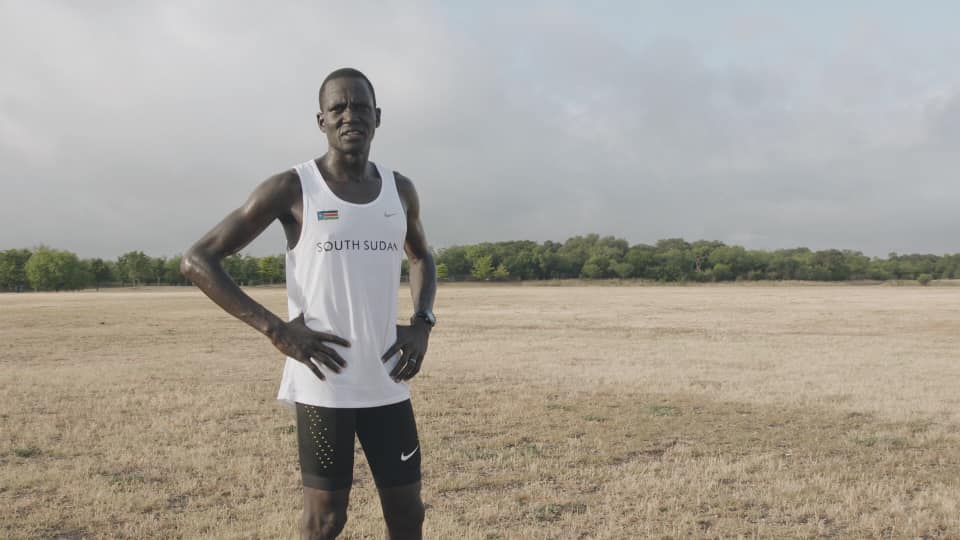
Guor Mading Maker, a refugee who became an Olympic athlete, in Runner

By Richard Ades

Two very different kinds of heroism are on display in documentaries coming out this weekend. One centers on a refugee-turned-Olympic athlete, the other on a celebrity wife and mother-turned-forgotten woman.

First up is Runner, the story of Guor Mading Maker, who was born in Sudan during a decades-long struggle between the Arabic/Muslim northern region and his own African/Christian south.

Director Bill Gallagher uses somber animation to depict Guor’s early years, when his parents reluctantly sent him away for his own safety. But “safety” is a relative term in the midst of a civil war, as he was captured by the enemy and, after escaping, spent four years of his boyhood totally on his own.

Guor’s fortunes finally changed due to a chance encounter with an aunt and uncle, who took him to the U.S. and settled in New Hampshire. There—as the documentary relates via interviews with former high school classmates and coaches—he discovered that running was not merely a survival tool but a sport and even the possible key to a college education and a promising future.

The bulk of the documentary deals with Guor’s Olympic aspirations, which were spread out over several years and were inextricably linked to the political situation in his homeland. He first opted to compete under an international banner, having no desire to run on behalf of the country that destroyed much of his family and nearly killed him. However, when a peace deal opened the possibility that southern Sudan would gain its independence, he had hopes of joining the new country’s first Olympic team.

Most sports fiction eventually leads to a rousing scene of hard-won triumph. Confined by reality, Gallagher’s film can’t do that, but it does deliver stark glimpses of the pain and frustration of competition, mixed with moving depictions of cultural pride and long-delayed reunions. Most of all, it introduces us to a man who has maintained his determination and integrity despite obstacles most of us can’t even imagine.

My Darling Vivian
Vivian Liberto and Johnny Cash during the early, happy years of their marriage

This weekend’s other new documentary, My Darling Vivian, pays homage to the Catholic schoolgirl who became Johnny Cash’s first wife and bore most of his children. Directed by Matt Riddlehoover, it serves as a counterpoint to the 2005 Cash biopic Walk the Line, which some feel was a misrepresentation of who Vivian Liberto really was.

Riddlehoover’s main witnesses are Vivian’s four daughters: singer Rosanne Cash and younger sisters Kathy, Cindy and Tara. Interviewed separately and only occasionally disagreeing on minor details, they present a comprehensive picture of the difficult life their mother led as Cash’s wife, and of the nearly invisible existence she led as his ex-wife. Family photos and archival footage help bring the story to life.

Obviously, the film will appeal most to Cash fans, particularly early scenes that detail how the couple met, fell in love and engaged in a long-distance courtship while Johnny finished his military service. But the account of their difficult marriage, during which Vivian was left to watch over the girls and assorted animals while her husband was away on tour for months at a time, should awaken even non-fans’ empathy. And few will fail to see the injustice of what happened to Vivian after their divorce, when the public forgot her as Johnny and new wife June Carter Cash became the music scene’s new darlings.

The doc makes two things clear: (1) Johnny Cash was an impossible man to live with; and (2) Vivian loved him anyway and always would. It’s also clear that Vivian’s daughters loved her and were eager to undo the damage they felt Walk the Line and time itself had done to her reputation. My Darling Vivian gives them the chance to do just that.

Ratings:
Runner: 4½ stars (out of 5)
My Darling Vivian: 4 stars

My Darling Vivian is available from VOD outlets beginning June 19. For information on how to watch Runner, visit runnerdoc.com.