Giving their all to protect reproductive freedom

Francine Coeytaux (left) is a co-founder of Plan C, an organization devoted to making the abortion pill available and affordable even in conservative states such as Texas.

By Richard Ades

Recent developments in the battle over abortion rights have mostly favored the forced-birth side of the argument. In particular, there’s the Supreme Court’s 2022 decision to overturn Roe v. Wade, emboldening conservative state legislatures that had already been working to restrict access to abortion.

Such developments are disheartening to those who care about reproductive freedom and women’s health care. For them, the documentary Plan C offers a reason to hope. Directed by Tracy Droz Tragos, it introduces us to a group of intrepid women who have been working behind the scenes to keep abortion available and affordable.

The doc is named after Plan C, an organization devoted to spreading information about the “abortion pill” drugs mifepristone and misoprostol. In interviews, co-founders Francine Coeytaux and Elisa Wells talk about the group’s efforts to adapt to the changing political landscape.

The COVID pandemic made their work more important than ever because (1) people seeking a surgical abortion were often prohibited from visiting a clinic, and (2) a mid-pandemic court ruling made the abortion pill available without an in-person medical appointment.

The documentary also introduces us to Just the Pill, as represented by medical director Julie Amaon and clinic director Frances Morales. The group works to deliver the abortion pill to those who need it—when they need it. Its distributors have been forced to shift into hyperdrive to keep clients on the right side of new state laws that prohibit abortion after as little as six weeks.

Supporters of the abortion pill hold a strategy meeting in a scene from Plan C.

Plan C also interviews several medical personnel and patients who prefer to keep their faces and names hidden due to their fear of legal repercussions and even physical attacks from abortion opponents.

Thanks to political rhetoric, abortion has long been a polarizing issue, and it’s becoming even more so as Republican-led legislatures pass increasingly extreme laws. The documentary devotes much of its attention to Texas, where one such law encourages citizens to spy on each other and to sue anyone they suspect of helping someone obtain an abortion. One day, predicts lawyer and journalist Carrie Baker, the Lone Star State will turn to surveillance to ferret out even those who perform their own abortions.

Much of the documentary presents a similarly cautionary viewpoint, as underscored by composer Nathan Halpern’s ominous score. In fact, it may strike some viewers as overly pessimistic, since it fails to note that all the restrictive laws may be sparking a backlash in the form of Republican election losses and statewide votes to protect abortion access—for instance, Kansas’s August 2022 rejection of an attempt to remove constitutional protections for the procedure.  

On the other hand, the film offers one big reason for optimism in its portraits of brave women who have devoted their lives to fighting for reproductive freedom. Their efforts leave even the most jaded observer feeling uplifted and inspired.

Rating: 3½ stars (out of 5)

Plan C opens Oct. 6 in select theaters, including Columbus’s AMC Dublin Village 18, AMC Easton Town Center 28 and the Gateway Film Center.

Character studies dominate Irish doc, U.S. road flick

Tana (Lily Gladstone) takes a cross-country trip in her late grandmother’s Cadillac in The Unknown Country. (Photo courtesy of Music Box Films)

By Richard Ades

Opening this weekend are two indie films that have more in common than you might think.

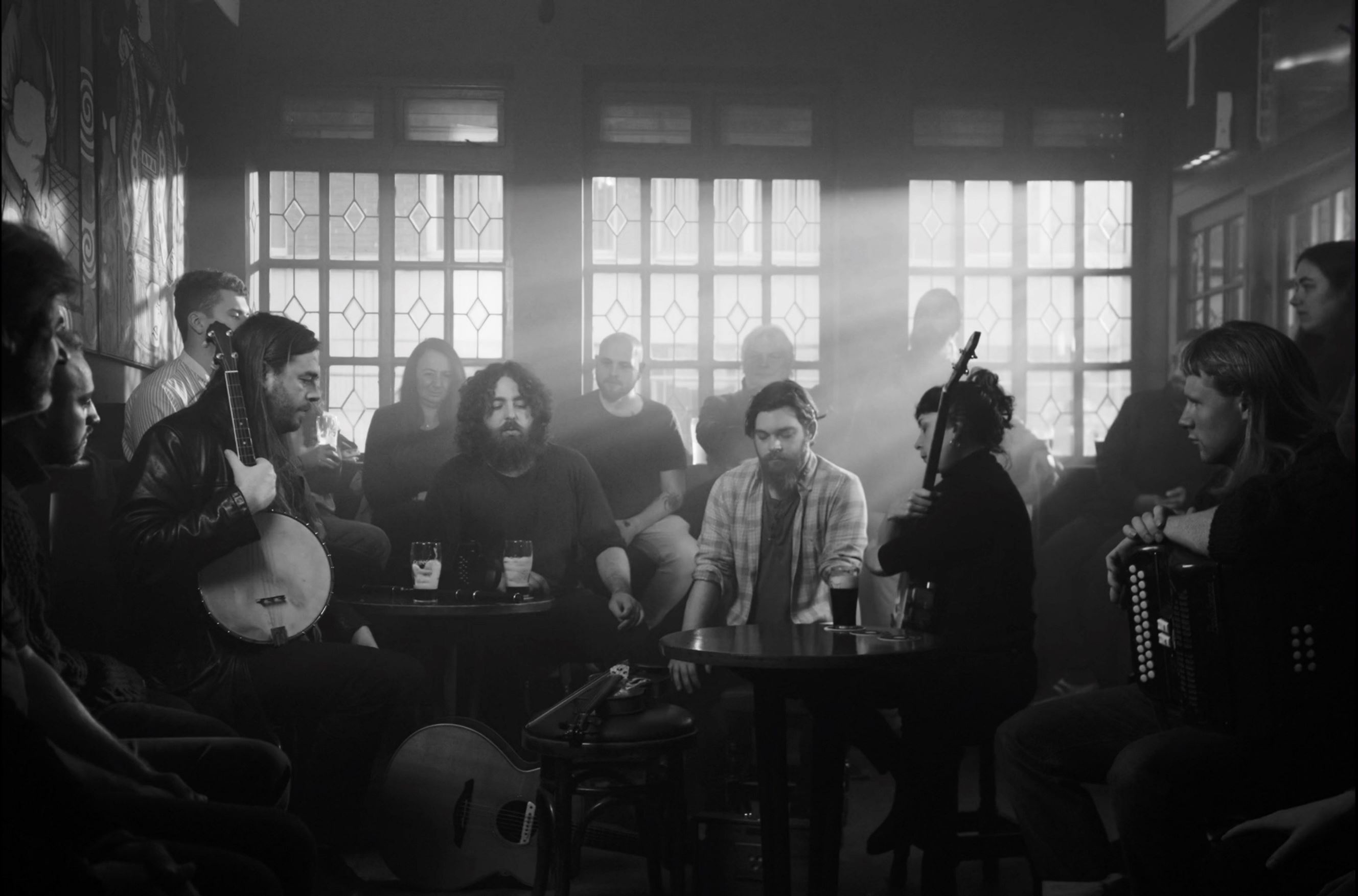
The Unknown Country, a drama by first-time director Morrisa Maltz, is about a cross-country trip taken by a grieving Native American woman. North Circular, an Irish documentary written and directed by Luke McManus, is described as “a musical trip through Dublin’s inner city.”

What unites the flicks is their willingness to digress in the presence of strong personalities. In each case, this is a mixed blessing.

The Unknown Country ostensibly focuses on Tana (Lily Gladstone), who takes time to travel to a family wedding in South Dakota even though she just lost her beloved grandmother. She then drives her granny’s Cadillac to Texas in a trek that ends at a landmark once visited by the dearly departed.

Co-written by director Maltz and cast members Gladstone and Lainey Bearkiller Shangreaux, the film is primarily about Tana’s attempt to come to terms with her loss. However, Tana herself ends up being overshadowed by a series of strong peripheral characters she meets along the road. Among others, there’s a waitress who lives for her cats, a bride and groom who feel they were destined to be together, and an elderly woman who comes to life on the dance floor.

Most of these characters are real people simply playing themselves, making the flick an adventurous blend of fiction and fact. Each of them is interesting, as are several sights Tana sees along the way, including a Native American wedding, a small-town winter festival and a brightly lit Dallas dance club.

The only problem is that we don’t get to know protagonist Tana as well as the people she meets, making the film a bit less than the sum of its very worthwhile parts.

Holding forth at Dublin’s Cobblestone Pub in a scene from North Circular are (from left): folk singers John Francis Flynn, Eoghan Ó Ceannabháin, Killian O’Donnell and Lisa O’Neill. (Photo courtesy of Lightdox)

In a similar way, North Circular spends much of its time introducing us to people who live near the titular roadway, which winds around some of the poorer sections of Dublin. One of the first is an army veteran who plays the bagpipes for military ceremonies and complains that the younger generation shows little interest in learning the traditional instrument. Yes, it’s a shame, but his story comes across as unnecessary digression.

Fortunately, most of the other interviewees can speak more directly to the film’s subject, which is the neighborhood’s struggles with poverty and encroaching gentrification. And several of them do more than speak—they sing about their losses and grievances, often delivering a cappella laments to a silent audience. The sum total is a memorable trip to a side of Ireland’s capital that is never experienced by the average tourist.

Besides their plethora of minor characters, the two films have one other thing in common: striking cinematography. Andrew Jajek’s images in The Unknown Country are engrossing whether they’re showing quiet human interactions or majestic landscapes such as South Dakota’s Badlands and Texas’s Big Bend National Park. And North Circular’s black-and-white images combine with its somber folk tunes to create what at times amounts to cinematic poetry.  

Rating for each film: 3½ stars (out of 5)

The Unknown Country opens July 28 at the Quad Cinema in New York City and the Nuart in Los Angeles, and will open at additional theaters across the country in the following weeks. North Circular opens July 28 at DCTV’s Firehouse Cinema in New York City.

Texas tale asks whether there’s life after porn

Mikey (Simon Rex, right) has big plans for Strawberry (Suzanna Son) in Red Rocket. (A24 photo)

By Richard Ades

When Mikey Saber (Simon Rex) saunters into his Texas hometown at the beginning of Red Rocket, he passes a billboard advertising Donald Trump’s “Make America Great Again” campaign. This sets the time period as 2016, and it may also provide a clue that we’re about to see the tale of a master manipulator.

Here’s another clue about what’s ahead: Red Rocket is the latest film of Sean Baker (The Florida Project, Tangerine), which means it’s likely about folks scraping by in a hardscrabble and precisely detailed pocket of modern-day America.

Both clues are accurate, but they only partially prepare viewers for what’s ahead: a sex- and nudity-filled journey that will sometimes make them chuckle and other times leave them squirming in dread or discomfort.

At its center is Mikey, an ex-porn star who, when we first meet him, has $22 in his pocket and a face that shows signs of a recent beating. Upon returning to his oilfield-lined hometown for the first time in years, Mikey goes straight to the house of his estranged wife, Lexi (Bree Elrod), and mother-in-law, Lil (Brenda Deiss).

Far from being glad to see him, however, they greet Mikey with a mixture of hostility and suspicion that clearly is based on past experience. They agree to let him stay only after he agrees to contribute to the rent.

This, of course, means Mikey has to find a job, but that’s not so easy when your “resume” consists of X-rated videos. He eventually gives up on landing legit employment and wheedles a chance to sell weed for a friend of Lil named Leondria (Judy Hill). In no time, he’s raking in the big bucks.

Then, just as he seems to be getting his life in order and even reconciling with Lexi, he catches sight of a redheaded teenager named Strawberry (Suzanna Son) behind the counter of the local doughnut shop. He immediately sets out to win her over, but just what he wants to win her over to may send shivers down the average viewer’s spine.

The script, by director Baker and Chris Bergoch, never quite goes where you expect or, perhaps, want it to go, and the unsettled ending may leave some unsatisfied. The film also goes on a little longer than necessary. Still, its many quirky characters and indelible moments more than make up for such annoyances.

Rex skillfully anchors the tale as the glib and ruthless Mikey, and every member of the cast is equally effective, including Elrod as the tough yet vulnerable Lexi and Son as Strawberry, who’s not quite as innocent as she first seems. Other strong impressions are made by Ethan Darbone as Lonnie, a gullible neighbor who becomes Mikey’s biggest fan; and Brittney Rodriguez as June, Leondria’s sarcastic daughter.

Of the flick’s many indelible moments, one that particularly sticks out comes when Strawberry gives Mikey an impromptu rendition of NSYNC’s “Bye Bye Bye,” which is nicely performed by Son. Anyone else would have recognized this as a clear A Star Is Born moment, but Mikey is so limited in his outlook and experience that it fails to alter the questionable future he has in store for the teen.  

The moment is illuminating, disturbing and heartbreaking. Add “darkly funny,” and you have a pretty good description of the film as a whole.  

Rating: 4 stars (out of 5)

Red Rocket (rated R) can be seen at theaters nationwide, including (as of Dec. 24) Columbus’s Gateway Film Center.

Comedy has Texas-sized helping of humor, heart

Dr. Eve Bolinger (Ruth Sternberg) tries to “de-homosexualize” Earl “Brother Boy” Ingram (Mark Phillips Schwamberger) in Evolution Theatre Company’s production of Sordid Lives (photo by Jerri Shafer)

By Richard Ades

Judging from the size of Friday night’s audience, Sordid Lives looks like one of Evolution Theatre Company’s more popular productions.

It’s not hard to see why. Del Shores’s comedy has become a cult hit since it first appeared in 1996 and subsequently spawned a movie and a short-lived TV series. It may not be a great work of art, but it’s a fun piece of theater.

In Evolution Theatre Company’s production, it benefits from a seasoned group of performers who seem to enjoy sinking their teeth into Shores’s juicy Texas stereotypes.

Pam Welsh-Huggins gets each of the four scenes off to a tuneful start as vocalist/guitarist Bitsy Mae Harling, who sings and strums her way through a handful of mood-setting tunes. Also establishing the proper mood is Shane Cinal’s Texas-centric set design, complete with homey furniture and the skull of a longhorn steer.

The scenes nearly function as separate set pieces except that they’re connected by a recent death: Peggy Ingram, a mother and grandmother, died after tripping over the wooden legs of neighbor G.W. (Ralph Edward Scott). Making her departure not only painful but embarrassing for her family, the accident happened while she and the married G.W. were sharing a motel room.

The scenes also have a thematic connection in the form of repressed sexuality. Peggy’s son, Earl “Brother Boy” Ingram (Mark Phillips Schwamberger), has been institutionalized in an attempt to “cure” him of his gay, cross-dressing ways. And her grandson, New York-based actor Ty (Andrew Trimmer), is struggling to come to terms with the homosexuality that he’s afraid to reveal to his family, especially strait-laced mother Latrelle (Lori Cannon).

The first scene takes place at the home of Peggy’s sister Sissy (Betsy Poling), who is attempting to grieve and quit smoking at the same time. It features the awkward reunion of Peggy’s younger daughter, LaVonda (Danielle Mari), and Noletta (Kathy Sturm), wife of the philanderer whose prosthetic legs were responsible for Peggy’s death.

The second scene is set in the local bar owned by Wardell (David Vargo), who is still ashamed that he and G.W. once gay-bashed Brother Boy, an act that may have led to the latter’s institutionalization. Also present are barflies Juanita (Vicky Welsh Bragg) and Odell Owens (Jeb Bigelow).

What makes these scenes work is that director Beth Kattelman seems to have encouraged the actors to invest in the characters rather than trolling for laughs. This allows the humor to flow naturally from the absurd situations and down-home dialogue.

However, the production doesn’t really hit its peak until after intermission. That’s when we finally meet the much-discussed Brother Boy, along with his therapist, Dr. Eve Bolinger (Ruth Sternberg). Schwamberger is a revelation as the long-institutionalized patient, who gamely puts up with Bolinger’s attempts to “de-homosexualize” him in hopes he’ll finally be allowed to go home. His portrayal is both hilarious and touching.

So, for that matter, is the scene itself. Adding to its effectiveness are Nitz (Curtis) Brown’s dramatic lighting and Sternberg’s crafty portrayal of the ruthless Bolinger.

Not surprisingly, the play ends with Peggy’s funeral and the tying up of the comedy’s various threads.

According to an ETC Facebook post, last Saturday’s performance of Sordid Lives sold out. With raunchy regional humor and an uplifting message, the comedy is likely to continue pulling in crowds. Translation: Order your tickets now.

Evolution Theatre Company will present Sordid Lives through Sept. 26 at the Columbus Performing Arts Center, 549 Franklin Ave., Columbus. Show times are 8 p.m. Thursday-Saturday. Running time: 2 hours, 30 minutes (including intermission). Tickets are $20, $15 students/seniors. 1-800-838-3006 or evolutiontheatre.org.