The forgotten man who championed unforgettable flicks

By Richard Ades

For people who became film aficionados during the 1960s and ’70s, Searching for Mr. Rugoff is a revelation. Such folks doubtless were intrigued by international filmmakers such as Costa-Gavras, Francois Truffaut, Lina Wertmuller and others, and the documentary reveals that their work might never have made it across the Atlantic if it weren’t for a New York theater owner and distributor named Donald Rugoff.

Full disclosure: I’m one of the many folks who owe my love of films to Rugoff.

Without him, I might never have held my breath over Costa-Gavras’s political thriller Z or laughed at the French spy spoof The Tall Blond Man With One Black Shoe. I also might never have experienced the brilliant but polarizing films of Wertmuller or the head-scratching puzzle that was The Man Who Fell to Earth. Rugoff and his distribution company, Cinema 5, brought these and other notable flicks to the attention of American filmgoers, yet few people remember him.

Director and one-time Cinema 5 employee Ira Deutchman seeks to remedy that situation by talking to people who worked with Rugoff or otherwise knew him. The portrait he paints is of an eccentric man who wasn’t always easy to be around but who seemed to have an innate talent for finding and promoting important cinema.

After inheriting a theater chain following his father’s premature death, Rugoff began opening elegant Upper East Side theaters—“temples of the art,” one commentator calls them—that made going to the movies an indispensable cultural event. People looked forward to major premieres so much that they didn’t even mind standing in the inevitable line to get in. In fact, they savored it as just another part of the ritual.

Rugoff also became a distributor and began championing a host of notable filmmakers, some of whom are interviewed by Deutchman. Costa-Gavras talks about the role Rugoff played not only in bringing his masterful Z to America but in helping it to win two Academy Awards and three additional nominations, including for Best Picture. Wertmuller likewise talks about her experiences with the impresario, who may have helped her to garner the first Oscar nomination ever received by a woman director (for 1975’s Seven Beauties).

We learn that Rugoff had both box office triumphs, such as 1975’s Monty Python and the Holy Grail, and flops, such as Truffaut’s The Soft Skin (1964). But whether the films were hits or misses, he always promoted them with ad campaigns that were groundbreaking and innovative. They were also sometimes controversial, as when he falsely labeled 1977’s Jabberwocky a Monty Python film because its director and star were members of the British comedy troupe.  

Rugoff’s success eventually faded, though the documentary can only suggest possible reasons. Was it health problems that impaired his judgment, or possibly a second wife who pushed her own questionable taste in films? Or maybe it was a change in the cinematic climate, along with the rise of competitors inspired by his example. Chances are it was a combination of causes.

At any rate, Rugoff ultimately was forced to exit the business. In 1986, he left New York and moved to a small town on Martha’s Vineyard, where he converted a former church into a movie theater before dying three years later. But even there, Deutchman learns, he’s been largely forgotten.

Someone who played such a crucial role in our country’s cinematic scene really deserves to be honored and remembered. With the release of Searching for Mr. Rugoff, maybe he will be.

Rating: 4 stars (out of 5)

Searching for Mr. Rugoff opened Aug. 13 at select theaters and through VOD outlets.

Nicolas Cage wants his pig back

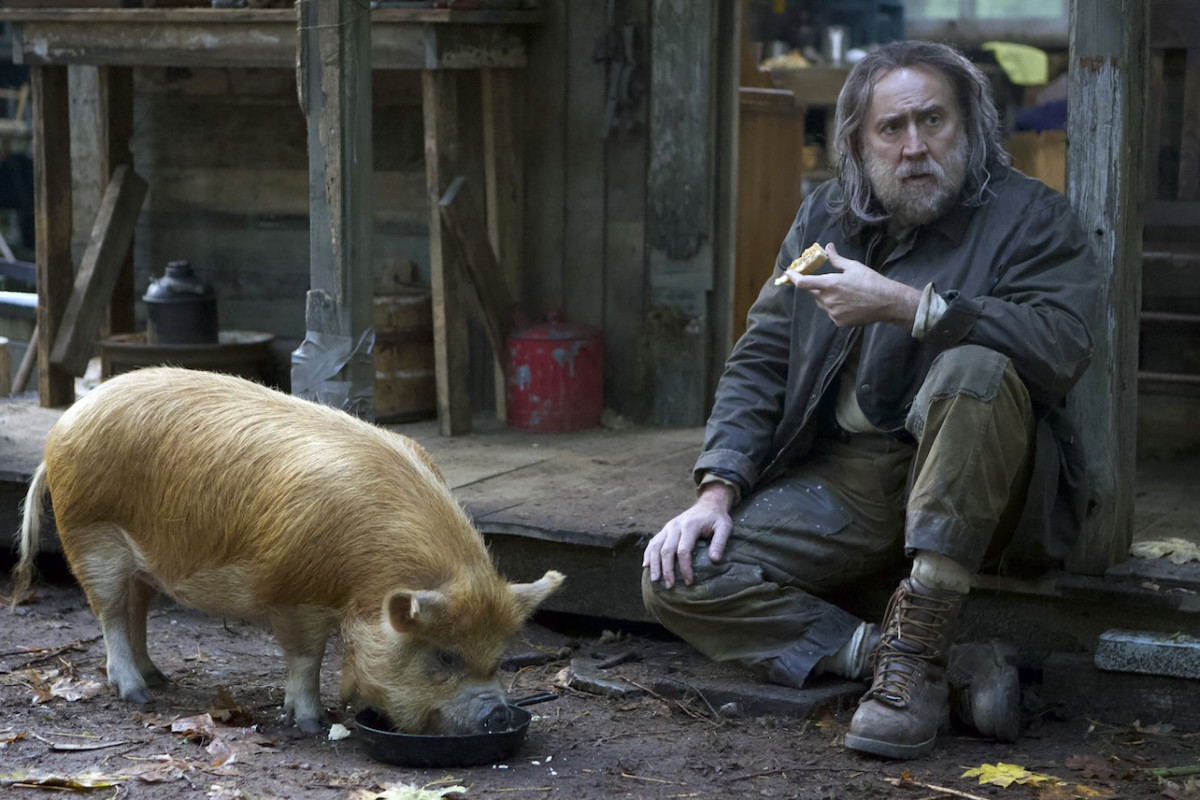
The reclusive Rob (Nicolas Cage) is forced to return to society after his truffle-hunting pig is kidnapped.

By Richard Ades

Rob leads a quiet life in rural Oregon sharing a cabin and hunting for truffles with his foraging pig. Then, one night, someone breaks in and steals the pig. What will happen next is anybody’s guess.

That’s partly because Pig, the debut feature by Michael Sarnoski, stars Nicolas Cage as grizzled recluse Rob. Repeatedly spoofed by SNL for appearing in over-the-top flicks in which everything’s on fire and “all the dialogue is either whispered or screamed,” Cage has the reputation of being an explosion waiting to happen.

Sarnoski uses that image, along with the setup of a typical revenge film, to keep viewers in a state of anticipation. What will the hulking Rob do when faced with someone who stands between him and his beloved sow?

As it turns out, he never does quite what we expect him to do. Neither does the film as a whole, which may disappoint fans of the star’s more outrageous outings but should please those with subtler tastes.   

The beginning scenes set up Rob’s key relationships. Settling down for the night after a day of truffle hunting, he starts to play a birthday greeting tape-recorded by his deceased lover, Laurie, but finds it too painful to hear. “I’m OK,” he insists when his concerned pig tries to comfort him.

But the most important relationship, as well as the most problematic, is between Rob and Amir (Alex Wolff), the Camaro-driving entrepreneur who drops by every Thursday to deliver those valuable truffles to high-class eateries in nearby Portland. Rob spurns Amir’s attempts to show concern for his well-being, but he brusquely demands the younger man’s help after his beloved pet is kidnapped. Together, they set off for the city, where Rob reveals unexpected knowledge of the restaurant scene and Amir reveals his prickly relationship with the industry’s ruthless kingpin, Darius (Adam Arkin).

Not everything in the script (co-written by Sarnoski and Vanessa Block) is logical or even believable. Particularly jarring—like a holdover from one of Cage’s tackier flicks—is a fight club of sorts that caters to disgruntled restaurant employees. More satisfying are the satirical barbs aimed at pretentious elements of West Coast culture. An enjoyable example is Rob’s interrogation of a chef (David Knell) who concocts trendy “deconstructed” fare but would rather be running his own English-style pub.

Through it all, Cage effectively plays against what’s become his type as the quietly resolute Rob, while Wolff keeps us equally off-balance with his portrayal of the hot-tempered but stubbornly loyal Amir. Their chemistry helps to sell a psychological study that builds slowly and imparts crucial life lessons along the way.

Rating: 4 stars (out of 5)

Pig (rated R) can be viewed at select theaters and will be available from VOD outlets beginning Aug. 3.

Actor’s colorful life revealed through his own home movies

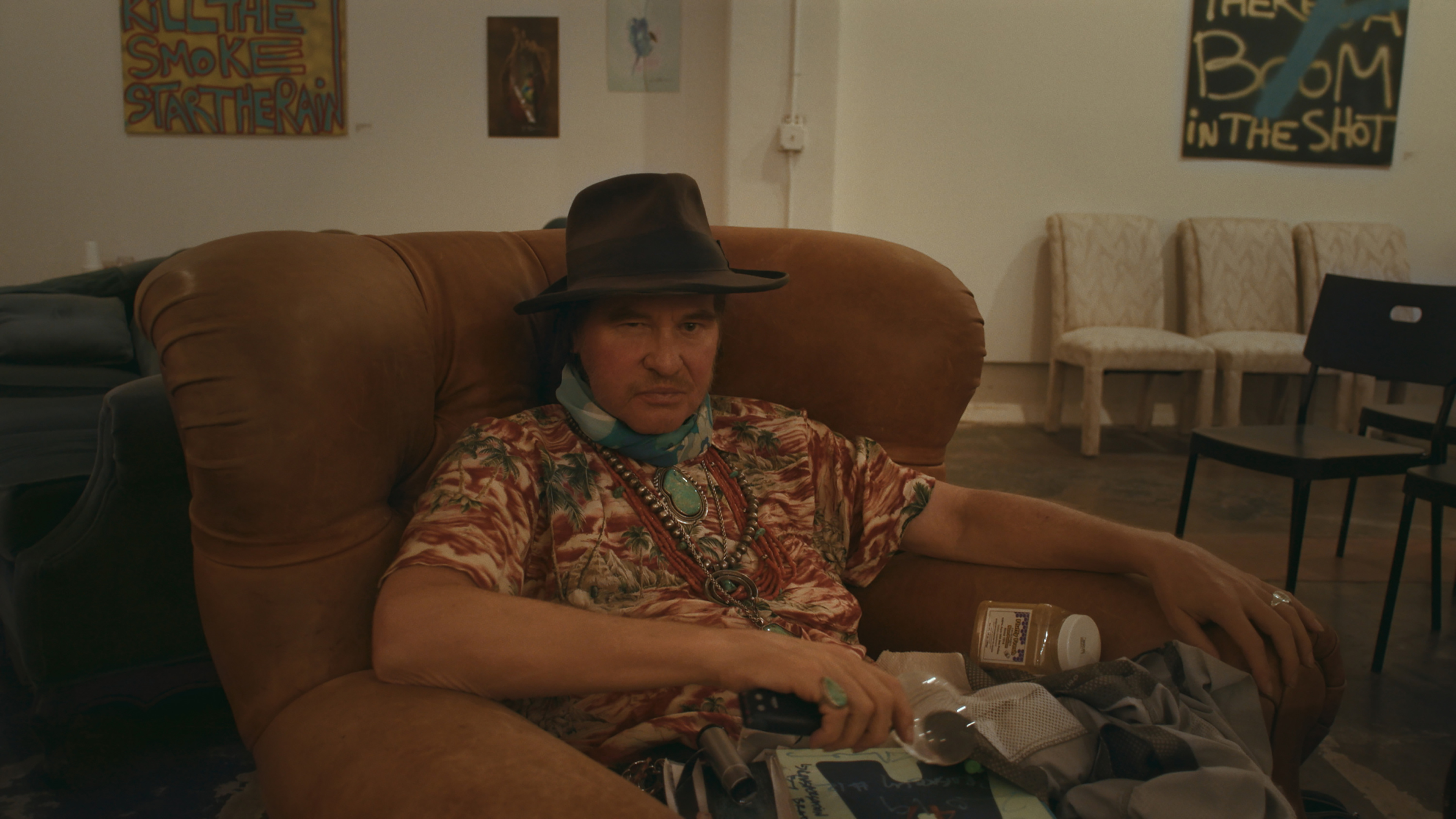
Val Kilmer as he appears today in Val (Photos courtesy of A24 Distribution, LLC)

By Richard Ades

At the beginning of the biographical documentary Val, Val Kilmer claims he’s “almost been fired” from all his movies. While that corresponds with the actor’s reputation as someone who’s hard to work with, the film ultimately portrays him as someone who may be eccentric and stubborn, but also thoughtful and dedicated to his craft.

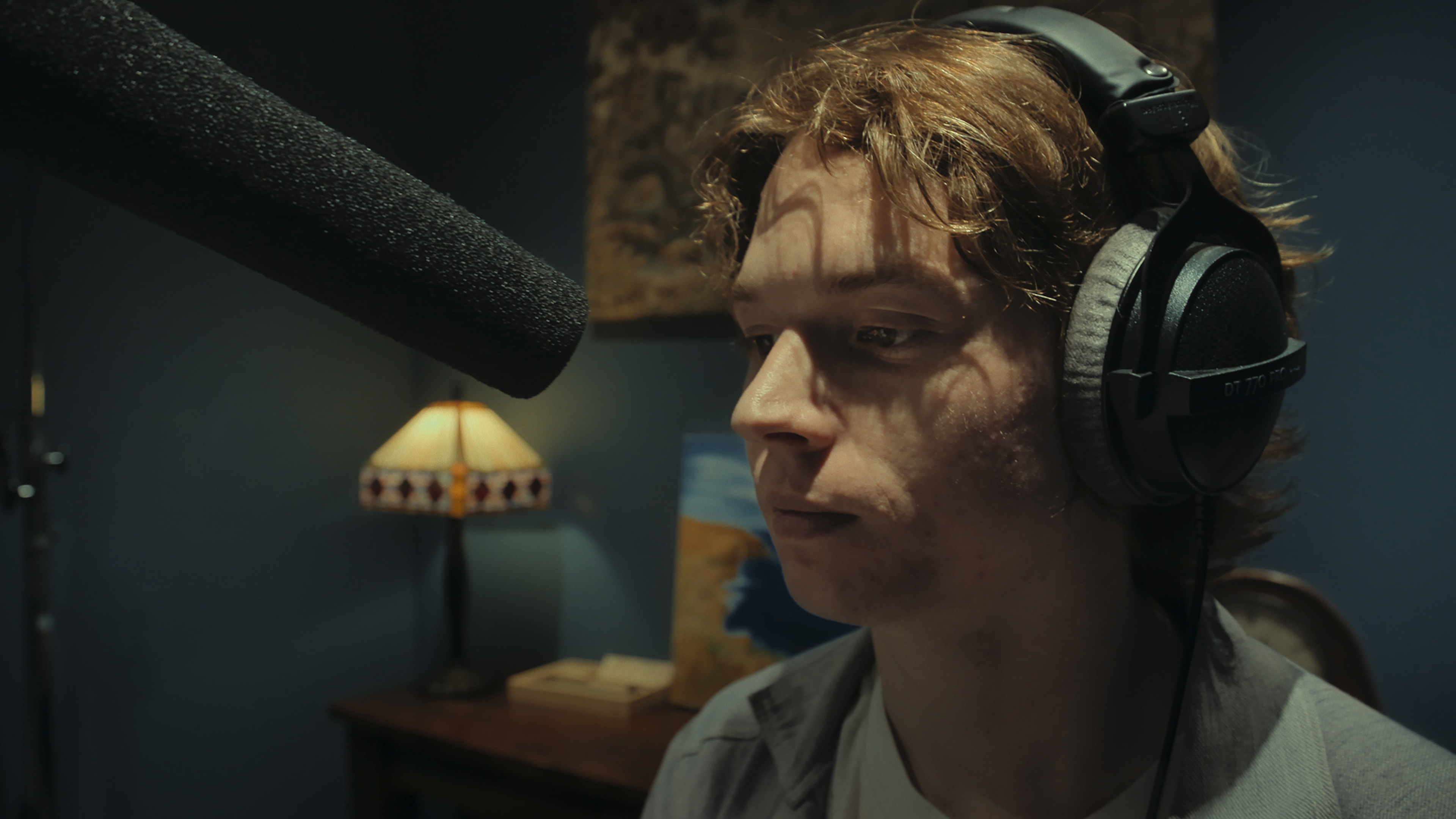
Kilmer is also very unlucky, we learn early on, as a 2015 bout with throat cancer has stolen the now-61-year-old actor’s most valuable asset: his voice. Two tracheotomies have left him unable to speak other than croaking out a few words in between gasps of breath. As a result, son Jack Kilmer has been given the task of narrating the story of his father’s life.

Fortunately, the task of illustrating that life has largely been taken care of, as Val Kilmer was an early and eager adopter of home videography. It’s probably no coincidence that first-time directors Ting Poo and Leo Scott previously worked primarily as editors, as their main job here was to pare down what must have been miles of old footage into a coherent documentary. (Tyler Pharo joins them as the flick’s third editor.)

Narrator Jack Kilmer substitutes his voice for the one his father lost to cancer.

For Kilmer fans, or just film fans in general, the result is intriguing. We see Kilmer landing his first professional off-Broadway role after losing the play’s leads to Kevin Bacon and Sean Penn. We see him making his mark in 1980s movies such as Willow and Top Gun. We see him filming his own auditions, at one point even firing off live ammunition to show his suitability for an action role.

As Kilmer’s popularity continues to rise in the 1990s, the doc shows him going all out to capture the part he sees as his destiny: rocker Jim Morrison in The Doors. It also shows him suffering through 1995’s Batman Forever, which forced him to wear a heavy bat suit that made it difficult to act or even to move. Not surprisingly, he turned down offers to repeat the iconic role.

Val eventually approaches the perverse attraction of a highway accident scene when it shows Kilmer on the troubled set of 1996’s The Island of Dr. Moreau. At one point, Kilmer expresses his frustration with the production’s problems by refusing to shut off his own video camera despite director John Frankenheimer’s pleas. Since Frankenheimer inherited the film, along with temperamental star Marlon Brando, from another director who left just days into the shooting, it’s hard to know who deserves our sympathy the most here.

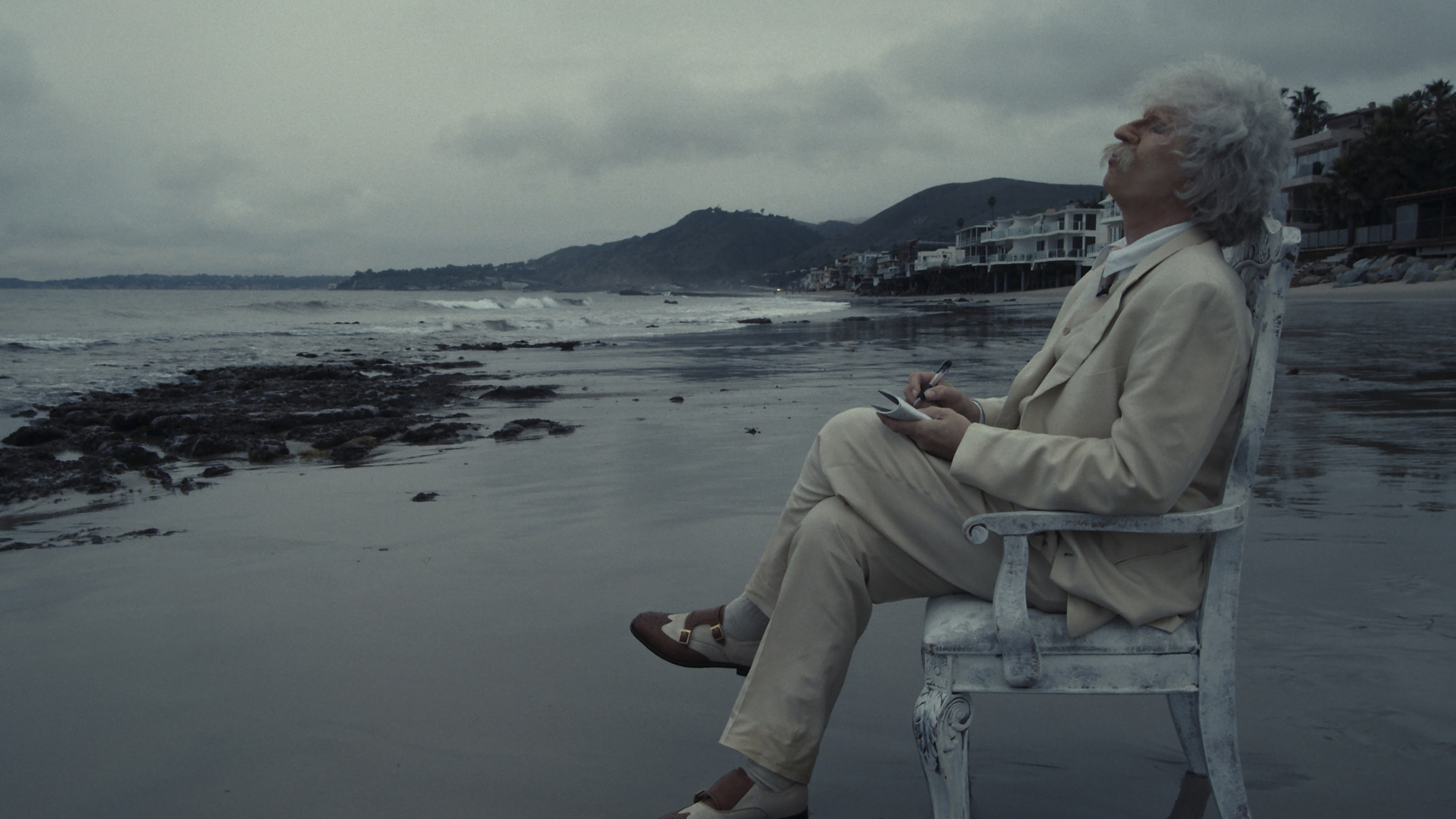
Val Kilmer rehearses as Mark Twain, a part he once had hopes of playing on the big screen.

That’s also true at other points in the documentary, especially when Kilmer complains about his 1996 divorce from actress Joanne Whalley and subsequent separations from their children, Jack and Mercedes. But in general, the actor comes across as a sympathetic figure.

Home movies from Kilmer’s childhood reveal family problems and tragedies that helped to shape him: a distant mother; a father whose business ventures didn’t always pan out; and especially the early loss of his creative younger brother, Wesley. Even more affecting is present-day footage that shows cancer survivor Kilmer being forced to live off his past triumphs by greeting fans at a Tombstone screening and a local Comic-Con.

A couple of quibbles: At times Val could have been organized in a more logical manner, and it never really delivers on Kilmer’s early promise to impart something profound about the craft of acting. Otherwise, the flick is well worth one hour and 49 minutes’ worth of any cinephile’s time.

Rating: 4 stars (out of 5)

Val (rated R) opens July 23 at select theaters, including Central Ohio’s Drexel Theatre, Gateway Film Center and Marcus Crosswoods Cinema. It will be available through Amazon Prime beginning Aug. 6.

Living, rapping and dancing on the streets of L.A.

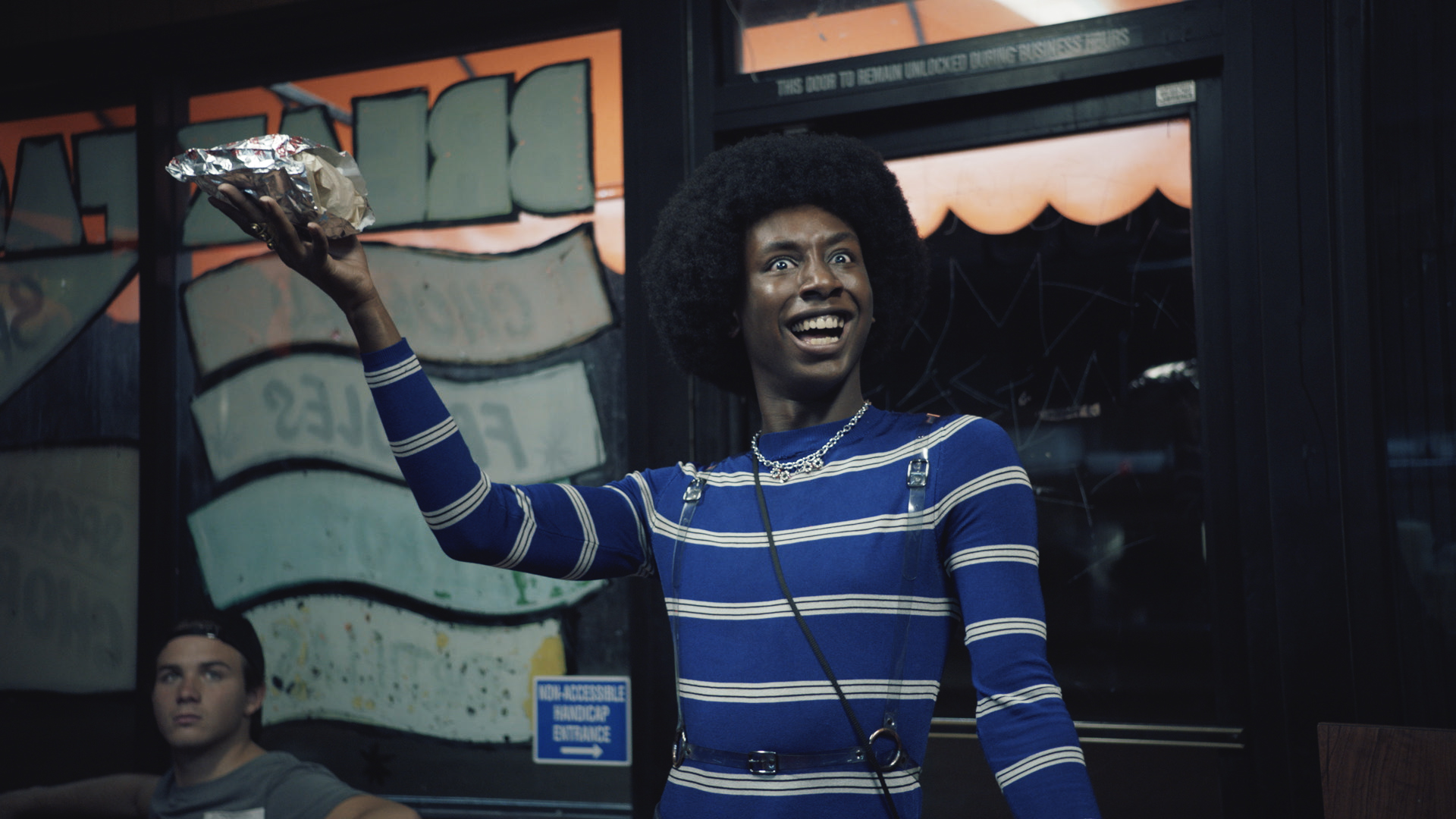
Yelp reviewer Tyris (Tyris Winter) celebrates a culinary find in Summertime. (Photos courtesy of Good Deed Entertainment)

By Richard Ades

I’ve been trying to find something to compare Summertime to, but it’s not easy. I thought of calling it a street-smart, spoken-word version of La La Land, but that falls hopelessly short.

Besides being set in Los Angeles, the musicals have just two things in common: energy and heart.

Rather than beginning with a massive traffic jam, Summertime starts with the simple scene of a guitarist (Olympia Miccio) singing, strumming and skating her way along a sidewalk. Then she collides with a fellow Angelino and subsequently disappears, as our attention shifts to someone else who just happens to be nearby.

That sets the pattern for the film, which director Carlos Lopez Estrada (Blindspotting) has designed as a stream-of-consciousness portrait of a day in the life of L.A., and in particular its Venice and Hollywood neighborhoods. We wander through their funky streets meeting one young and talented individual after another, all of them poetically sharing their dreams, fears, struggles and desires.

Some characters pay brief visits, while others reappear periodically. An early standout is Tyris (Tyris Winter), an Afro-coifed gay man who wanders from one restaurant to another writing Yelp reviews and searching for an elusive cheeseburger. He’s feisty and mercurial, but as the day progresses, we realize that underneath he’s nursing a pain whose cause is only suggested.

Paolina (Paolina Acuna-Gonzalez) rebels against her tradition-minded mother with the help of a bevy of spirited dancers.

Also dealing with personal challenges are Paolina (Paolina Acuna-Gonzalez), a Latina chafing under her tradition-minded mother’s rules, and Marquesha (Marquesha Baber), who’s receiving therapy for trauma related to body-image issues. Paolina faces her frustrations by imagining a rebellious dance featuring women in flowing red dresses, while Marquesha faces hers by tracking down and confronting her abusive ex.

Tying the film together is the comical tale of Rah and Anewbyss (Austin Antoine and Brice Banks), sidewalk rappers who struggle to find an audience until they catch the ear of a big-time producer. Then their careers take off at breakneck speed, especially after they ditch the rhymes about “Lambos” and start paying homage to their devoted moms.

The diverse cast includes Blacks and Whites, Latinas and Korean Americans, gays and straights. Each performer wrote his or her own story and poetic dialogue, resulting in a variety of moods and viewpoints. The miracle is that Estrada—with masterful help from cinematographer John Schmidt, editor John Melin and composer John S. Snyder—turns it all into a joyful and cohesive whole.

Summertime may have no plot, but it does leave us with a message of sorts: Live your life, face your demons, find your happiness—and respect other people’s right to do the same.

Rating: 4 stars (out of 5)

Summertime (rated R) opens July 16 at select theaters, including Columbus’s Gateway Film Center and Cleveland’s Cedar Lee.

Looking for the world’s loneliest whale

Joshua Zeman’s documentary revolves around his search for a renowned but unseen whale that can’t be understood by other whales.

By Richard Ades

As someone who cares about the environment and about those majestic creatures known as whales, I looked forward to watching The Loneliest Whale: The Search for 52.

The documentary has a fascinating premise: Aided by a group of oceanographers and other scientists, filmmaker Joshua Zeman sets out to find the mysterious whale that’s been dubbed “52,” so named because he sings his song at a frequency of 52 hertz. This separates him from other whales, who sing at various frequencies depending on their species, but never at 52 hertz.   

Whales, especially the males, sing to communicate with other whales that may be many miles away. However, 52’s unique pitch means he’s unable to communicate with anyone, as a result of which he’s been called the loneliest whale in the world.

The beginning of the documentary explains that 52’s existence was discovered years ago with the help of underwater listening devices originally deployed by the U.S. Navy to keep track of potentially hostile submarines. The unseen whale quickly became a source of fascination to people the world over, maybe because he symbolized the isolation many feel in modern society.

Apparently, one of those people was Zeman. So, after spending four years looking into the possibility of finding the illusive 52, he finally gathers a team and sets out to sea to do just that.

It’s at this point that all the film’s exposition begins to pay off—to an extent. Unfortunately, Zeman dilutes the excitement of the resulting “hunt” with more exposition. That is, he intersperses footage of the search for 52 with history lessons on the ways humans have made whales’ lives difficult down through the centuries.

From hunting them to the edge of extinction to polluting the ocean with mechanical noise that frustrates their attempts to communicate, we have not been good neighbors to our fellow mammals. If all this comes as news to you, then these digressions might seem worthwhile. Otherwise, you might wish Zeman had taken a more personal approach to his subject.

For one thing, what drives him to spend years of his life searching for a beast no one has ever seen? And what drives the scientists on his team to devote their entire careers to the ocean? Such topics are left largely unexplored.

At least the documentary satisfies our curiosity about the whale itself by answering questions such as: “Why is he so different from other whales?” And, “Is he really alone?” Before the film is over, we’re even treated to a surprise that wouldn’t be possible in, say, a flick about the Loch Ness Monster.

It’s a welcome moment, even if it doesn’t quite make up for all the lectures that preceded it.

Rating: 3 stars (out of 5)

The Loneliest Whale: The Search for 52 (rated PG) opened July 9 at Columbus’s Gateway Film Center. It will be available digitally beginning July 16.

Revisiting the election that broke the mold

James Fletcher’s documentary looks at what Donald Trump did right in 2016—and what Hillary Clinton did wrong.

By Richard Ades

The Accidental President is worth seeing, but the timing of its theatrical release is less than ideal. Does anyone want to see a documentary that rehashes the 2016 presidential race when we’re still trying to put the 2020 election behind us?

But for those willing to give it a try, James Fletcher’s flick is a lively and surprisingly even-handed history lesson that’s sure to provide nuggets of new understanding. Though it mainly relies on talking heads to examine the past, those heads belong to an eclectic and thoughtful group of journalists, commentators, political operatives, a prominent screenwriter (Aaron Sorkin) and even a cartoonist (Dilbert’s Scott Adams).

Writer/director Fletcher begins his look back with the 2016 primary season, which saw a record number of prominent Republicans vying for the top spot. The sheer volume made it hard for any candidate to stand out—any traditional candidate, that is. While his politically experienced opponents focused on ideas, Trump gained traction by becoming, as former White House communications director Anthony Scaramucci puts it, a “human wrecking ball.”

During the GOP debates, Trump targeted other hopefuls with a steady stream of insults and name-calling that kept his face front and center throughout the 24-hour news cycle. In short, the former reality TV star showed he knew how to work the media. While conservatives often claim news outlets have a liberal bias, one interviewee notes that they actually have a “conflict bias.” Thus, the political neophyte was able to garner millions of dollars’ worth of free publicity by creating one juicy kerfuffle after another.

At the same time that he was slaking the media’s thirst for conflict, Trump was stoking the anger many Americans felt over the perception that they’d been left behind by the modern economy. The documentary notes that Sen. Bernie Sanders benefited from some of this same dissatisfaction in his bid for the Democratic nomination, fueling an early lead over Hillary Clinton. It also notes that his fans’ anger was exacerbated when the party’s establishment was suspected of using “super delegates” to give Clinton an unfair advantage in the race.  

Time correspondent Molly Ball is one of several political observers featured in The Accidental President.

Speaking of Clinton, her diehard supporters probably won’t appreciate the section of the film that focuses on what she did wrong after becoming the Democratic candidate. Despite being vastly more qualified than Trump, she hobbled herself by avoiding the press and mostly ignoring the so-called “blue wall” states where Trump ultimately carved out slim leads. (One of them, Wisconsin, was snubbed altogether.) She also made verbal gaffes such as referring to Trump supporters as “deplorables,” thus alienating voters who felt looked down upon by the “coastal elite.”

Of course, Clinton also was handicapped by FBI director James Comey and his controversial decision to raise the issue of her emails yet again during the campaign’s final days. On the other hand, as Time political correspondent Molly Ball suggests, Clinton should have been so far ahead of her inexperienced opponent by that point that such a setback wouldn’t have mattered. In the end, she won the popular vote but lost in the Electoral College, which was the only vote that mattered.

The Accidental President also brings up other issues that played a role in 2016 and still bear consideration today: Why were Twitter and Trump such a perfect match? Do emotions beat out ideas on the campaign trail? And how was Trump able to weather the “October surprise” that was the Entertainment Tonight tape?

The 2016 race may be long over and Donald Trump may be out of office, but the forces that led to his surprising victory will continue to play a role in politics because they obviously worked. That makes The Accidental President a useful history lesson.

Rating: 4 stars (out of 5)

The Accidental President (no MPAA rating) is available through VOD outlets and will screen in limited U.S. theaters beginning June 21. It will soon be available on Starz.

Mysterious pregnancy reveals hateful prejudice

Magalie (Emilie Bierre) is hiding a difficult problem in Les Notres.

By Richard Ades

Thirteen-year-old Magalie (Emilie Bierre) is pregnant but hides the fact for as long as she can. When her condition is finally discovered, she resolutely refuses to talk about it, even with her mother. In particular, she refuses to reveal who the father is.

That’s the setup for Les Notres, a French-Canadian film set in the close-knit Quebec town of Sainte-Adeline. Eventually, Maglie’s reticence leads to the spread of dangerous suspicions and rumors fed by nationalistic prejudice.

Directed by Jeanne Leblanc from a script she co-wrote with Marianne Farley, Les Notres (English translation: Ours) dives into provocative and sometimes creepy territory. At its core, though, it’s the story of a girl who finds herself in trouble and is determined to deal with it on her own—even though she’s clearly not up to the task.

That makes it tempting to draw comparisons to 2020’s searing Never Rarely Sometimes Always, in which an older teen named Autumn is similarly close-mouthed about her unwanted pregnancy. In each case, we learn (or surmise) that the girl is keeping the truth to herself for reasons that seem vitally important to her, at least.  

There’s one big difference between the two flicks, though. Autumn has the support of a helpful cousin, while Magalie is failed by one adult after another, including her caring but insufficiently strict mother (Marianne Farley). The result is a festering situation that hurts not only her but others around her.

From the viewer’s perspective, there’s another difference that’s even more important. Never Rarely Sometimes Always ends with a touching moment that perfectly crystalizes the gravity of Autumn’s situation. In contrast, Les Notres teases us with the possibility that things will come to a head, then hops months ahead to reveal a development that many will find inconsequential and profoundly unsatisfying.

One final comparison: Like Never Rarely star Sidney Flanigan, actor Bierre is adept at playing a girl who keeps her emotions to herself. Perhaps too adept, as at key moments we have no idea why she does what she does or how it affects her. But the real blame for this belongs to director/co-writer Leblanc, who seems more interested in advancing her cynical plot than in making Magalie a fully realized character.

Speaking of the plot, Les Notres does make important political points. It just feels like it does so by arbitrarily turning its heroine into a powerless victim.

All this leaves me hoping that the next time I see a film with a young female protagonist, she has some modicum of agency. It would be a nice change.

Rating: 3 stars (out of 5)

Les Notres (no MPAA rating) can be seen beginning June 18 at select theaters (including Columbus’s Gateway Film Center) and through VOD outlets.

Growing up poor and desperate in small-town Ohio

Ruth (Jessica Barden) and her brother, Blaze (Gus Halper), struggle to stay afloat in the Ohio-made drama Holler. (Photos courtesy of IFC Films)

By Richard Ades

Some have compared Holler to Winter’s Bone, as both depict a desperate life as seen through the eyes of a teenage girl. Then again, lots of flicks have been influenced by that 2010 classic. The flick that Holler most reminds me of is Annie Silverstein’s modest 2020 release, Bull.

In both cases, the young heroine has been left with heavy responsibilities because her mother is in jail. And in each, she finds herself attracted to a man who’s eager to lead her into a life of crime.

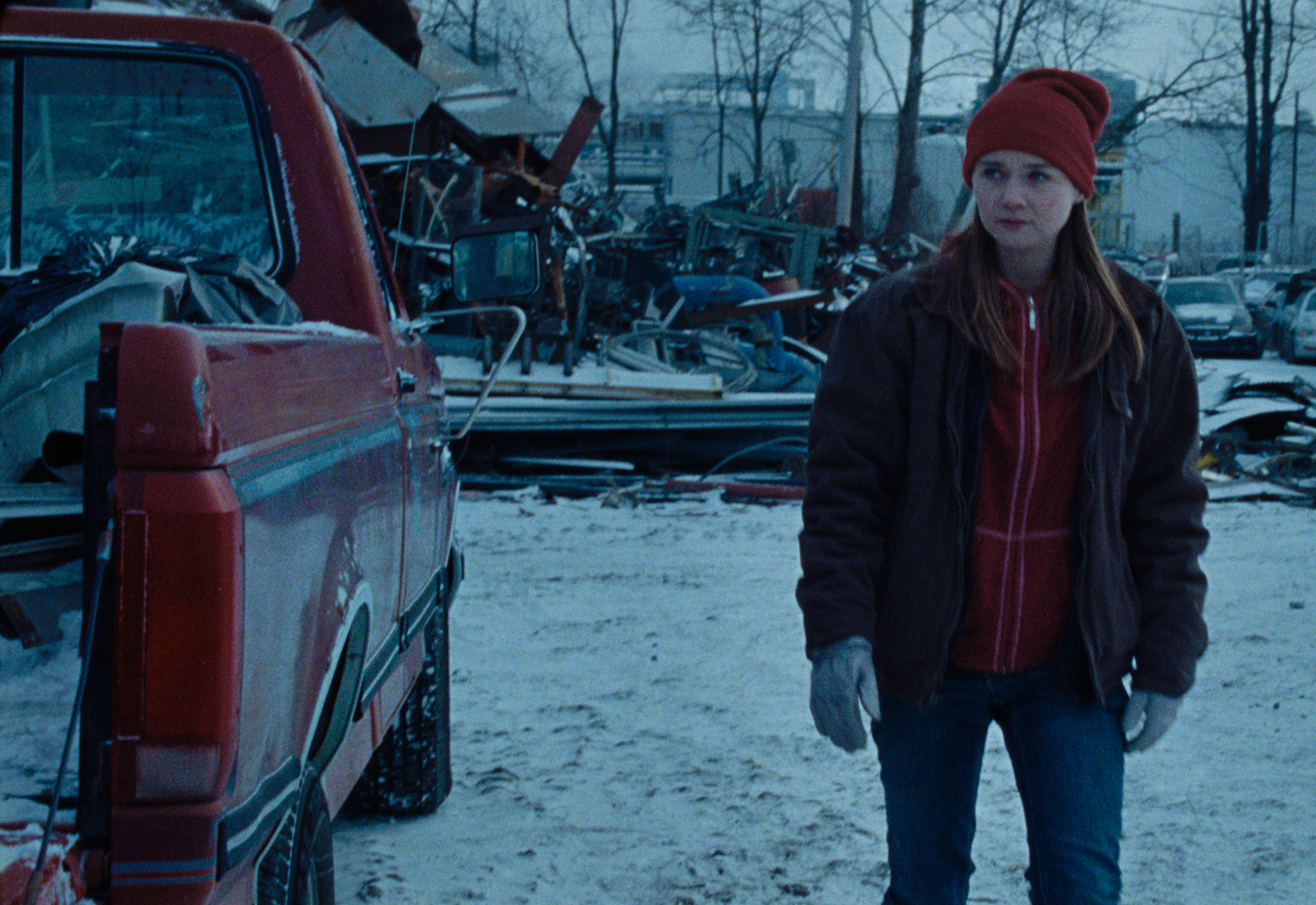
Made and set in small-town Ohio, the new film centers on Ruth (Jessica Barden), who lives with older brother Blaze (Gus Halper) in a house without running water because they can’t afford to pay the utility bills. Ruth is on the brink of high school graduation, and Blaze is determined to give her a chance at a brighter future by pushing her off to college. Ruth refuses, however, being unwilling to leave her brother when he has few prospects for employment.

Then the two are offered a job by Hark (Austin Amelio), who runs a shady recycling business. The job pays well, but it involves the illegal and potentially dangerous task of collecting aluminum, copper and other scrap materials from factories that have closed down.

Much to her protective brother’s chagrin, Ruth seems to take to the work and, worse yet, shows signs of taking to Hark. Is her future doomed before it has a chance to get started?

HOLLER Still 2

Holler is the feature debut of writer/director Nicole Riegel, who sets the unsentimental (and reportedly semi-autographical) tale in her hometown of Jackson, Ohio. The picture it paints of daily life is not likely to turn Jackson into a tourist destination.

Like rural areas all over the Midwest and Appalachia, the town is cursed by a lack of work and a rampant drug problem—the latter being represented by Ruth’s mom, Rhonda (Pamela Adlon), who ran afoul of the law after becoming addicted to pain killers. Ruth is fortunate to have the support of her brother and a kind family friend, Linda (Becky Ann Baker), but the clear message is that her only hope for a happy future is to escape.

British actor Barden leads the competent cast with her scrappy portrayal of Ruth, and director of photography Dustin Lane captures the drama of the girl’s life with gritty (if sometimes frustratingly dark) images. That helps to compensate for a script that is a bit predictable and more than a bit vague on a key question: Namely, how can college even be an option for Ruth when she has no way of paying the costs that routinely leave middle-class kids in debt?

Like Bull, Holler also has an ending that will dissatisfy some viewers, though for different reasons. While the earlier film left things largely unsettled, this one tries too hard to tie up loose ends. Still, it’s an impressive debut with an important message, even if that message is delivered imperfectly.

Rating: 3½ stars (out of 5)

Holler (rated R) opens June 11 at select theaters and VOD outlets.

Trans athletes fight for the right to compete

Andraya Yearwood is a trans female athlete from Connecticut whose success in track and field events has been cited as evidence by backers of efforts to ban trans girls and women from competing.

By Richard Ades

Mack Beggs has a problem. The Texas teen is an accomplished wrestler, but the state forces him to wrestle girls. That’s because Mack was born a female, and though he’s begun transitioning to male, Texas law requires young athletes to compete in the gender they were assigned at birth.

Mack is one of three teenagers portrayed in Changing the Game, a documentary directed by Mark Barnett that examines the controversial issue of trans athletes in a way that’s compassionate, thoughtful and evenhanded. It’s also comprehensive, as each of the youths lives in a different state, and each state has a different way of dealing with the issue. Also featured are:

• Sarah Rose Huckman, a competitive skier who lives in New Hampshire, which allows trans athletes to compete in their chosen gender, but only if they’ve undergone reassignment surgery.

• Andraya Yearwood, a track athlete who lives in Connecticut, which allows all athletes to compete in their preferred gender regardless of where they are in the reassignment process.

On the surface, Andraya is the most fortunate of the three since her state takes the most liberal attitude. However, the film reveals that law and public opinion don’t always jibe. When the tall and muscular Andraya wins a track victory, her success is marred by critics who feel she has an unfair advantage over her competitors. (In fact, backers of recent Ohio efforts to ban trans female athletes from competing have cited as evidence the success of Andraya and another trans Connecticut track star who also appears in the film.)

Mack Beggs is a trans male wrestler who’s forced to compete with girls due to restrictive Texas laws.

Like the states they live in, the three featured athletes are a study in contrast. Mack is shy and soft-spoken, while Sarah is an outgoing blogger who challenges her state’s trans rules. Finally, Andraya is a fierce competitor on the track but is uncomfortable over the criticism she receives, especially since she has a double-minority status as someone who’s both trans and African American.

Just as fascinating as the athletes themselves are the glimpses we’re given of the family members and friends who surround them. Many of them upend stereotypical expectations.

A case in point: Texas wrestler Mack is being raised by Southern Baptist grandparents who claim they’re as conservative as they come. In fact, grandmother Nancy is a deputy sheriff who owns several guns—and is prepared to use them to defend her grandson against anyone upset by his success on the mat. Meanwhile, grandfather Roy struggles to remember which pronouns to use with his grandson, but he apparently has a firm grasp of why Mack is who he is. “You gotta feel good about yourself,” Roy says.

The lesson seems to be that when someone has a personal connection to a trans person, political dogma and prejudice can’t help giving way to love and acceptance.

Just as impressive as the documentary’s portrayal of the athletes and their families is its depiction of their critics. While some deal in hateful stereotypes, others are more measured and logic-minded.

Those who think Mack shouldn’t be wrestling girls—something with which Mack himself agrees, of course—say his use of testosterone supplements makes it unfair. And people who argue that Andraya shouldn’t be competing with cisgender girls say it makes a mockery of Title IX rules that were designed to level the playing field for female athletes.  

Such criticisms can’t be dismissed as groundless, showing that the issue is far from black and white. Then again, no one who believes in equality can dismiss these trans athletes’ right to be true to who they are and to pursue their dreams just like their cisgender counterparts.

Far from being a clinical study of a hot-button sports issue, Changing the Game is illuminating, heartwarming and inspiring. It deserves a gold medal.

Rating: 4½ stars (out of 5)

Changing the Game is available on Hulu beginning June 1.

Welsh town antes up to buy a racehorse

Jan Vokes (Toni Collette), her husband, Brian (Owen Teale, left), and Howard Davies (Damian Lewis) cheer on the racehorse they and their neighbors jointly own in Dream Horse. (Photos by Kerry Brown/Bleecker Street and Topic Studios)

If you like horses and you like Wales, Dream Horse has a lot to offer. But if you also like drama, you’ll find more of it by actually visiting Wales and taking in such impressive sights as Mount Snowdon or one of the country’s ancient castles.

Though based on the fascinating true story of a Welsh village that sponsored a racehorse named Dream Alliance, the filmmakers are too polite and easy-going to turn it into a scintillating tale. Director Euros Lyn and writer Neil McKay, both of whom have worked mainly in television, seem loathe to put either their characters or their viewers through much hassle as the film trots through its predictable paces.

The central protagonist is Jan Vokes (Toni Collette), who holds down two jobs and looks after her aging parents while her unemployed husband, Brian (Owen Teale), mostly lolls in front of the TV. Not surprisingly, Jan is a bit dissatisfied with her existence. So when a bar patron named Howard Davies (Homeland’s Damian Lewis) tells her about the practice of forming a syndicate to own a racehorse, she gloms onto the idea.

In no time, she’s passing out fliers and calling a town meeting for anyone who wants to ante up a few pounds for the chance to make a few more pounds. At first it seems like no one will show up, but then a whole bunch of people show up—only to be left in darkness as the electricity cuts out. No problem. Someone just drops a few coins in the meter and they’re off, literally, to the races.

The meeting largely sets the pattern for the rest of the film: Problems arise, only to be solved with a minimum of complications or surprises. The result could be called a feel-good movie, if you don’t mind also feeling a little bored.

Jan (Toni Collette) and Dream Alliance share a post-race moment.

The story really should have been more interesting, as it involves a frankly risky venture: The syndicate members have to buy a mare, mate her to a talented sire and hope she gives birth to an equally talented offspring.

One reason the flick doesn’t live up to its potential is that we don’t know enough about most of the characters to understand why they’re willing to take the chance. Since they live in a former mining town, it would seem logical that they need a new source of income, but we mostly get the sense that they simply want an escape from their everyday routines.

The same goes for the two characters we do know something about: Jan and Howard. Jan, as stated, is bored with her life and marriage, while Howard longs to escape from his humdrum job as a tax accountant. Actors Collette and Lewis are capable of creating interesting and complex characters, but here they’re never given the chance. (Their Welsh accents are impeccable, though.)

If there’s one thing that helps to make up for the film’s lack of drama, it’s the musical soundtrack. The action is regularly punctuated with uplifting ballads, the most uplifting of all being the Welsh national anthem, which is sung lustily prior to a key race.

Even more fun is the song that accompanies the closing credits. Paying homage to the country’s patron saint of pop music, the cast takes turns singing the Tom Jones hit “Delilah.” It’s an irresistible moment, one of the few in this good-natured but uninspired telling of what should have been an inspiring tale.

(Note: The real-life story of Dream Alliance was told earlier—and, by some accounts, better—in Louise Osmond’s 2015 documentary Dark Horse: The Incredible True Story of Dream Alliance. It is available through YouTube and other VOD outlets.)

Rating: 3 stars (out of 5)

Dream Horse opens May 21 in theaters nationwide, including Central Ohio’s AMC Easton Towne Center 30, Cinemark Movies 16-Gahanna, Cinemark Polaris 18, Crosswoods 17 and Pickerington 17. It will be available through VOD outlets beginning June 11.