Abused Iranian seeks refuge Down Under

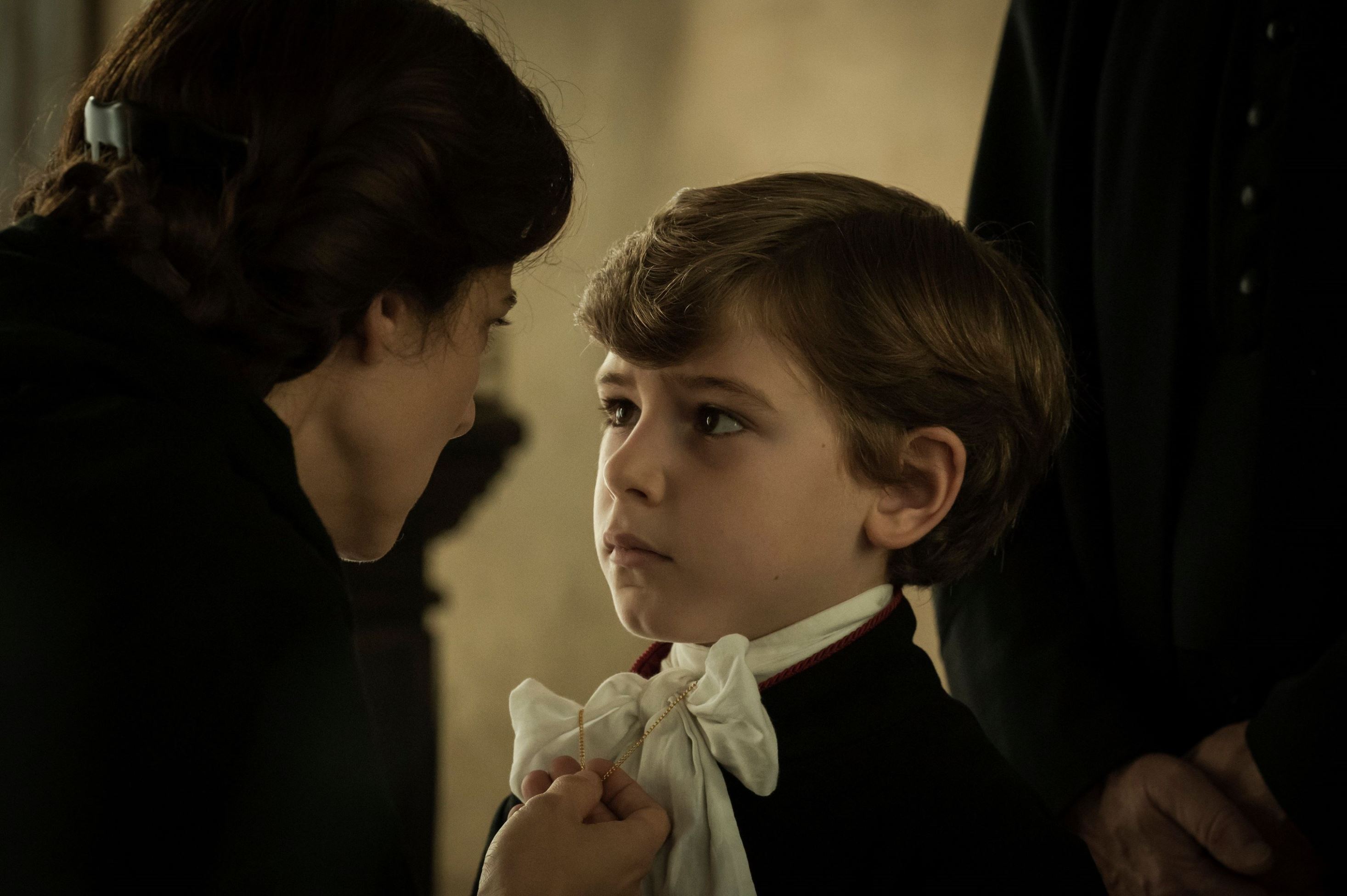
The title character (Zar Amir Ebrahimi, left) and her daughter, Mona (Selena Zahednia), in Shayda

By Richard Ades

Shayda is the story of an Iranian woman who flees a bad marriage by hiding out in a shelter for abused women.

The title character is played by Zar Amir Ebrahimi, who expressively conveys Shayda’s fears as she faces cultural and legal forces that limit her options despite the fact that she and her husband are temporarily living in Australia. Perhaps her greatest fear is that even if she wins a divorce, she could end up losing custody of her daughter.

The story is inspired by the real-life experiences of writer-director Noora Niasari, whose mother went through a similar ordeal. That explains why Shayda’s fears ring true, including her paranoia that husband Hossein will somehow discover the shelter’s secret location.

That also might explain why the character who affects us the most is Shayda’s daughter, Mona, who basically represents Niasari herself. But it certainly helps that Mona is played by a talented young actor named Selena Zahednia, whose face and voice register every emotion the girl is experiencing.

When Shayda and Mona first arrive at the shelter, the daughter is peevish and complains about missing the foods and relatives they’ve left behind in Iran. She even seems to miss her father, though she’s witnessed at least some of his brutish behavior toward her mother.

Then Hossein wins a court order granting him unsupervised visitations with his daughter, and Mona begins undergoing a subtle transformation. At first won over by her dad’s hugs and gifts, she becomes increasingly alarmed by his questions about Shayda’s comings and goings. And she feels uneasy when he asks her to keep confidences from her mother.   

As Hossein, Osamah Sami gives an unnerving portrayal of a man whose fatherly feelings may be subservient to his anger toward his wife and his patriarchal sense of entitlement.  

It’s easy to conclude that Hossein is shaped by his Muslim beliefs and that the movie is an attack on the culture that spawned them. But the flick’s main target is actually wider, as the shelter where Shayda finds refuge also houses women of other nationalities, including the UK. In other words, abuse of women is depicted as a universal problem.

Speaking of universality, the film’s main weakness is that it defines Shayda as an abused wife and devoted mother, but it fails to fill in the details that would help us understand her as an individual.

What is her background? Why is she in Australia? What are her career goals? The answers to such questions are eventually given (or at least hinted at), but in the meantime she simply comes across as a scared woman who’s desperate to change her life.

It’s one more reason why Mona stands out as the film’s most relatable character.

Rating: 3½ stars (out of 5)

Shayda (PG-13) opens April 5 at select theaters.

Stranded alcoholic goes to war with beavers

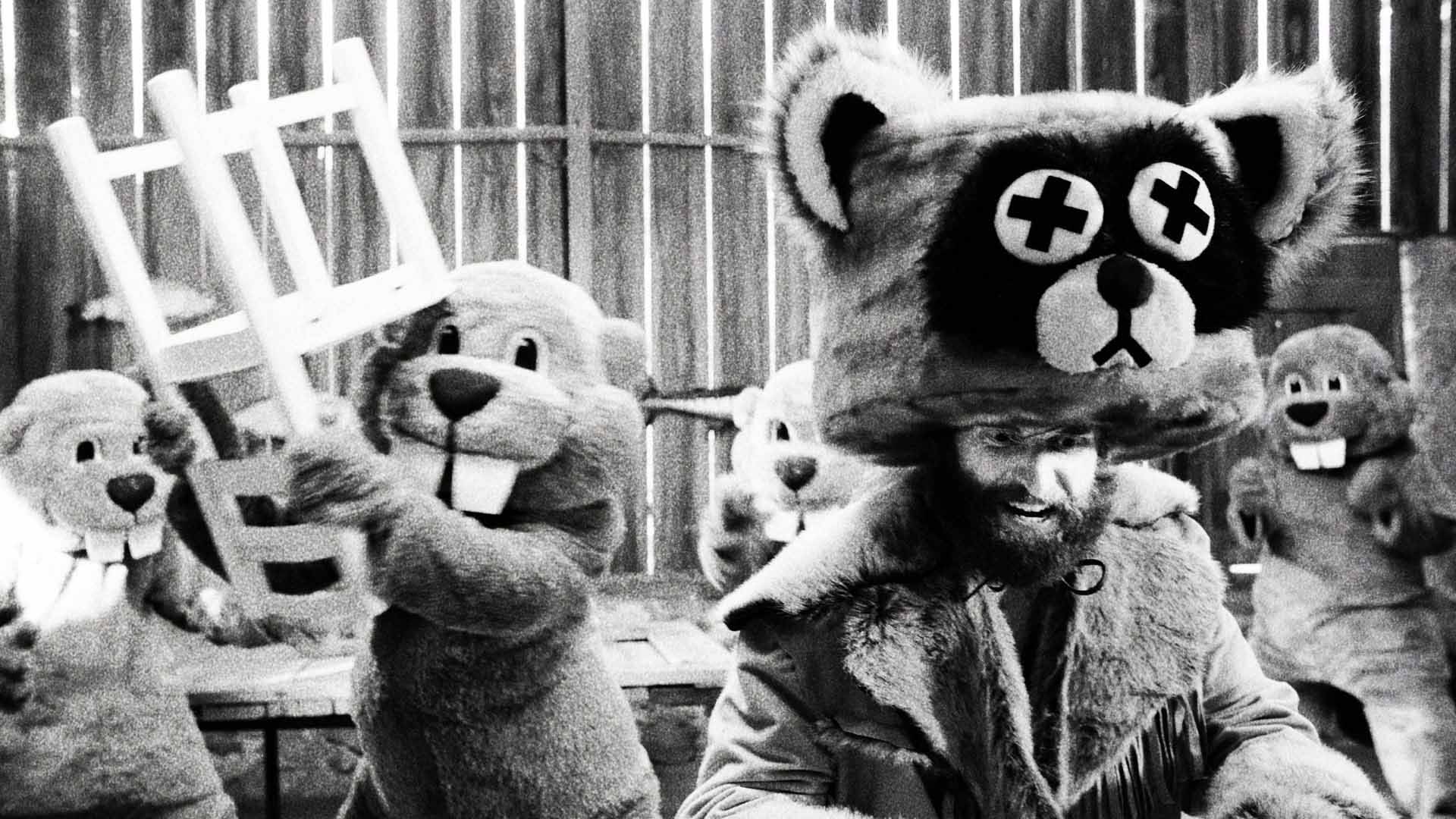
A hidden Jean Kayak (Ryland Brickson Cole Tews, foreground) watches the industrious title characters at work in Hundreds of Beavers. (Photos courtesy of hundredsofbeavers.com)

By Richard Ades

What do you get when you take a drunk applejack salesman and strand him in a wintry wilderness filled with beavers?

If the beavers were real, you’d get a very strange nature documentary. But since they’re actually people dressed in animal costumes, you instead get Hundreds of Beavers, a comedy so bizarre that it’s probably on its way to achieving cult status.

Shot in black and white and with title cards rather than spoken dialogue, Beavers borrows some of its look and feel from the silent era. More often, though, it comes off as a (mostly) live-action version of early 20th-century cartoons, which sometimes had plots and visuals so surreal that you had to wonder just what the animaters were drinking and/or smoking.

You might end up wondering the same about director Mike Cheslik and his star, Ryland Brickson Cole Tews, who collaborated with him on the script. But however they got their inspiration, they brought it to life with skill, imagination and a taste for macabre humor.

Angry beavers battle Jean Kayak, who’s wearing a hat made from one of their deceased comrades.  

Tews plays Jean Kayak, who runs the Acme Applejack farm and seems determined to drink up the profits. Then a fiery explosion turns the farm into cinders and apparently leaves Kayak in a deep slumber. When he awakens months or years later, he finds himself alone in a world covered in deep snow.

At first, Kayak spends all of his time trying to stave off hunger by hunting giant rabbits (played, of course, by people in rabbit costumes). His efforts grow more and more elaborate, but like Wile E. Coyote in the old Road Runner cartoons, he always comes up empty. (The comparison is inescapable, as Kayak’s Acme Applejack farm is no doubt an homage to the Acme Co. from which Wile E. purchased his bird-trapping supplies.)

Things finally begin turning around for Kayak after he meets several new people, including a fur trader (Wes Tank) and a merchant (Doug Mancheski). The former helps him learn the trapping skills he needs to gain an advantage over the animals he’s been hunting, while the latter motivates him by offering rewards for their carcasses.

The biggest reward is the hand of the merchant’s furrier daughter (Olivia Graves) in marriage, but the price is steep: namely, “hundreds of beavers.”

The furrier (Olivia Graves) goes to work on a beaver carcass.

Director Cheslik turns the resulting battle royale between Kayak and the beavers into an inventive and sometimes comically gruesome treat with help from collaborators such as cinematographer Quinn Hester, composer Chris Ryan and special effects coordinator Brandon Kirkham.

Most viewers will be happy to accept all the clever mayhem at face value, but those looking for a deeper meaning may find it thanks to a final character: an Indian fur trader (Luis Rico) who befriends Kayak and sometimes helps him out.

The presence of a Native American, along with an early scene that’s reminiscent of the first Thanksgiving, may serve to remind us that Europeans’ “discovery” of the New World had a profound effect on its environment. Could it be that Kayak is meant to represent the early hunters and trappers who decimated animal populations to line their own pockets?

But if there is such a message, don’t worry. The flick never takes itself seriously enough to turn into an ecological lecture. Cheslik and his cohorts are having way too much fun for that.  

Rating: 4 stars (out of 5)

Hundreds of Beavers can be seen in select theaters (including Central Ohio’s Drexel Theatre beginning April 5). It will be available online beginning April 15 via Prime Video and Apple TV, and beginning April 19 as an SVOD exclusive on Fandor.

Song writer puts faith in hard-drinking has-been

By Richard Ades

The Neon Highway begins by giving its protagonist a glimpse of the success he craves.  

Wayne Collins (Rob Mayes) and his kid brother, Lloyd (T.J. Power), perform a country tune in a Nashville bar and are an immediate hit. Afterward, two industry execs offer Wayne a contract, but they add that they have no use for his guitar-picking sibling.

What’s a brother to do? Wayne is so eager to launch a music career that he appears ready to throw Lloyd under the bus. Then, while driving home, he almost literally does just that thanks to a highway accident.  

The tragedy seems to leave all thoughts of a music career in the rear-view mirror, as we next find Wayne working as a phone/internet installer in Georgia some seven years later. But then, as luck would have it, he’s sent to fix a line for a man who turns out to be one-time country icon Claude Allen (Beau Bridges).

Wayne shows Claude one of his original tunes, and in no time the two are driving to Nashville—where, the older man insists, they’ll be welcomed with open arms. In reality, the city proves to be far less hospitable.

By convincingly playing a washed-up country singer with an alcohol problem, Bridges is following in the footsteps of brother Jeff, who portrayed a similar character in 2009’s Crazy Heart. If we don’t root for him as much as we did for Jeff’s hopeful has-been, it’s partly because Claude is simply not very likable.

As depicted by Bridges, and as directed and co-written by William Wages, Claude is arrogant and obnoxious toward everyone around him, even those who love him. He’s also blatantly self-serving, to the extent that Wayne wonders whether the ex-idol can be trusted to look out for his best interests or is simply using him to stage a comeback.

All this could have made for some powerful drama and an interesting character study. As time goes on, Claude persuades Wayne to put a lot on the line, including his job and a good deal of cash, yet Wayne refuses to give up on him. Is he motivated by guilt over what happened long ago between him and his brother?

That would seem to be the situation the flick’s prologue set up, but the script never capitalizes on its potential. In fact, it doesn’t even make it clear whether Wayne is driven by his love of music or simply by his family’s financial challenges, including a broken dryer and a son in need of college tuition.

Mayes’s Wayne is as likable as Bridges’s Claude is unlikable, and both display authentic country singing voices. But their efforts are undercut by a script that drowns any potential drama in bland dialogue and superfluous characters.

Ultimately, the flick, like the people it portrays, is a study in lost opportunities.

Rating: 2 stars (out of 5)

The Neon Highway (PG-13) opens March 15 in select theaters.

Young migrants’ journey turns into nightmare

Seydou (Seydou Sarr, center) and other migrants crowd into a boat that they hope will take them to Italy. (Photos courtesy of Cohen Media Group)

By Richard Ades

In this presidential election year, it’s easy to forget that migrants are not merely a campaign issue. They’re also desperate people who sometimes take unimaginable risks in their search for a better life.

One such person is at the center of Io Capitano (“I Captain”), the Italian nominee for this year’s International Feature Film Oscar. Directed and co-written by Matteo Garrone (2008’s Gomorrah), it’s the story of Seydou (Seydou Sarr), a 16-year-old Senegalese musician who believes he can become a superstar if only he and his cousin Moussa can find their way to Italy.   

The youths’ optimism is challenged when a local elder warns them the trip will be risky, and that even if they get to Europe, they’ll find it’s far from a paradise. His words nearly scare Seydou into abandoning the journey, but then Moussa (Moustapha Fall) reminds him of the fame that hopefully awaits them in Europe.   

“White people will be asking for your autograph,” the cousin predicts.

So, after seeking guidance from a neighborhood mystic, they set off, only to learn that the elder’s warnings were all too accurate. Soon they’re dealing with bribe-seeking officials, unreliable guides, desert heat and much worse in a journey that begins to resemble Dante’s descent into hell.

African migrants are forced to cross the Sahara Desert on foot in a scene from Io Capitano.

Worst of all, they’re eventually separated, leaving Seydou to continue on his own. Will the teen, who had to be coaxed into taking the trip, be up to the task? Will he even have the chance to go on, or has his luck run out?  

Garrone’s film begins as a warmhearted celebration of Senegalese culture before evolving into a terrifying depiction of the hazards that await would-be migrants such as Seydou and Moussa. Whether any of them succeeds, it seems, depends on a mixture of strength, grit and just plain luck.

Leading a uniformly good cast, Sarr turns the kind-hearted Seydou into a likable, root-worthy protagonist. Behind the scenes, cinematographer Paolo Carnera supplies images that are striking whether they depict a Senegalese dance or a forced march through the Sahara Desert.

Io Capitano goes a bit overboard toward the end by allowing its drama to escalate into hectic melodrama. Otherwise, it’s a moving depiction of a search for a better life that morphs into a fight for survival.

Rating: 4 stars (out of 5)

Io Capitano opens in select cities Feb. 23 and expands to other theaters in the following weeks, including Columbus’s Gateway Film Center on March 1.

Democracy comes to Bhutan. Hilarity ensues.

An elderly Buddhist lama (Kelsang Choejey, who is a lama in real life) has a mysterious need for a firearm in The Monk and the Gun. (Photos courtesy of Roadside Attractions)

By Richard Ades

It was less than 20 years ago that the Himalayan country of Bhutan modernized and transformed itself from a kingdom into a democracy. The resulting repercussions are at the center of a warmly funny and slyly satirical film called The Monk and the Gun.

Written and directed by Pawo Choyning Dorji (2019’s Lunana: A Yak in the Classroom), the film introduces us to seemingly unrelated characters whose paths ultimately converge in a momentous and meaningful way.

There’s Tshering (Pema Zangmo Sherpa), an official charged with preparing remote villagers for the “mock election” that’s meant to serve as democracy’s dry run. There’s Choephel (Choeying Jatsho), who’s earned the wrath of his mother-in-law and neighbors by backing an unpopular candidate.

There’s also Benji (Tandin Sonam), a city dweller who hopes to make some quick cash by serving as a guide for a treasure-seeking American improbably named Ronald Coleman (Harry Einhorn).

Finally, giving the flick its name, there’s Tashi (Tandin Wangchuk), a Buddhist monk who’s ordered by his “lama” to find two guns by the time the full moon arrives in four days. Why, asks Tashi, who’s never even seen a gun. “To make things right,” the lama (Kelsang Choejey) replies cryptically.

Tashi (Tandin Wangchuk, right) barters over the ownership of a vintage rifle with American gun collector Ronald Coleman (Harry Einhorn, left) and his guide, Benji (Tandin Sonam).  

Because guns are a rarity in Bhutan, and because the treasure the American seeks is a rare Civil War rifle that somehow made its way into a local man’s home, it’s inevitable that Coleman and Tashi end up looking for the same weapon. That sets up a dilemma that eventually sends Coleman and his guide off on a risky and illegal mission, but not until it’s exposed the visitor to one of the many cultural shocks he encounters.

After finding the prized gun and offering to buy it for a small fortune, Coleman learns from his guide that the owner is reluctant to sell because he considers the amount too high. “Wait, what?” the American says, astounded that anyone would choose scruples over a life-changing infusion of money.

Meanwhile, elections official Tshering encounters cultural shocks of another kind as she tries to sell democracy to the local villagers. As Buddhists who’ve always devoted themselves to living in harmony, they can’t understand why they’re suddenly being asked to divide themselves into mutually hostile political factions.

Many of the flick’s satirical jabs are aimed at the U.S.: at our materialism, at the ever-growing viciousness of our political process, and especially at our love affair with guns. But Dorji also aims much of the humor at his own countrymen, especially those who think adopting Western-style ways will automatically guarantee them a better life.  

Driven by Dorji’s clever script, Jigme Tenzing’s serene choreography and convincing performances by the mostly amateur cast, The Monk and the Gun is a delight from beginning to its surprisingly uplifting ending.

Rating: 5 stars (out of 5)

The Monk and the Gun opens Feb. 9 in theaters nationwide, including Columbus’s Gateway Film Center.

She forged a new way to look at racism

Aunjanue Ellis-Taylor stars as author Isabel Wilkerson in Origin. (Photos by Atsushi Nishijima/courtesy of Neon)

By Richard Ades

Isabel Wilkerson’s 2020 book Caste: The Origins of Our Discontents was praised for its incisive comparison between racial repression in the U.S. and repressive systems in other countries. In particular, it looked at India’s caste system and Nazi Germany’s genocidal antisemitism.

Now writer-director Ava DuVernay has transformed that best-selling book into a semibiographical movie called Origin, which explains the challenges Wilkerson faced as she was formulating her provocative ideas. Besides facing pushback from African Americans and others who questioned her thesis, we learn, she lost several beloved members of her family.

DuVernay, who wrote the script with Wilkerson herself, apparently hopes these personal tragedies will inject enough drama into the film to prevent it from coming off as a mere lecture.

Wilkerson (Aunjanue Ellis-Taylor, right) is comforted by her husband, Brett (Jon Bernthal).

First, the bad news: It still comes off largely as a lecture despite solid acting by Aunjanue Ellis-Taylor (as Wilkerson) and the rest of the cast. But the good news is that the lecture imparts enough details about Wilkerson’s revolutionary thesis to be worthwhile. Those who haven’t read the book will find it enlightening, while those who have read it may see it as a useful recap.

In a nutshell, Wilkerson contends that our country’s history of repression toward Blacks—from slavery and racist laws to the recent murders of innocent African Americans such as Trayvon Martin—has much in common with other societies’ attempts to devalue certain groups and depict their members as less than human.

In India, that group is the Dalits (formerly known as the Untouchables), who often are denied educational opportunities and relegated to the most menial of jobs. In Nazi Germany, of course, that group was the Jews.

Throughout the film, historical incidents are recreated to give the victims and perpetrators of repression a human face. Among others, we meet a Black couple and a White couple who worked undercover to understand racism in the Jim Crow South. We also meet a Gentile man and a Jewish woman who fell in love in Germany during the rise of Naziism.

Nazis hold a public book burning in a scene from Origin.

Dramatically, perhaps the most effective of these recreations involves a young Black baseball player who wasn’t allowed to swim when his White teammates dropped by the local pool. Historically, the most shocking scene (for those unfamiliar with Wilkerson’s book) shows Nazi officials patterning Germany’s antisemitic laws after American laws that relegated Blacks to second-class citizenship.

In the more contemporary scenes involving Ellis-Taylor’s Wilkerson, the other major cast members include Jon Bernthal as her husband, Brett; Emily Yancy as her mother, Ruby; and Niecy Nash as her cousin, Marion.   

DuVernay’s 2014 film Selma was a fascinating look at Martin Luther King and the pivotal role he played in the Civil Rights movement. The director’s new film may not be as dramatically effective, but it is every bit as illuminating.

Rating: 3 stars (out of 5)

Origin (PG-13) can be seen in theaters nationwide.

Black writer rebels against tired stereotypes

Thelonius “Monk” Ellison (Jeffrey Wright) resents fellow writers who trade in racial stereotypes. (Photo by Claire Folger/Orion Pictures Inc.)

By Richard Ades

American Fiction’s opening credits are accompanied by funky music reminiscent of ’70s “blaxploitation” cinema. That efficiently sets us up for the flick’s satire of entertainment that trades in Black stereotypes.

If only the satire itself were delivered as efficiently. Instead, director/co-writer Cord Jefferson mixes it in with a series of family and personal tragedies and challenges that delay and dilute its message.

It’s all pleasantly entertaining, thanks largely to a fine cast led by Jeffrey Wright. It’s just not as pointed as it might be.

Wright plays Thelonius “Monk” Ellison, an L.A.-based writer of brainy books that struggle to find an audience. While attending a book festival in Boston, his hometown, Monk is frustrated to find that most of the attention is being grabbed by up-and-coming author Sintara Golden (Issa Rae) and her best-selling tale of inner-city life, We’s Lives in da Ghetto.

Author Sintara Golden (Issa Rae, left) and a fawning interviewer (Nicole Kempskie) discuss Sintara’s acclaimed novel, We’s Lives in da Ghetto. (Photo courtesy of Orion Pictures Inc.)

Sintara’s success, combined with Monk’s failure to find a publisher for his latest ultra-intellectual effort, confirms his view that African American writers can’t sell books unless they fill them with stereotypical representations of Black existence. In other words, they have to be immersed in crime, poverty, anger, drugs and violence.

In an effort to dramatize the absurdity of the situation, Monk dashes off an exaggerated version of such a book and instructs his agent (John Ortiz) to market it under the pen name Stagg R. Leigh. Anyone who’s seen The Producers will probably guess what happens next: Much to Monk’s chagrin, this supposed loser is snapped up by eager publishers who see it as a surefire hit.

This forces Monk to play the part of the fictitious author, who’s supposedly a street-wise escaped felon, while interacting with various bigwigs who not only want to publish the book but to turn it into a Hollywood blockbuster. The result is comedic and satirical gold.

Monk’s brother, Clifford (Sterling K. Brown), makes an unexpected appearance in the family pool. (Photo courtesy of Orion Pictures Inc.

Before we get to that point, however, Monk’s life is hit with several complications, including an unexpected death, a mother (Leslie Uggams) who’s stricken with Alzheimer’s, an estranged brother (Sterling K. Brown) who recently came out as gay and an amorous neighbor (Erika Alexander).

These and other developments are generally handled well, but they do nothing to advance the flick’s frontal attack on an entertainment industry that too often deals in racial stereotypes.

The film reclaims its satirical edge with an unconventional finale that debates just what kind of story it meant to tell. That’s a clever and all-too-appropriate way to wrap things up, since it’s apparent that first-time filmmaker Jefferson, as talented as he is, never quite made up his mind.

Rating: 3½ stars (out of 5)

American Fiction (rated R) opens Dec. 11-12 in theaters nationwide.

Critics name the best of 2023

The 22nd annual Columbus Film Critics Association Awards, honoring the best in film for 2023, were announced on Jan. 4. The winners are listed below.

Lily Gladstone (left) and Leonardo DiCaprio in Killers of the Flower Moon, winner of several honors in the Columbus film critics’ annual poll

Best Film

  1. Killers of the Flower Moon
  2. The Holdovers
  3. Poor Things
  4. Past Lives
  5. Oppenheimer
  6. Barbie
  7. American Fiction
  8. The Zone of Interest
  9. Spider-Man: Across the Spider-Verse
  10. The Iron Claw

Best Director

  • Martin Scorsese, Killers of the Flower Moon
  • Runner-up: Greta Gerwig, Barbie

Best Lead Performance

  • Emma Stone, Poor Things
  • Runner-up: Lily Gladstone, Killers of the Flower Moon

Best Supporting Performance

  • Jodie Foster, Nyad
  • Runner-up: Da’Vine Joy Randolph, The Holdovers

Best Ensemble

  • Killers of the Flower Moon
  • Runner-up: Poor Things

Actor of the Year (for an exemplary body of work)

  • Sandra Hüller, Anatomy of a Fall (Anatomie d’une chute) and The Zone of Interest
  • Runner-up: Jeffrey Wright, American FictionAsteroid City and Rustin

Breakthrough Film Artist

  • Lily Gladstone, Killers of the Flower Moon – (for acting)
  • Runner-up: Celine Song, Past Lives – (for directing and screenwriting)

Best Cinematography

  • Robbie Ryan, Poor Things
  • Runner-up: Rodrigo Prieto, Killers of the Flower Moon

Best Film Editing

  • Thelma Schoonmaker, Killers of the Flower Moon
  • Runner-up: Jennifer Lame, Oppenheimer

Best Adapted Screenplay

  • Kelly Fremon Craig, Are You There God? It’s Me, Margaret.
  • Runner-up: Eric Roth and Martin Scorsese, Killers of the Flower Moon

Best Original Screenplay

  • David Hemingson, The Holdovers
  • Runner-up: Justine Triet and Arthur Harari, Anatomy of a Fall (Anatomie d’une chute)

Best Score

  • Robbie Robertson, Killers of the Flower Moon
  • Runner-up: Ludwig Göransson, Oppenheimer

Best Documentary

  • (Tie): Anselm (Anselm – Das Rauschen der Zeit) and Kokomo City
  • Runners-up (tie): 20 Days in Mariupol and Still: A Michael J. Fox Movie

Best Foreign Language Film

  • Afire (Rotter Himmel)
  • Runner-up: Anatomy of a Fall (Anatomie d’une chute)

Best Animated Film

  • Nimona
  • Runner-up: Spider-Man: Across the Spider-Verse

Frank Gabrenya Award for Best Comedy

  • The Holdovers
  • Runner-up: American Fiction

Best Overlooked Film

  • Are You There God? It’s Me, Margaret.
  • Runner-up: Showing Up

Wrestling family on the road to tragedy

The wrestling Von Erich brothers are (from left): David (Harris Dickinson), Kevin (Zac Efron), Mike (Stanley Simons) and Kerry (Jeremy Allen White). (Photo by Eric Chakeen)

By Richard Ades

When wrestler Kevin Von Erich (Zac Efron) tells his future wife how much he cares about his younger brothers, she says he must have “oldest son syndrome.” She’s right, it turns out, as every time one of his sibs succumbs to what Kevin calls the family curse, the pain and concern are etched all over his face.

Curses are imaginary, of course, but it’s hard not to believe in them after watching The Iron Claw. The tale eventually racks up so much tragedy that writer/director Sean Durkin might be accused of melodramatic overkill if he hadn’t based his script on the Von Erichs, a real-life family of wrestlers that won notoriety in the 1980s.

A black-and-white prologue explains the Texas-based dynasty’s origins. Fritz Adkisson (Holt McCallany), who competes under the stage name Von Erich, believes he can make his fortune in the ring if only he commits himself to the task. He’s so convinced of his future success that he surprises wife Doris (Maura Tierney) with a Cadillac that she knows they can’t afford.

Kerry (Jeremy Allen White, left) and David (Harris Dickinson) share a triumphant moment in the ring. (Photo by Brian Roedel)

The film then fast-forwards a couple of decades to find Fritz equally committed to turning his now-grown sons into successful wrestlers. At first, that means only Kevin and second-oldest David (Harris Dickinson), but eventually Fritz wheedles younger brothers Kerry (Jeremy Allen White) and would-be musician Mike (Stanley Simons) into joining the family business.

How? Apparently Fritz relies on parental authority and none-too-subtle appeals to sibling rivalry. In an early scene, he goes so far as to rank his sons in order of preference, telling them their rankings are subject to change depending on their actions. In other words, he’s not exactly in the running for Father of the Year.

Just as future wife Pam (Lily James) predicted, Kevin ends up feeling protective toward his younger brothers when he thinks his dad is treating them like pawns. For the most part, though, he says nothing, either on their behalf or his own, even after Fritz begins granting the others opportunities that had been promised to him.

Pam (Lily James) and her husband, Kevin (Zac Efron) (Photo by Brian Roedel)

In fact, no one says anything, allowing Fritz to push his offspring into situations that prove increasingly dangerous for them and the family as a whole. The result is a slow-motion disaster that would be painful to watch if it weren’t so beautifully acted.

Leading the cast, a bulked-up Efron aces the part of the self-effacing, self-doubting Kevin, while McCallany makes Fritz an understated portrait of modern Machiavellianism. Equally effective are Dickinson, White and Simons as the younger brothers, Tierney as the emotionally distant mother and James as the warm-hearted Pam.

The moral of the story seems to be that wrestling may be a make-believe sport, but the dangers it presents can be all too real—especially when you’re pushed into it by someone guided solely by his own self-interest.

Rating: 4 stars (out of 5)

The Iron Claw (rated R) opens Dec. 22 in theaters nationwide.

The Irish town where music is a way of life

By Richard Ades

It’s a pity I couldn’t have seen The Job of Songs before taking a trip to Ireland a few years back.

My partner and I were eager to hear authentic Irish music in authentic Irish pubs, but we had little idea where to look. We didn’t know that close to the popular tourist destination known as the Cliffs of Moher is a village steeped in Irish musical traditions.

The tune-filled documentary—directed, edited and co-written by Lila Schmitz—introduces us to Doolin, located in County Clare on the west coast of Ireland. A musician who performs under the stage name Luka Bloom says he moved to the town decades ago after discovering that its entire population was into music just as much as he was.

Apparently, Doolin’s musical fame has spread across the pond and beyond. Local radio deejay Eoln O’Neil is shown spinning Irish tunes on a show that attracts listeners from around the world.

The town is also popular with tourists, who have begun dropping by for a quick fix of music on their way to or from the Cliffs of Moher. It’s a trend that some locals look down on, one complaining that the visitors ought to stick around long enough to meet some actual Irish people.

Speaking of which, the film introduces to several Doolin residents of all ages who devote their lives to playing music. The oldest is Ted McCormic, who has only one leg but doesn’t let either his disability or his 80-plus years stop him from sharing his still-strong voice at local jams.  

Other featured musicians include Anne Rynne, who begin playing and writing songs in her 60s after receiving a guitar from her brother, Bloom.

Radio host O’Neil points out the inescapable fact that beautiful but mournful airs make up much of the traditional Irish repertoire. “It’s in our DNA,” he says.

Unfortunately, the sad tunes are more than simply a musical taste, as depression, alcoholism and even suicide are described as widespread problems in the area.

Red-haired Katy Theasby talks about her own struggles with depression and overindulgence, but she says music was her salvation. After obtaining a new tin whistle, she says, she found that for the first time she was able to play without drinking.

Whether for their mental health, personal fulfillment or other reasons, all of the Doolin musicians clearly feel that playing is as necessary as breathing. According to one, listening to music is also important for non-musicians, explaining that the “job of songs” is to allow these folks to feel even though they don’t have songs of their own.

In much the same way, the job of Schmitz’s documentary is to allow viewers to “visit” the musical mecca known as Doolin even though they’ve never actually been there.

Rating: 4 stars (out of 5)

The Job of Songs (no MPAA rating) is available from various digital platforms. For information, visit thejobofsongs.com.