Reviews

Search for daughter leads father, son into peril

By Richard Ades

Of the five films up for an international Oscar, Sirat is by far the most unsettling.

I say that without fear of contradiction, even though I have yet to see most of its competitors. Watching Spain’s nominee is simply the kind of nerve-wracking experience that few films can match.

French-born director/co-writer Oliver Laxe begins his tale as a massive rave is getting underway in the middle of the Moroccan desert. After arriving in trucks and other weather-beaten vehicles, hardcore enthusiasts begin dancing ecstatically to bass-heavy beats that echo against rocky canyon walls.

It’s into this scene that a middle-aged Spaniard named Luis (Sergi Lopez) arrives with his young son, Esteban (Bruno Nunez Arjona). Passing out fliers with pictures of his grown daughter, Luis explains that she’s disappeared to join the raver lifestyle, and he thinks she might be here.

As it turns out, no one has seen her, but Luis learns she could be at an upcoming rave happening far to the south in Mauritania. Then comes an unexpected complication followed by a fateful decision.
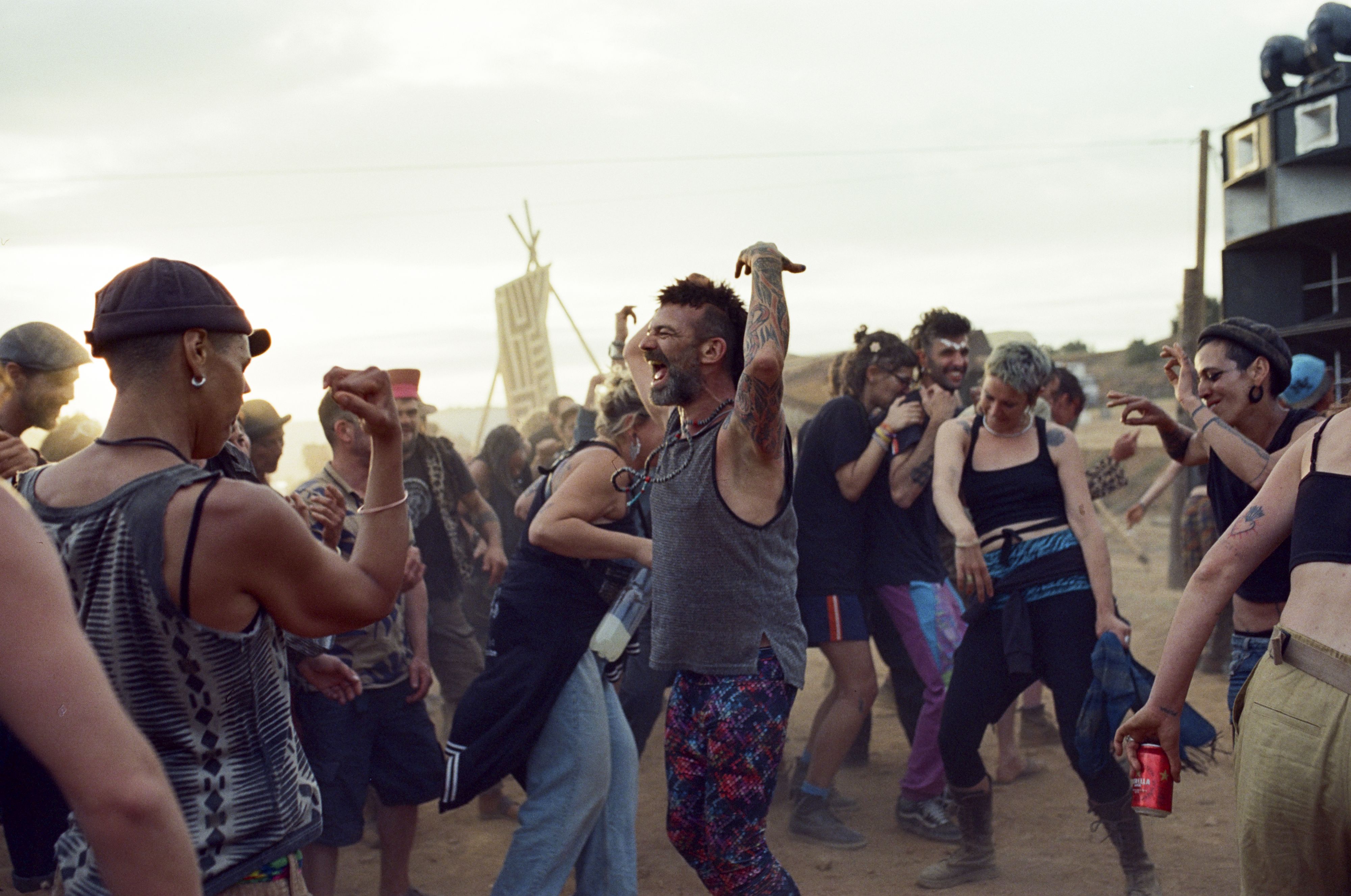
Ravers do their thing in an early scene from Sirat.

Soldiers arrive and order all Europeans to leave the country due to a developing military conflict. When a few ravers revolt by instead heading south toward their next gathering, Luis decides to follow, thus sending him and his son on a journey into a hellish landscape filled with dangers both natural and manmade.

“Hellish,” by the way, is an appropriate adjective, according to words that flash on the screen at the film’s beginning. Referring to Islamic beliefs concerning the path souls must follow in the afterlife, they explain that the Sirat bridge connects heaven and hell and is “narrower than a strand of hair and sharper than a sword.”

Translation: Salvation is hard to come by.
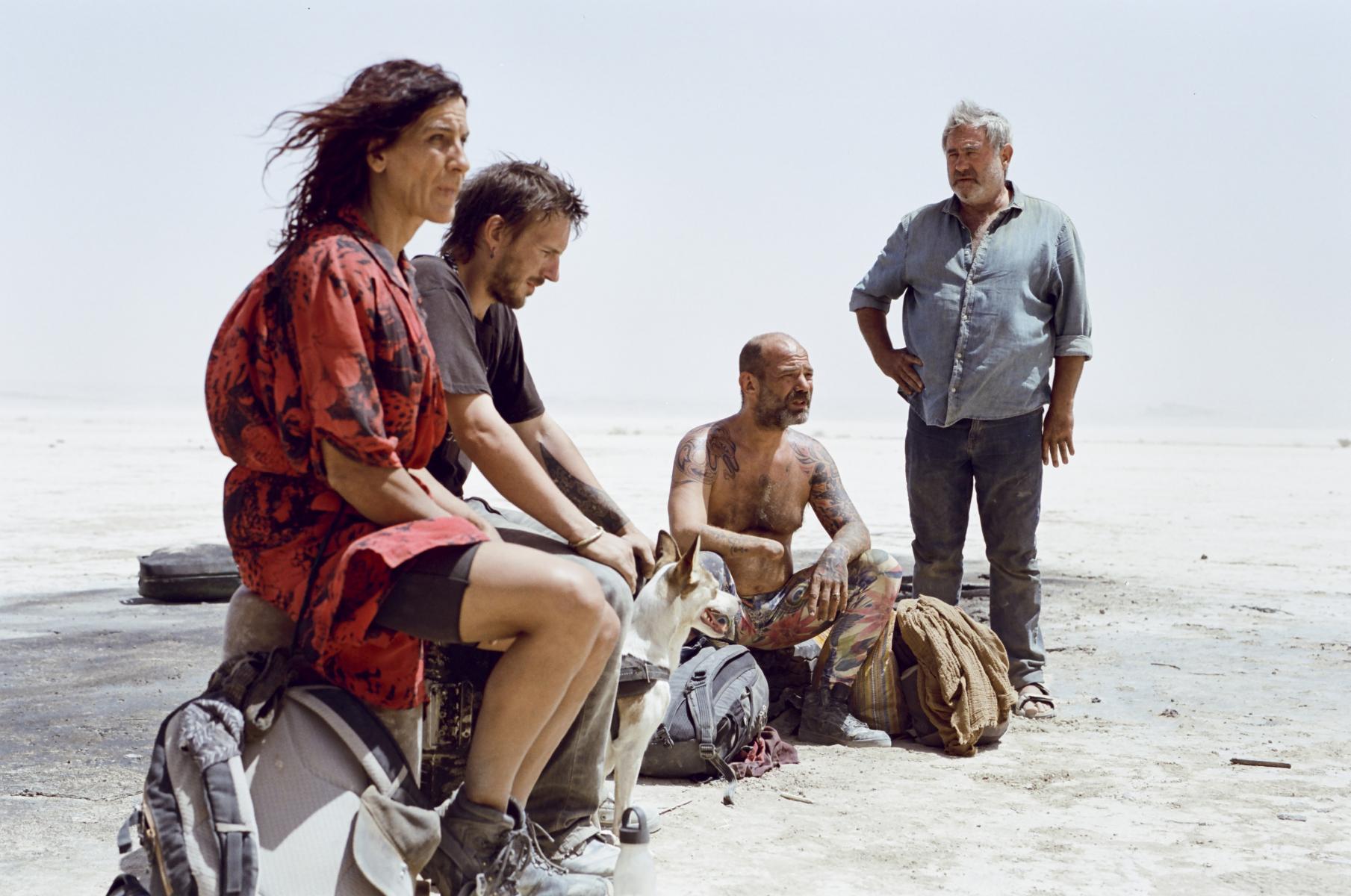
Luis (Sergi Lopez, right) with some of his newfound raver friends

For those of a spiritual bent, this offers one way to view the nightmarish trip Luis, Esteban and their adopted raver friends take as they head across the desert and over treacherous mountain roads—all the while hearing news reports of military actions that threaten to escalate into World War III.

For those of a more political bent, the trip might be seen as the emotional approximation of what it’s like to live in a world that increasingly seems at the mercy of leaders who have no compunction about starting wars and killing innocents to serve their own purposes.

However you interpret the characters’ tribulations, you can’t help but be moved by them thanks to director Laxe and collaborators such as cinematographer Mauro Herce and composer Kangding Ray, as well as a convincing cast consisting largely of gifted amateurs.

Sirat, in other words, is one painful ride.

Rating: 4 stars (out of 5)

Sirat (rated R) can be seen at select theaters, including the Gateway Film Center in Columbus, and is scheduled to expand nationwide beginning March 6.


Girl risks her life to bake a cake for Saddam

Baneen Ahmad Nayyef plays Lamia, an Iraqi girl who faces a daunting task in The President’s Cake.

By Richard Ades

Five films have received Oscar noms in the international category, including the French-sponsored Iranian drama It Was Just an Accident and the apparent front-runner, Brazil’s The Secret Agent.

Not on the final list is Iraq’s nominee for the honor—though it’s hard to say why, because the film is a gem.

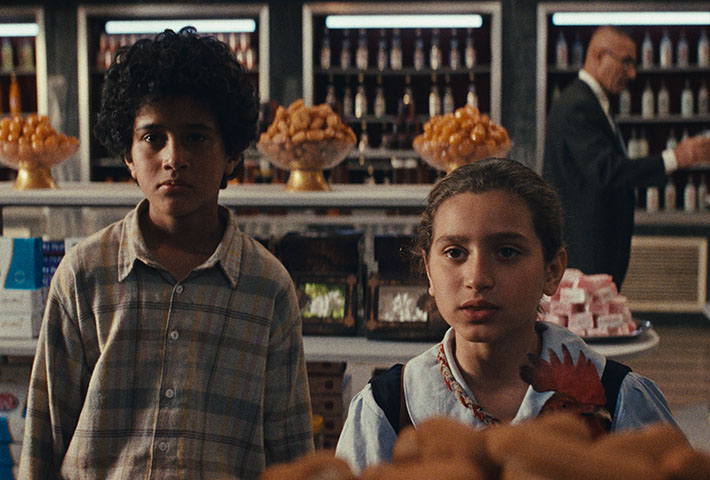
The President’s Cake, written and directed by Hasan Hadi, is the alternately sad, funny and nail-biting story of Lamia, a 9-year-old girl who receives an unwanted honor: Thanks to a classroom lottery, she’s one of many citizens from across the country who are chosen to bake birthday cakes in honor of dictatorial leader Saddam Hussein.

What makes this task so difficult is that the tale is set in 1990, when Iraq’s invasion of Kuwait has made it the target of military attacks and economic sanctions. As a result, day-to-day survival is hard enough, and finding necessary ingredients such as flour and sugar is nearly impossible.

Lamia (Baneen Ahmad Nayyef) seldom goes anywhere without her pet rooster, Hindi.

Portrayed with a combination of pluck and vulnerability by Baneen Ahmad Nayyef, Lamia is already living on the edge—literally, as her home is located in the swampy Mesopotamian Marshes. Apparently parentless, the child shares a tiny home with her diabetic grandmother, Bibi (Waheed Thabet Khreibat), and a rooster named Hindi. Beyond the pet bird, her only friend seems to be Saeed (Sajad Mohamad Qasem), a neighbor with a reputation for getting into trouble.

When Lamia tells Bibi about her cake-making assignment, the grandmother insists that she skip classes the next day so they can take a trip to the city. Lamia assumes the purpose is to find the proper ingredients, but it turns out Bibi has something else in mind. Knowing her health is failing, the elderly woman plans to leave Lamia with a friend who’s better able to take care of her.

Unfortunately, Lamia mistakes her grandmother’s concern for anger, and she grabs her pet rooster and escapes into the streets of Baghdad. Knowing her friend Saeed had also planned to be in the city that day, she meets up with him and enlists his help as she proceeds to search for the elusive cake ingredients.

The result is a perilous journey that could be described as Dickensian (as in Charles) or Chaplinesque (as in Charlie). Nearly everyone they meet tries to ignore, cheat or even harm them, forcing them to rely on each other and on their own ingenuity. A fine cast, led by the talented youngsters playing Lamia and Saeed, makes it a gripping experience.

Like the aforementioned It Was Just an Accident, Hadi’s debut film portrays a country distorted by authoritarian politics. Hussein’s insistence on total devotion can be seen in the chants of allegiance Lamia and her classmates are forced to repeat every day, and in the countless images of him that can be seen displayed on Baghdad streets.

Lamia (Baneen Ahmad Nayyef, right) searches for cake ingredients with her friend, Saeed (Sajad Mohammad Qasem).

The film also shows how ordinary Iraqis are hurt by the world’s responses to Hussein’s aggression, including military attacks and sanctions that keep necessary food and medicine out of their hands. It’s a reminder that even well-intentioned actions can have unintended consequences, though it somewhat dilutes Hadi’s political message.

Maybe this helps to explain why the film didn’t score an Oscar nom even though it has so much to offer. Besides an absorbing story, its portrayal of a country under the control of a leader who demands constant obedience and adoration is a chilling vision of where the awards’ host country could well be headed.

Rating: 4 stars (out of 5)

The President’s Cake opened Feb. 6 in New York and Los Angeles and will open wide on Feb. 27.

Blacks, Jews unite in fight to liberate amusement park

By Richard Ades

PBS has just launched Black and Jewish America, a four-week miniseries that examines the political and historical ties between African Americans and Jewish Americans.

For those who want to examine the topic further, a new documentary directed by Ilana Trachtman is a good place to start. Ain’t No Back to a Merry-Go-Round tells the fascinating story of a 1960 protest that unexpectedly created cross-cultural ties.

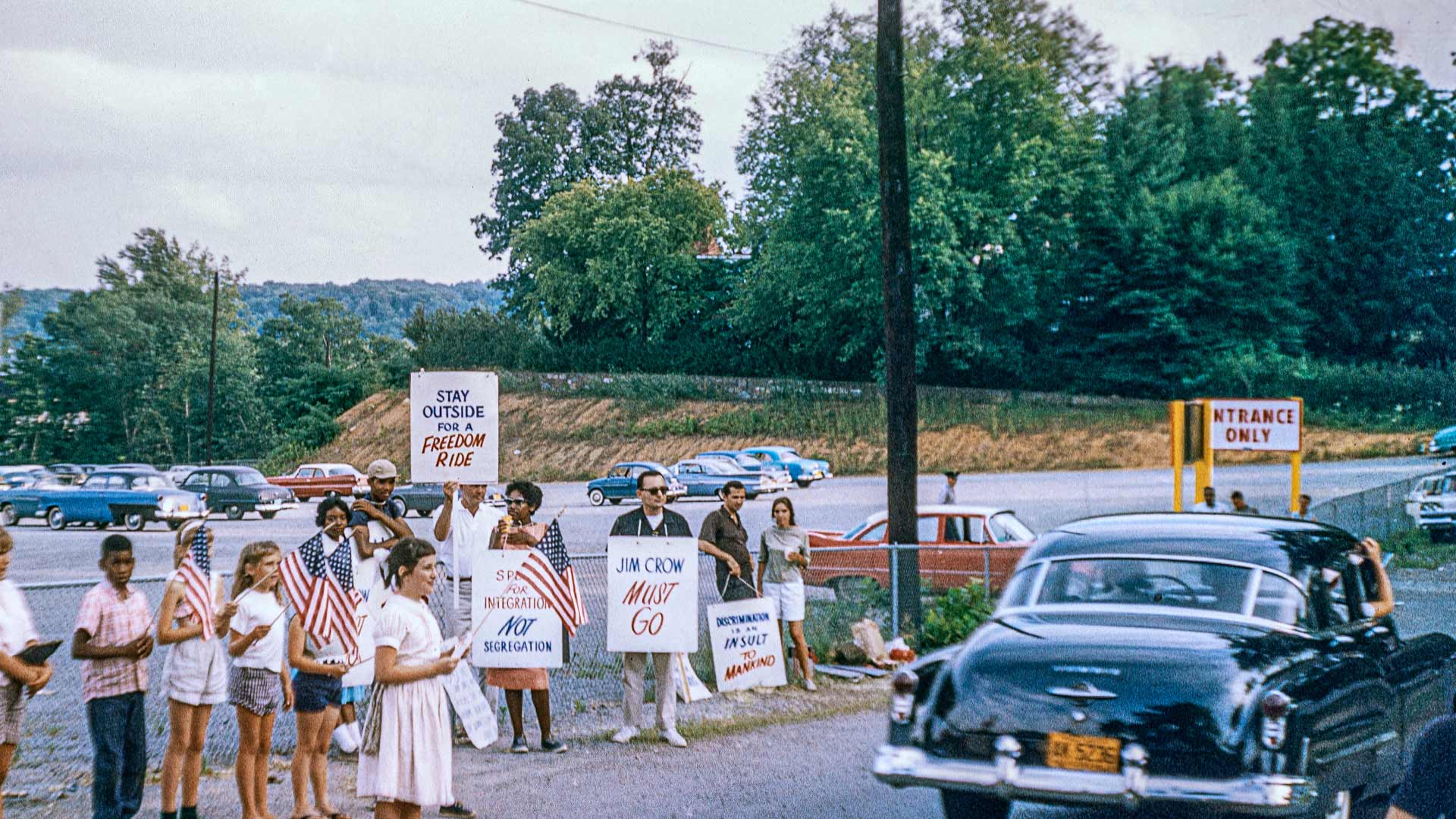
The protest centered on Glen Echo Amusement Park, which once served as a recreation destination for families in the Washington, D.C. area. Offering rides, snacks and a giant pool, it had everything parents needed to keep their kids entertained on hot summer days.

The only problem: You had to be White to enter. Children from local Black neighborhoods could only watch the fun from outside the gates.

The situation eventually prompted students from nearby Howard University to do something about it. However, it took them awhile to get to that point, according to Dion Diamond, one of two Howard alumni interviewed for Trachtman’s film.

During the 1950s, Diamond recalls, most students of the historically Black university were comfortably middle-class and refused to acknowledge that segregation affected them. That didn’t begin to change, he says, until Southern activists launched a sit-in campaign aimed at integrating Woolworth’s lunch counters.

Picketers urge families not to patronize the segregated Glen Echo Amusement Park in a scene from Ain’t No Back to a Merry-Go-Round.

Inspired by the action, Howard students formed their own civil rights organization, the Nonviolent Action Group, or NAG. Then, after the sit-in achieved success by forcing most Woolworth’s stores to integrate, the group began looking for a new issue to tackle.

They soon found one in their own backyard: Glen Echo.

Thus it was that NAG announced its decision to begin picketing the amusement park on June 30, 1960—only to learn that the issue had already been adopted by residents of Bannockburn, a progressive and largely Jewish neighborhood in nearby Bethesda, Maryland.

Through interviews with Diamond, fellow Howard alum Hank Thomas and then-Bannockburn residents Helene Wilson Ageloff and Esther Delaplain, the documentary explains what happened next.

The Howard students at first had mixed feelings about their new allies, and they were uneasy about the fact that their picket lines were predominantly White. But as the summer wore on, a spirit of camaraderie developed among the students, the Bannockburn volunteers and local Black residents who joined the struggle.

This was fortunate because they faced a difficult battle, which the documentary depicts with the help of vintage footage. Not only did the park’s owners refuse to capitulate, but the picketers were bombarded with racist and antisemitic insults—and even threats—from counter-protesters, including some who wore swastikas.

Trachtman’s documentary reports the protest’s eventual outcome, but it doesn’t stop there. It also reveals the action’s long-term effects on its participants, several of whom went on to engage in other civil rights efforts such as the Freedom Rides.

Toward the end of the film, Howard alumnus Thomas is shown telling a group of students one important fact he learned from the protests: that American Jews have been some of African Americans’ most important allies.

That’s a good jumping-off place for tackling PBS’s Black and Jewish America, which examines the long and sometimes difficult relationship between two groups bonded by their familiarity with historic discrimination.

Rating: 4 stars (out of 5)

Ain’t No Back to a Merry-Go-Round can be seen in select theaters and will make its Columbus, Ohio, debut at 2 p.m. Feb. 15 at the Gateway Film Center. For a list of other screenings, visit aintnoback.com/screenings/.

 Black and Jewish America: An Interwoven History, hosted by Henry Louis Gates Jr., airs at 9 p.m. Tuesdays on WOSU-TV in Columbus. Check local listings for times in other areas.

Musical goes from OK to great when the DeLorean reaches 88

Marty (Lucas Hallauer) realizes his inventor friend’s DeLorean really is a time machine. (photo by McLeod9 Creative)

By Richard Ades

One thing you can say about Back to the Future: The Musical: It sure knows how to stick the landing.

Thanks to stagecraft wizardry—including a time-traveling DeLorean that may be the most impressive prop since Miss Saigon’s helicopter—the show recreates the finale of its cinematic forebear with breathtaking results.

How it gets to that finale is not always as impressive, however. When the show stays faithful to the plot and spirit of Robert Zemeckis’s 1985 classic, it’s on solid ground. When it adds superfluous production numbers with dancers who seem to appear out of nowhere, it’s just wasting everyone’s time.

For those who haven’t seen the original film, Back to the Future was a sci-fi tale with both humor and heart. Set in 1985, it was about a teenager named Marty who travels 30 years into the past and accidentally prevents his future parents from hooking up, thus creating a reality in which he was never born.

Brilliantly filmed and perfectly cast, the flick starred Michael J. Fox as Marty and Christopher Lloyd as Doc Brown, eccentric inventor of the teen’s four-wheeled time portal. It also starred Lea Thompson and Crispin Glover as Marty’s future parents, Lorraine and George, whose high school romance is thwarted when Lorraine inconveniently falls in love with the stranger who just happens to be her future son.

Goldie (Cartreze Tucker) and the company perform “Gotta Start Somewhere.” (photo by Matthew Murphy and Evan Zimmerman)

Directed by John Rando, the touring version of Back to the Future also benefits from a well-chosen cast. The first clue is that Marty is played by Lucas Hallauer, who sings and bounds around the stage with Michael Fox-like skill and energy. As Doc Brown, David Josefsberg is suitably quirky even though he doesn’t quite attain Lloyd’s level of hilarious eccentricity.

Speaking of eccentric, no one can match Glover’s odd take on the self-doubting George, but Anthony J. Gasbarre III (filling in for Mike Bindeman) did an admirable job on opening night. As smitten teenager Lorraine, Zan Berube is lovable and displays a strong singing voice.

Other top cast members include Sophia Yacap as Marty’s girlfriend, Jennifer; and Nathaniel Hackmann as Biff, the town bully who makes George’s life miserable in both 1955 and 1985. Almost stealing the show, Cartreze Tucker gives a powerhouse performance as Goldie Wilson, a restaurant worker who dreams of going into politics.

In fact, Tucker’s exuberance made “Gotta Start Somewhere” one of the few production numbers that got an enthusiastic reaction from the opening night audience. At the other end of the appreciation scale was the Act II opener, “21st Century,” which went all out on futuristic costumes and dance steps but earned only polite applause.  

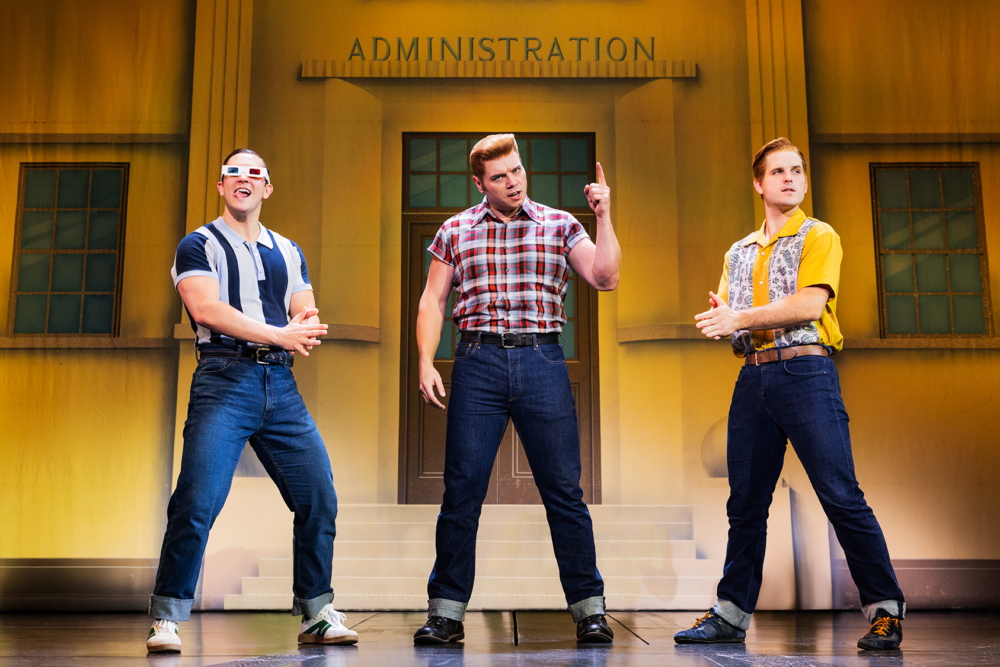
Biff (Nathaniel Hackmann, center) and friends (Zachery Bigelow, left, and Fisher Lane Stewart) perform “Teach Him a Lesson.” (photo by Evan Zimmerman for MurphyMade)

Truthfully, the original songs by Alan Silverstri and Glen Ballard are often tuneful, and Chris Bailey’s choreography is full of high-kicking, acrobatic energy. When they serve the plot or help to define the atmosphere in which the story unfolds, they’re not bad. Maybe the problem is that they too often seem like unnecessary distractions.

On the other hand, the story is perfectly served by Tim Hatley’s gorgeous scenic design and by all the lighting, video, sound and “illusion” designers who helped to create the explosive scene in which Marty attempts to return to his own reality with the help of a speeding DeLorean and a well-timed bolt of lightning.

It was exciting enough when it took place on the silver screen. Seeing it recreated on the Ohio Theatre stage just takes that excitement to a whole new level.

Broadway in Columbus will present Back to the Future: The Musical through Jan. 11 at the Ohio Theatre, 39 E. State St., Columbus. Showtimes are 7:30 p.m. through Friday, 2 and 7:30 p.m. Saturday, 1 and 6:30 p.m. Sunday. Running time: 2 hours, 40 minutes (including intermission). For more information, visit columbus.broadway.com. For information about upcoming tour stops, visit backtothefuturemusical.com/northamerica/.

Staged film adaptation goes heavy on spectacle

Cast members show off some of the high-flying choreography that won Some Like It Hot one of its four Tony Awards on Broadway.

By Richard Ades

“Well, nobody’s perfect.” It’s ironic that one of the most famous last lines in the history of cinema belongs to a film that’s pretty much perfect.

Billy Wilder’s Some Like It Hot stars Tony Curtis and Jack Lemmon as Depression-era musicians Joe and Jerry, who are being chased by gangsters because they accidentally witnessed a mob execution. Disguising themselves as women, they join an “all-girl band,” where their attempts to fit in are complicated by Joe’s attraction to the lead singer and Jerry’s acquisition of an admirer who refuses to take “no” for an answer.

It’s always risky trying to adapt a work as universally loved and admired as Wilder’s 1959 comedy, so it’s not surprising that the stage version of Some Like It Hot fails to achieve the original’s perfection. What’s disappointing is that it could have been a lot better.

With a book by Matthew Lopez and Amber Ruffin, and songs by Marc Shaiman and Scott Wittman, the musical opened on Broadway in late 2022 and closed just over a year later. Despite the relatively short run, the show garnered a slew of Tony nominations and won four. Besides best actor in a musical, it took home awards for costume design, choreography and orchestrations.

These wins point to some of the show’s strong points, which are also evident in the touring production that opened Tuesday at Columbus’s Ohio Theatre.

Director/choreographer Casey Nicholaw imbues the many song-and-dance numbers with high kicks and precision tapping, all backed by Charlie Rosen and Bryan Carter’s brassy, jazzy orchestrations. Meanwhile, Gregg Barnes outfits the characters in imaginative period costumes. Combined with Scott Pask’s gorgeous set designs, it all adds up to a colorful spectacle.

In a way, that’s part of the reason the show falls short of the film that inspired it. Far from a spectacle, Wilder’s classic was the comic but heartfelt tale of two men who disguise themselves to stay alive and find their lives altered as a result. Not only do they learn what it’s like to be a woman in a man’s world, but one of them finds that living as a woman is strangely fulfilling.

In the touring show, Matt Loehr and Tavis Kordell star as buddies Joe and Jerry, respectively, who don dresses and disguise themselves as Josephine and Daphne. Both get plenty of opportunities to show off their dancing and singing skills, but they have fewer chances to define their evolving characters. And Jerry, in particular, evolves a lot, becoming increasingly comfortable in the guise of the invented Daphne. (Like the Tony-winning actor who played Jerry on Broadway, Kordell identifies as nonbinary.)

As Sugar, the band’s lead singer, Leandra Ellis-Gaston displays fairly decent pipes but was sometimes overpowered by the band on opening night. In fact, several singers faced the same problem, pointing to the possibility that the sound balance was in need of tweaking. A related problem is that the lyrics were often hard to make out, weakening songs that weren’t that memorable to begin with.

One singer who managed to come through loud and clear on Tuesday was DeQuina Moore, who gives a powerhouse performance as band leader Sweet Sue. Filling out the leading cast members, Edward Juvier is a hoot as Osgood, the millionaire who takes a liking to Daphne.

Of the two acts, the second comes closer to the spirit of the movie, slowing down enough to allow Loehr, Kordell and Ellis-Gaston to flesh out their characters. However, it ends with a seemingly endless slapstick number that involves chases and slamming doors and would have been more at home in a bedroom farce.

Moral: If you’re going to adapt a classic movie for the stage, it helps if you understand just what made the movie great.

Broadway in Columbus will present Some Like It Hot through Nov. 23 at the Ohio Theatre, 39 E. State St., Columbus. Showtimes are 7:30 p.m. through Friday, 2 and 7:30 p.m. Saturday, and 1 and 6:30 p.m. Sunday. Running time: 2 hours, 45 minutes (including intermission). For ticket information, visit columbus.broadway.com. For information on future tour stops, visit somelikeithotmusical.com.

Reimagining the making of a classic

Jean-Paul Belmondo and Jean Seberg (Aubry Dullin and Zoey Deutch) act out a scene from Breathless in Nouvelle Vague, a dramatization of the making of the 1960 film. (Photos by Jean-Louis Fernandez/courtesy of Netflix)

By Richard Ades

Nouvelle Vague may be the most affectionate love letter to moviemaking since Francois Truffaut’s Day for Night (1973).

Directed by Richard Linklater, the new film reimagines the making of Breathless, the 1960 classic that established critic-turned-director Jean-Luc Godard as a star of the influential movement known as the French New Wave.

If you’re a devoted cinephile, it’s likely you’re already salivating. And make no mistake: Linklater made this film with you in mind.

Not only is it shot in the style of Breathless, with a handheld camera and black-and-white photography, but it announces the name of each historic participant—from the director and stars to the lowliest of crew members—as soon as he or she appears on the screen. Linklater assumes you’ll want to know.

But what if you’re not a cinephile? In that case, chances are you’ll be a bit less enthralled, but the flick still has much to offer thanks to a charming cast and a witty script that both reveres and pokes fun at Godard and his eccentric approach to moviemaking.

We first meet Godard (Guillaume Marbeck) as a critic who wears shades even in darkened theaters and who complains that he hasn’t fulfilled his dream of making his first movie by the age of 25. Urged on by fellow critics, and encouraged by their belief that the only authentic way to make cinema is on the cheap, he takes on a film based on a real-life criminal who’s charged with killing a cop.

Jean-Luc Godard (Guillaume Marbeck, left) takes a break with his leading man, Jean-Paul Belmondo (Aubry Dullin).

Godard quickly hires the then-unknown Jean-Paul Belmondo (Aubry Dullin) to play the protagonist, but he has more trouble casting the crook’s American girlfriend. Aiming high because he thinks it will boost the film’s box office potential, he begins a campaign to land rising star Jean Seberg (Zoey Deutch).

Seberg is reluctant but eventually agrees because the film treatment was co-authored by Truffaut (Adrien Rouyard), another critic-turned-director who’s already made a name for himself. Once shooting starts, however, she begins to think she made a mistake.

For one thing, Godard has no script, preferring to rely on last-minute inspiration. For another, he’s not afraid to suspend shooting if that inspiration doesn’t show up on time.

Jean-Paul Belmondo (Aubry Dullin) takes to the street for a climactic scene while cinematographer Raoul Coutard (Matthieu Penchinat) and director Jean-Luc Godard (Guillaume Marbeck) follow in an open-top Citroen.

After Godard threatens the production’s bare-bones budget by repeatedly sending his cast and crew home early, not only Seberg but producer Georges de Beauregard (Bruno Dreyfurst) becomes worried. Beauregard repeatedly lowers the boom, but Godard refuses to change his unconventional ways.

There’s no suspense over the outcome, of course. We know going in that Breathless will become a groundbreaking success and Godard will go on to enjoy a decades-long career. The only question is just how he will accomplish this unlikely feat.

With a sense of history leavened by a sense of humor, Linklater answers that question in a way that should leave cinephiles fascinated and everyone else pleasantly entertained. 

Rating: 4½ stars (out of 5)

Nouvelle Vague (rated R) can be seen at select theaters and is available on Netflix beginning Nov. 14.

Painful memories of an eradicated past

An animated sequence depicts Pelagia Radecka, a young resident of Gniewoszów, Poland, searching for survivors of antisemitic violence in 1945.

By Richard Ades

My community is getting ready for the annual Columbus Jewish Film Festival, but a local theater is beating it to the punch with one of the most powerful Holocaust-related documentaries you’re likely to see this year.

Among Neighbors, directed by Yoav Potash (Crime After Crime), is about the tragic and lasting effects World War II had on the town of Gniewoszów, Poland. The film is at once a history lesson, a tale of survival and a portrait of humanity at its best and its absolute worst.

It’s also a mystery, one whose solution isn’t provided until the film’s final moments.

Because the documentary does so much, and because Potash waits so long to connect seemingly disparate parts, it sometimes comes off as disjointed. But the dramatic end justifies the director’s suspense-building means, and the film is never less than compelling along the way.  

Using a combination of contemporary interviews, archival footage and eloquent hand-drawn animation, Potash introduces us to Gniewoszów both past and present.

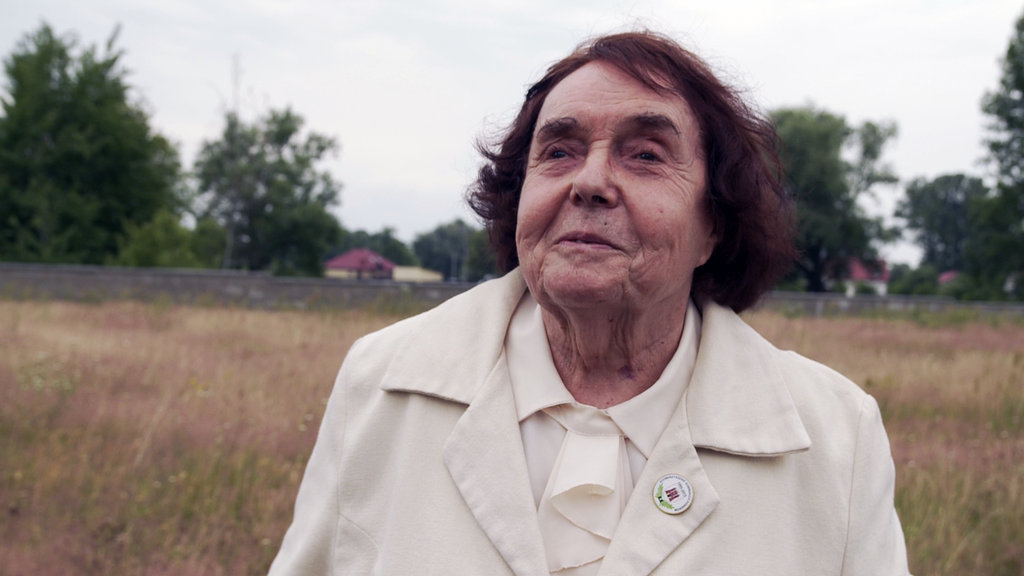
Pelagia Radecka, a Catholic resident of Gniewoszów, witnessed an act of antisemitic violence after the Nazis left her town.

In the past, Jews and Catholics lived together as neighbors and sometimes as friends, just as they had for centuries. But that all changed when Nazi Germany invaded Poland at the beginning of World War II and began instituting antisemitic restrictions that eventually evolved into roundups and death camps.

In response, a few Poles came to their Jewish neighbors’ defense, but more went along with the restrictions and even benefited from them. And some adopted the Nazis’ antisemitic and violent ways, even after the Germans had been driven out.  

As a result, Gniewoszów became a town whose Jewish residents have disappeared along with all traces of their former presence in the community. And most of its current residents are reluctant to talk about what happened to them, particularly since a 2018 law makes it illegal to suggest that Poles were in any way complicit in the Holocaust.

Yaacov Goldstein, a Jewish resident of Gniewoszów, survived the Holocaust and later moved to Israel.

Luckily for Potash, he’s able to find a few elderly residents who were alive during World War II and can be coaxed into telling what they remember. Two of them stand out:

˖ Yaacov Goldstein, a Jew who was a boy during World War II and later moved to Israel, tells the harrowing story of his parents’ efforts to survive and to protect him and his younger brother from the Nazis.

˖ Pelagia Radecka, a Catholic resident who was a teenager during the war, recalls being friends with the Jewish shopkeepers and their son who lived across the street. She also recalls witnessing a shocking act of antisemitic violence that occurred after the Germans had been driven out.

Bravely, Radecka is eager to talk about this act, even though she’s kept it to herself ever since, and even though talking about it amounts to a violation of Polish law.

Besides being a portrait of the highs and lows humans are capable of, Among Neighbors is a critique of societies that attempt to erase their sordid pasts. For Americans, living at a time when our own government is attempting to do the same, it could not be more timely.

Rating: 4½ stars (out of 5)  

Among Neighbors can be seen in select theaters, including Columbus’s Gateway Film Center, with screenings scheduled at 1:30 p.m. Oct. 25 and 26. For a list of other upcoming screenings, visit amongneighbors.com/screenings.

Tortured Iranian prisoners on a quest for justice

By Richard Ades

Two of the bravest movies I’ve seen in the past couple of years have taken aim at Iranian authoritarianism. In 2024, there was The Seed of the Sacred Fig, followed this year by the judo-centric Tatami.

Now, add a third flick that raises a middle finger to Iran’s Islamic dictatorship: It Was Just an Accident, a ballsy effort written and directed by Jafar Panahi. The low-budget thriller deftly creates tension leavened with flashes of humor, all the while wading through moral quagmires and asking questions that defy easy answers.

The tale begins on a dark highway, where we meet a family man (Ebrahim Azizi) who’s driving home with his wife and young daughter when his car breaks down in front of a garage that’s closed for the night.

Luckily for him, the mechanic agrees to take a look at his vehicle anyway. Unluckily for him, the mechanic’s assistant thinks he recognizes this stranded motorist.

Vahid (Vahid Mobaserri) once spent years in prison after being charged with political “crimes” against the state. While there, he was interrogated and tortured by a guard whose face he never saw, but who was recognizable by the squeaking sounds made by his artificial leg.

Vahid thinks he hears the same sounds when this stranger enters his garage.

What follows is a quest for justice—or vengeance, depending on your point of view. Eventually finding a way to capture the motorist, Vahid prepares to bury him alive, only to be attacked by doubt when the stranger claims it’s a case of mistaken identity.

Discussing the fate of their prisoner, whom they suspect of being a sadistic former prison guard, are (from left) Shiva (Miriam Afshari), Hamid (Mohamad Ali Elyasmehr), Ali (Majid Panahi), Golrokh (Hadis Pakbaten) and Vahid (Vahid Mobaserri). (Photo courtesy of Neon)

Vahid then begins rounding up fellow victims of the guard variously known as “Eghbal the Pegleg” or “the Gimp” in hopes someone can make a positive identification. It’s a motley crew, ranging from a photographer (Miriam Afshari) and her tempestuous ex (Mohamad Ali Elyasmehr) to a bride (Hadis Pakbaten) who’s already decked out in her wedding gown.

Driving around in Vahid’s decrepit van, they vent about their prison experiences and argue about whether the drugged man in the back is really their former tormenter—and, if so, what to do with him. Should they make him pay with his life, or would that simply lower them to the government’s level?

These are heavy considerations, and yet writer/director Panahi manages to add bits of humor that often stem from cultural quirks. For example, it seems that not even kidnappers are immune from paying the tips, gifts and bribes that apparently are a part of Iranian daily life.

Beautifully acted by a committed cast, and beautifully photographed by cinematographer Amin Jafari, It Was Just an Accident is mesmerizing from its beginning to its cathartic and intriguingly nebulous ending. The fact that Panahi made this subversive film without the government’s permission—and thus, in secret—just makes his achievement all the more astounding.

Rating: 4½ stars (out of 5)

It Was Just an Accident (no MPA rating) opens theatrically Oct. 15 in New York City and expands to other markets Oct. 24 and 31.

Adapted fairy tale brings together hermit, runaway teen

Ivan Martin plays the character known only as the “Woodsman” in writer/director Kelsey Taylor’s adaptation of a familiar fairy tale. (Photos courtesy of To Kill a Wolf)

By Richard Ades

Most of us are familiar with Little Red Riding Hood, the story of a girl who ventures into the woods and has a disastrous encounter with a hungry wolf. The fairy tale is generally considered a symbolic warning to girls about the dangers they face from human “wolves” (i.e., lechers) as they approach womanhood.   

With To Kill a Wolf, writer/director Kelsey Taylor takes the tale’s basic characters and injects them into a modern yarn with an entirely different message. While the original story cautions listeners to avoid danger, Taylor’s adaptation is about dealing with danger’s aftermath: the guilt, shame and other reactions that remain after a catastrophe that was at least partly one’s own fault.

Switching the order of the original tale, Taylor starts out by introducing us to the “Woodsman” (Ivan Martin), a grizzled middle-aged man who lives on his own in a remote, wooded area of Oregon. We first meet the hermit when he’s prowling among the trees with a metal detector searching for—what?

The answer comes when the detector alerts him to an object buried under leaves on the forest floor. It’s an animal trap, the kind that’s designed to clamp onto its unsuspecting prey’s leg and hold it until the creature either starves to death or is dispatched by the trap’s owner.

The man sets off the trap, rendering it harmless, and moves on.

It’s in the midst of such a search that the Woodsman discovers a teenage girl lying on the snowy ground, unconscious and near death. After taking her home and nursing her back to health, he asks how she ended up in that situation, to which he receives the evasive reply, “I don’t know.”

Dani (Maddison Brown) refuses to explain how she ended up alone in the woods.

We later learn that this Red Riding Hood stand-in is a 17-year-old runaway named Dani (Maddison Brown), but the girl stubbornly refuses to answer the Woodsman’s questions about her past. She’s obviously been through some kind of trauma, and whatever it was seems to have rendered her incapable of trusting another human being.

Almost as obvious is the fact that the Woodsman has been through a trauma of his own, as evidenced not only by his lonely lifestyle but by the artificial limb that’s hidden under his pants leg.

The two traumas, the girl’s and the man’s, form a mystery that’s only gradually explained with the help of an extended flashback and other devices. Keeping us invested along the way are two intriguing performances: Martin’s as the gruff but well-meaning Woodsman and Brown’s as the girl who keeps her emotions inside until it’s no longer possible.

Ably filling out the main cast are David Knell as a local rancher, and Kaitlin Doubleday and Michael Esper as Dani’s estranged aunt and uncle. Behind the scenes, the film benefits from the artistry of cinematographer Adam Lee and composers Sara Barone and Forest Christenson.

Directing her first feature-length film, Taylor has created a layered gem that’s at once a mystery, a character study and a meditation on the difficulty of healing from one’s own past. It’s an impressive debut, to say the least.

Rating: 4½ stars (out of 5)

To Kill a Wolf is available through VOD outlets beginning Sept. 23 and will screen virtually Sept. 25-30 through the Popcorn List’s Pop-up Series.

Pioneer left her mark on 1950s cheesecake photography

Model-turned-photographer Bunny Yeager poses with a tool of her trade. (Photos courtesy of Music Box Films)

By Richard Ades

Lots of women posed for Playboy when it first hit newsstands in the 1950s. Bunny Yeager was attractive enough to be one of them, but she instead opted to make her mark on the other side of the camera lens.

The story of this celebrated cheesecake photographer is told in Naked Ambition, a documentary directed by Dennis Scholl and Kareem Tabsch.

Featuring vintage film footage and interviews with people who knew her, the flick depicts Yeager as someone who played a big role in shaking up America’s puritanical attitudes toward sex and nudity.

Yeager was introduced to the craft of taking naughty pictures by posing for a few herself when she worked as a model beginning in the ’40s. The experience proved to be helpful when she decided to switch roles, the doc tells us, as it allowed her make her own models feel more at ease.

As someone who’d spent time in front of the camera herself, Yeager knew the women were mainly concerned about looking their best. By demonstrating that she understood them and was on their side, she turned each photo session into a collaborative effort.

The result: images that were not only sexy but joyfully so, and which allowed the personality of each individual woman to come through.

Bunny Yeager helped to turn Bettie Page into a popular pinup model.

While helping her subjects achieve centerfold celebrity—and helping Hugh Hefner turn his cheeky magazine into a success—Yeager achieved a fair amount of fame herself. She even made an appearance on the TV game show What’s My Line, where the panelists were unable to guess that her “line” was “cheesecake photographer.”

Among her friends and admirers who appear in the documentary is the late talk show host Larry King, who shares a long anecdote that is amusing but has little to do with Yeager herself. Mostly, though, directors Scholl and Tabsch properly keep the focus on the woman who became known as “the world’s prettiest photographer.”

Sadly, Yeager’s life had its share of challenges and tragedies. Ironically, the doc points out, one of the biggest challenges was brought about by the changing attitudes she helped to foster.

As society became more and more open to sexually oriented images, the images themselves became increasingly hard-core. By the mid-1970s, especially after the launch of Hustler magazine, the emphasis was on (porno-)graphic nudity rather than the kind of subtle artistry that was Yeager’s stock in trade.

Suddenly out of work, the photographer was forced to reinvent herself—which she did, again and again.

Maria Stinger poses with a pair of cheetahs during one of Yeager’s typically elaborate photo shoots.

As a woman who found success in a field dominated by men, Yeager could be seen as a feminist icon. But since she found that success by taking sexy pictures of women for men’s enjoyment, she’s viewed by some feminists with mixed feelings. Indeed, we learn, her own daughters still disagree over the value of her legacy.

One thing that can’t be argued is that Yeager was a pioneer who left her mark on society. Naked Ambition remembers and honors her for that very reason.

Rating: 4 stars (out of 5)

Naked Ambition opens Sept. 12 in New York, Chicago, Los Angeles and Ottawa, Ontario, with additional openings scheduled in coming weeks. For a full list of engagements, visit musicboxfilms.com/film/naked-ambition/.