

Edgardo (Enea Sala, left) receives a Catholic education after being abducted from his Jewish family in 1858. (Photos courtesy of Cohen Media Group)
By Richard Ades
Kidnapped: The Abduction of Edgardo Mortara relates the true story of a young Jewish boy who was taken from his parents so he could be converted to Christianity.
It’s a disturbing tale, but you may also find it a bit confusing unless you know something about Italian history. It also helps if you have a little patience.
Veteran director Marco Bellocchio takes his time unfolding the account of 6-year-old Edgardo Mortara, who is seized from his Bologna home in 1858 after Catholic officials learn he’d been secretly baptized as a baby. According to law, as the local “inquisitor” explains to the parents, he therefore must be raised as a Christian.
The boy’s father and mother, Salomone and Marianna (Fausto Russo Alesi and Barbara Ronchi), are shocked, as they know nothing about the baptism. They beg the official not to take their son, but their pleas only win them a 24-hour reprieve. After that, Edgardo (Enea Sala) is whisked away to Rome and enrolled in a school along with other boys who are training to become Catholic.

A distraught Marianna Mortara is allowed to visit her son (Enea Sala) months after he was abducted by Catholic officials.
In the months and years that follow, Salomone and Marianna do everything they can to reverse the church’s decision, including appealing their case to the press. But their efforts are stymied by Pope Pius IX (Paolo Pierobon), who takes a personal interest in the boy and refuses to give him up even after the abduction arouses international condemnation.
Director/co-scripter Bellocchio and most of his cast treat the tragic events with solemn restraint. Maybe a little too much restraint, as much of the film is weighed down by its own seriousness. There are effective scenes here and there, but the only actor who routinely shakes things up is Pierobon as the blustery and bullying Pius IX.
Another problem is that the script assumes the audience understands the complicated political atmosphere in which Edgardo’s ordeal is unfolding. In a much-simplified nutshell: Pius IX was in office at a time when Italians were rebelling against the pope’s power, which included controlling Rome and other parts of the country that were known as the Papal States. It all came to a head in 1871, when Italian troops captured Rome from the pope’s forces and unified Italy under one banner.
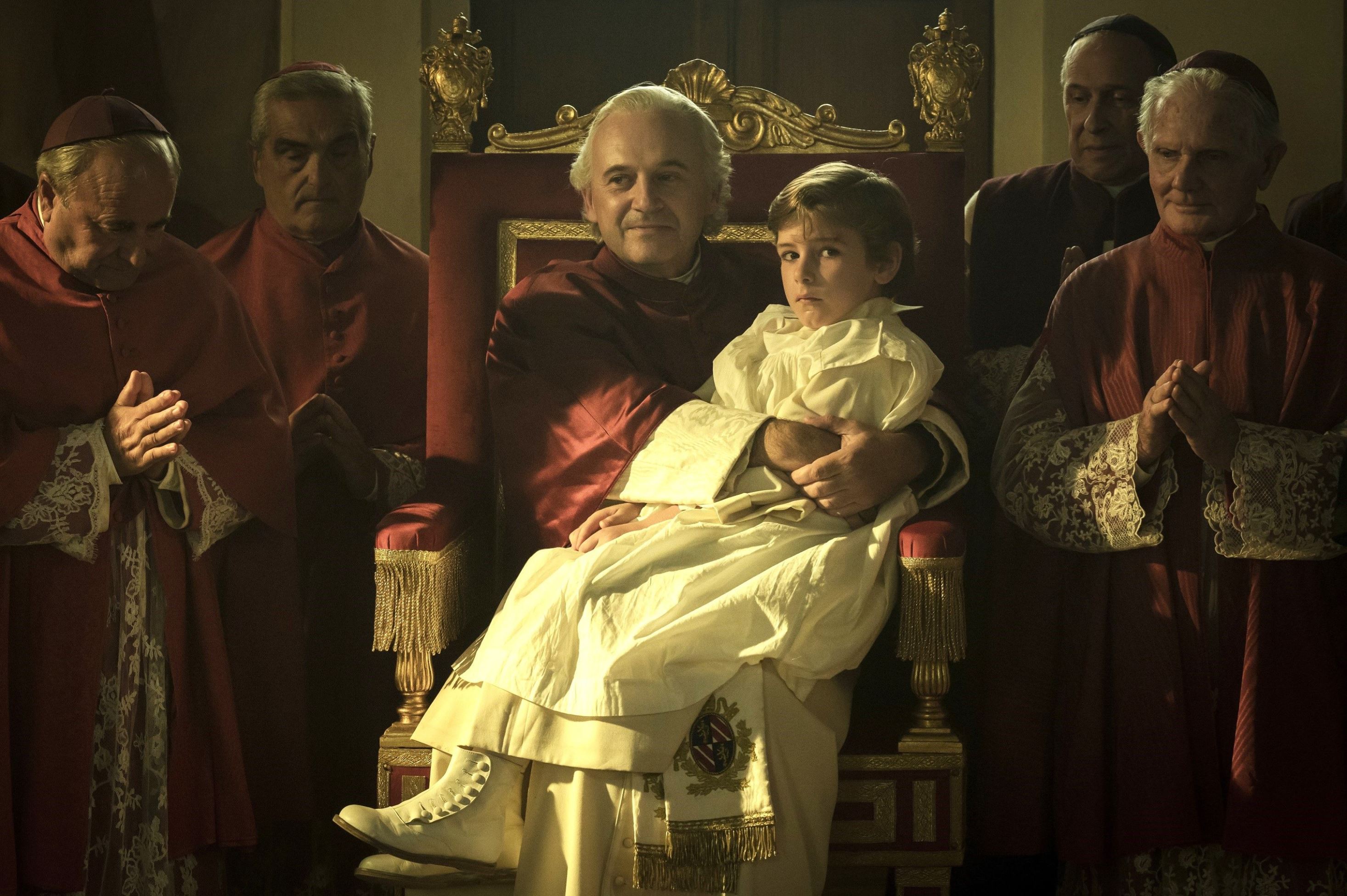
Pope Pius IX (Paolo Pierobon) refuses to give up Edgardo (Enea Sala) even though the boy’s abduction has been greeted with international condemnation.
Unfortunately for those who aren’t knowledgeable about that history, Bellocchio skims over most of this in order to keep the focus on Edgardo, who by this time has grown into a young adult (played by Leonardo Maltese). It’s an understandable decision, but one that will leave many viewers confused about what’s really going on.
Kidnapped is about an act of official antisemitism that had an effect far beyond one Jewish individual and his family. As such, it has intrinsic interest, but the film would have had more impact if Bellocchio had imbued it with a bit more history and a bit less restraint.
Rating: 3 stars (out of 5)
Kidnapped: The Abduction of Edgardo Mortara opened May 24 in New York and Los Angeles and expands to additional cities beginning May 31. It will open in Columbus June 7 at the Gateway Film Center.



 Reel Time With Richard Ades