The Irish town where music is a way of life

By Richard Ades

It’s a pity I couldn’t have seen The Job of Songs before taking a trip to Ireland a few years back.

My partner and I were eager to hear authentic Irish music in authentic Irish pubs, but we had little idea where to look. We didn’t know that close to the popular tourist destination known as the Cliffs of Moher is a village steeped in Irish musical traditions.

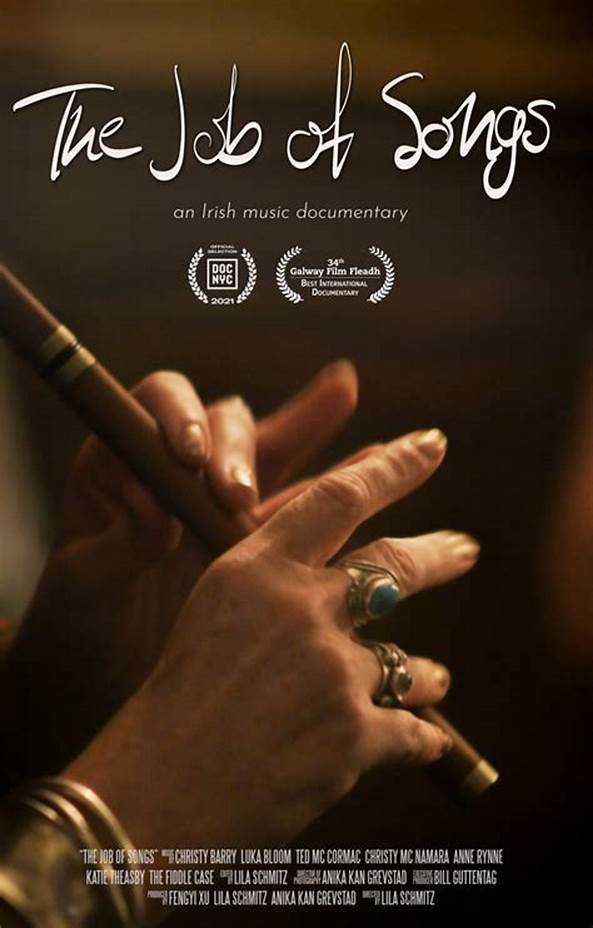
The tune-filled documentary—directed, edited and co-written by Lila Schmitz—introduces us to Doolin, located in County Clare on the west coast of Ireland. A musician who performs under the stage name Luka Bloom says he moved to the town decades ago after discovering that its entire population was into music just as much as he was.

Apparently, Doolin’s musical fame has spread across the pond and beyond. Local radio deejay Eoln O’Neil is shown spinning Irish tunes on a show that attracts listeners from around the world.

The town is also popular with tourists, who have begun dropping by for a quick fix of music on their way to or from the Cliffs of Moher. It’s a trend that some locals look down on, one complaining that the visitors ought to stick around long enough to meet some actual Irish people.

Speaking of which, the film introduces to several Doolin residents of all ages who devote their lives to playing music. The oldest is Ted McCormic, who has only one leg but doesn’t let either his disability or his 80-plus years stop him from sharing his still-strong voice at local jams.  

Other featured musicians include Anne Rynne, who begin playing and writing songs in her 60s after receiving a guitar from her brother, Bloom.

Radio host O’Neil points out the inescapable fact that beautiful but mournful airs make up much of the traditional Irish repertoire. “It’s in our DNA,” he says.

Unfortunately, the sad tunes are more than simply a musical taste, as depression, alcoholism and even suicide are described as widespread problems in the area.

Red-haired Katy Theasby talks about her own struggles with depression and overindulgence, but she says music was her salvation. After obtaining a new tin whistle, she says, she found that for the first time she was able to play without drinking.

Whether for their mental health, personal fulfillment or other reasons, all of the Doolin musicians clearly feel that playing is as necessary as breathing. According to one, listening to music is also important for non-musicians, explaining that the “job of songs” is to allow these folks to feel even though they don’t have songs of their own.

In much the same way, the job of Schmitz’s documentary is to allow viewers to “visit” the musical mecca known as Doolin even though they’ve never actually been there.

Rating: 4 stars (out of 5)

The Job of Songs (no MPAA rating) is available from various digital platforms. For information, visit thejobofsongs.com.

Indiana Jones has nothing on Ohio-based glacier explorer

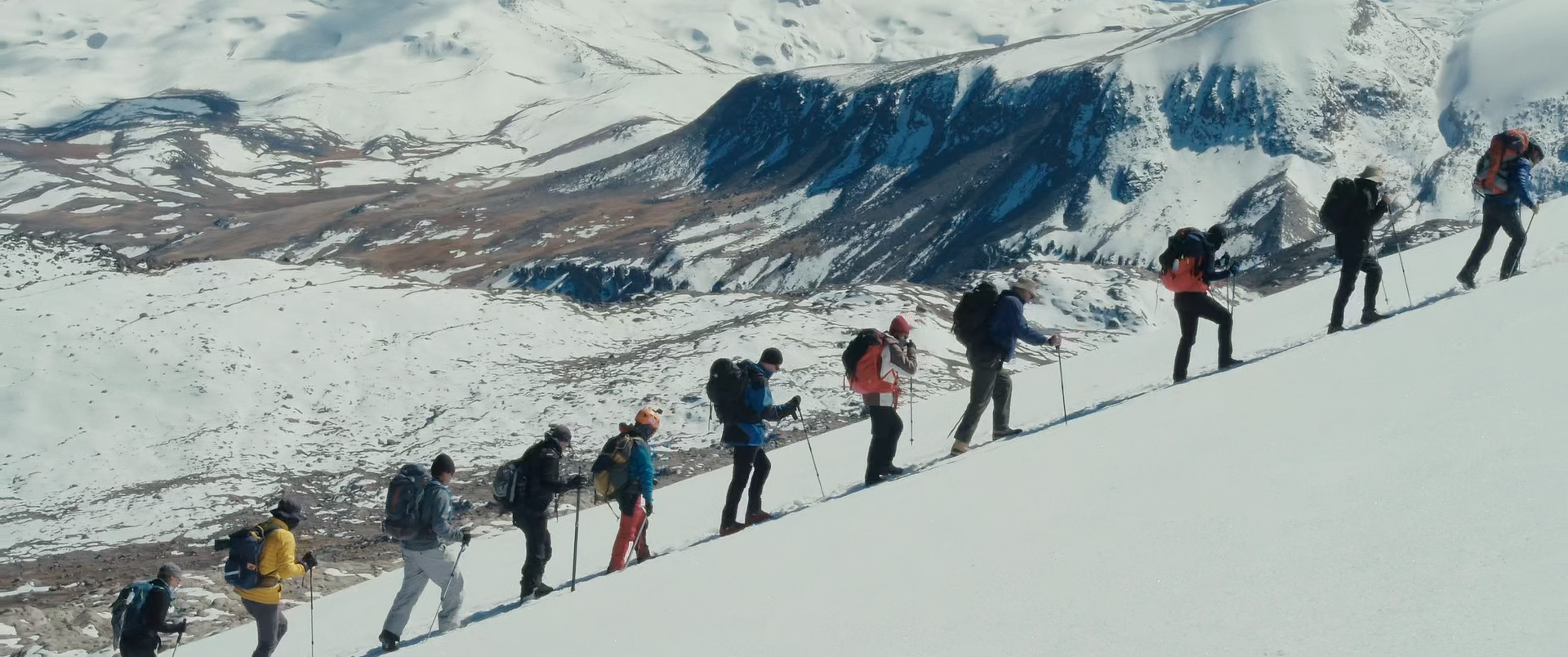
Lonnie Thompson and his colleagues go to great trouble to extract ice cores like this from remote glaciers to learn the secrets they store about the earth’s past.

By Richard Ades

One admirer compares research scientist Lonnie Thompson to Indiana Jones. Another compares him to Clark Kent, the deceptively average-looking individual who is, in reality, Superman.

Both comparisons are apt, as we learn from Canary, a documentary directed by Danny O’Malley and Alex Rivest. The film details Thompson’s decades-long effort to uncover the history stored in glaciers found in some of the world’s highest and least-accessible locations. It also explains how the Ohio State professor became a major voice in the fight against climate change.

Even before the opening credits appear, we’re shown an incident in a war-torn area of Indonesia that encapsulates Thompson’s bravery and commitment to the environment.

After demanding to meet with him, members of a local tribe ask why he and his team are drilling into a mountaintop glacier that they consider the head of their god. Is he trying to steal the deity’s memory? Thompson tells them that’s exactly what he’s doing, because the glacier that stores the “memory” is in danger of melting away.

Serving as the film’s narrator along with other experts such as his wife, Ellen Mosley-Thompson—a glaciologist in her own right—Thompson explains that glaciers are like the canary in the coal mine. In the olden days, caged canaries were taken into mines to serve as early warning systems. If the air got too thin to keep the tiny birds alive, miners knew they had to leave quickly or suffer the same fate.

Thompson’s point is that glaciers have served the same function. By melting and shrinking, sometimes with shocking speed, they’ve offered some of the earliest evidence that the climate is changing and we’d better do something about it or suffer the consequences.

The analogy comes naturally to Thompson, as he was born and raised in a poor area of West Virginia that’s dominated by the coal industry. Ironically, considering the role fossil fuels have played in climate change, he originally enrolled at OSU to study coal geology. However, he eagerly switched fields when he was offered a job studying glaciers.

Thompson and his team climb to reach the next glacier.

With a combination of archival footage and contemporary interviews, the documentary explores Thompson’s career, which started with a years-long effort to access a mountaintop glacier located in a remote area of Peru. Though at first he was motivated solely by scientific curiosity, his discovery that glaciers around the world were shrinking eventually turned him into what he is today: a prominent cautionary voice in the fight against climate change.

Dramatic photography by cinematographer Devin Whetstone, accompanied by Paul Doucette and Jeff Russo’s equally dramatic score, set an appropriate tone for a film about a man engaged in a struggle for humanity’s survival. They help to make up for co-director O’Malley’s script, which sometimes fails to fill in salient details. Just what, for example, do Thompson and his colleagues do with the ice cores they work so hard to extract from glaciers? And what do these samples of ancient ice tell them about our planet?

But the film fills in just enough details when it reports on the rise of climate-change denial, a movement that caused politicians as diverse as Newt Gingrich, Sarah Palin and Mitt Romney to change from science supporters into science questioners. An eye-opening depiction of their transformation underscores the uphill battle Thompson and other activists face as they work to save humanity from its own excesses.   

Rating: 3½ stars (out of 5)

Canary opens Sept. 15 in select theaters in New York and Los Angeles, as well as the Gateway Film Center in Columbus. Subsequent one-night screenings are planned Sept. 20 in multiple markets. For details, visit canary.oscilliscope.net.

Character studies dominate Irish doc, U.S. road flick

Tana (Lily Gladstone) takes a cross-country trip in her late grandmother’s Cadillac in The Unknown Country. (Photo courtesy of Music Box Films)

By Richard Ades

Opening this weekend are two indie films that have more in common than you might think.

The Unknown Country, a drama by first-time director Morrisa Maltz, is about a cross-country trip taken by a grieving Native American woman. North Circular, an Irish documentary written and directed by Luke McManus, is described as “a musical trip through Dublin’s inner city.”

What unites the flicks is their willingness to digress in the presence of strong personalities. In each case, this is a mixed blessing.

The Unknown Country ostensibly focuses on Tana (Lily Gladstone), who takes time to travel to a family wedding in South Dakota even though she just lost her beloved grandmother. She then drives her granny’s Cadillac to Texas in a trek that ends at a landmark once visited by the dearly departed.

Co-written by director Maltz and cast members Gladstone and Lainey Bearkiller Shangreaux, the film is primarily about Tana’s attempt to come to terms with her loss. However, Tana herself ends up being overshadowed by a series of strong peripheral characters she meets along the road. Among others, there’s a waitress who lives for her cats, a bride and groom who feel they were destined to be together, and an elderly woman who comes to life on the dance floor.

Most of these characters are real people simply playing themselves, making the flick an adventurous blend of fiction and fact. Each of them is interesting, as are several sights Tana sees along the way, including a Native American wedding, a small-town winter festival and a brightly lit Dallas dance club.

The only problem is that we don’t get to know protagonist Tana as well as the people she meets, making the film a bit less than the sum of its very worthwhile parts.

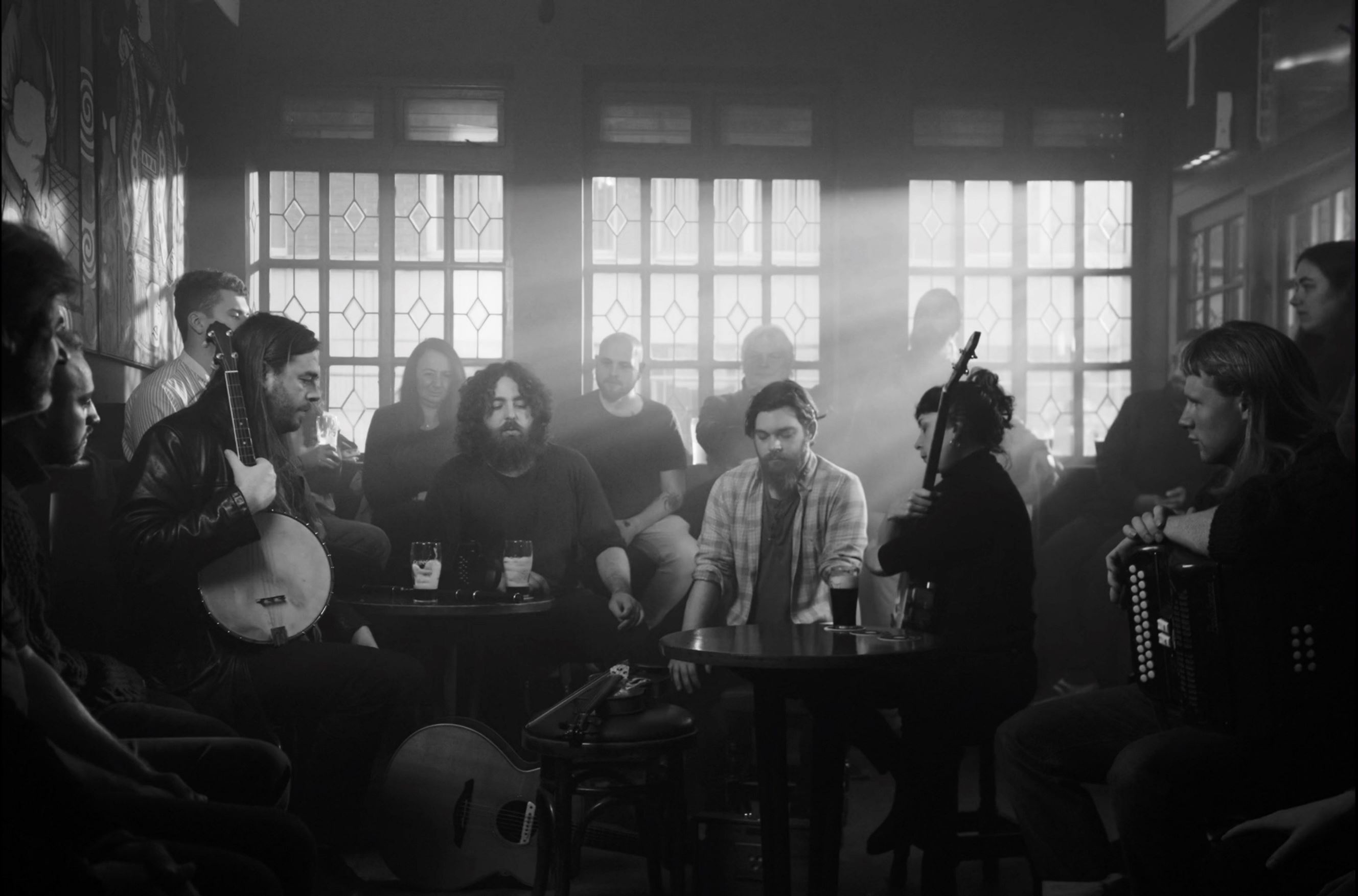
Holding forth at Dublin’s Cobblestone Pub in a scene from North Circular are (from left): folk singers John Francis Flynn, Eoghan Ó Ceannabháin, Killian O’Donnell and Lisa O’Neill. (Photo courtesy of Lightdox)

In a similar way, North Circular spends much of its time introducing us to people who live near the titular roadway, which winds around some of the poorer sections of Dublin. One of the first is an army veteran who plays the bagpipes for military ceremonies and complains that the younger generation shows little interest in learning the traditional instrument. Yes, it’s a shame, but his story comes across as unnecessary digression.

Fortunately, most of the other interviewees can speak more directly to the film’s subject, which is the neighborhood’s struggles with poverty and encroaching gentrification. And several of them do more than speak—they sing about their losses and grievances, often delivering a cappella laments to a silent audience. The sum total is a memorable trip to a side of Ireland’s capital that is never experienced by the average tourist.

Besides their plethora of minor characters, the two films have one other thing in common: striking cinematography. Andrew Jajek’s images in The Unknown Country are engrossing whether they’re showing quiet human interactions or majestic landscapes such as South Dakota’s Badlands and Texas’s Big Bend National Park. And North Circular’s black-and-white images combine with its somber folk tunes to create what at times amounts to cinematic poetry.  

Rating for each film: 3½ stars (out of 5)

The Unknown Country opens July 28 at the Quad Cinema in New York City and the Nuart in Los Angeles, and will open at additional theaters across the country in the following weeks. North Circular opens July 28 at DCTV’s Firehouse Cinema in New York City.

Preserving film history one frame at a time

By Richard Ades

The worst job I ever had was working in a motion picture lab in the late 1970s. Not only did I spent much of my time trapped in a dark room with very pungent chemicals, but I sometimes had the difficult task of copying old, shrunken films that had to be coaxed through our machinery.  

Too bad I couldn’t have seen Film: The Living Record of Our Memory back then. It would have allowed me to feel some pride in the small role I was playing in the massive (and massively difficult) effort to preserve our cinematic history.

Spanish director Ines Toharia Teran’s documentary is about the worldwide quest to save films that otherwise would be lost due to chemical degradation, disasters and other causes.

It’s a quest that began in spite of the early film studios, we’re told, as they thought of movies as commercial products rather than works of art or historical documents that needed to be preserved. In fact, flicks that had already made the theatrical rounds were often destroyed to recover the silver in the film stock, thus helping to pay for future productions.

An additional preservation complication: Early film stock was composed of nitrate, which was dangerously inflammable. If it ever caught on fire, not even water could extinguish the flames.

The documentary tells us that the result of this danger and neglect is that 80 percent of all silent films are likely gone forever, along with half of all the “talkies” ever made.

Film is not a tragedy, however, but an account of the heroes who have devoted themselves to protecting film history. Numerous preservationists and other cinematic experts from around the world talk about the challenges they face—such as trying to reconstruct a formerly “lost” film by splicing together the least-degraded frames from various recovered prints.

Why go to all this trouble? Because otherwise we’ll lose pieces of art that help to define our cultural history. And sometimes we’ll lose pieces of actual history, as in the case of home movies and other nonfiction films that depict scenes from the Holocaust and other world tragedies.

At nearly two wide-ranging hours, Film will be of most interest to those who care about cinema’s past, present and future.

Does it bother you that Alfred Hitchcock’s 1926 film The Mountain Eagle may never be seen again? Is it important to you that people be able to watch the early works of India’s Satyajit Ray, or the many independent films that depict Africa’s anti-colonial struggles?

Do you want such influential flicks as Charles Burnett’s Killer of Sheep and Cuban director Tomas Gutierrez Alea’s Memories of Underdevelopment to be available to future cinema lovers?

If so, the documentary will be two hours well spent.

Rating: 3½ stars (out of 5)

Film: The Living Record of Our Memory opened May 5 at the Gateway Film Center in Columbus, with additional screenings planned May 8-9 in Los Angeles, May 11-14 in St. Louis, May 20 in San Francisco and May 21 in Cleveland. The film will be available through VOD outlets beginning May 16.

Klan veteran and Kurdish immigrant form unlikely alliance

Former Klansman Chris Buckley (left) shares a stage with Syrian refugee Heval Kelli in a scene from Refuge. (Photos by Tomesha Foxio)

By Richard Ades

Refuge is the story of the healing that takes place when a former Ku Klux Klan member is befriended by a Muslim refugee.

That’s the way the documentary is billed, at least, though the description is a bit misleading. For one thing, the two men don’t actually meet until late in the film, by which time much of the healing has already taken place.

The former Klan member is Chris Buckley, an Army veteran who lives in LaFayette, Ga., with his wife and two small children. Chris enlisted in the military after 9/11, and his subsequent years of overseas combat duty only added to the hatred and distrust he felt toward Muslims.

More broadly, his ongoing struggle to support his family made him susceptible to the appeal of White nationalism, which encouraged him to blame his problems on people of color, immigrants and other convenient scapegoats. Hence, Chris joined the Klan and began throwing himself into the hate group’s rituals and ideology.

By the time we meet him, however, Chris has left the Klan for reasons that aren’t immediately revealed. He claims he’s trying to put his hatred behind him, though he makes an exception in the case of the religion he blames for his many wartime injuries and for the death of a beloved Army buddy.

Meanwhile, directors Erin Bernhardt and Din Blankenship also introduce us to Heval Kelli, a Muslim Kurd who arrived in the U.S. after his family was forced to flee their native Syria. A cardiologist, Heval lives with his aging parents in Clarkston, a Georgia town two hours away from LaFayette by car—and light years away in terms of environment.

“Mama Amina” works to make newcomers feel at home in the multiethnic community of Clarkston, Ga.

For decades, Clarkston has accepted refugees from various parts of the world, resulting in a community that comprises a multitude of nationalities, languages and religions. All are made to feel welcome thanks to the efforts of warm-hearted residents such as 89-year-old “Mama Amina,” a tireless volunteer.

Chris and Heval eventually meet, of course, though it takes some doing on the part of others to bring it about. In particular, it takes the efforts of Melissa, Chris’s wife, who has her own reasons for hating racism and who emerges as one of the film’s real heroes.

As a record of a Chris’s conversion from a vicious bigot to someone who ends up fighting bigotry, Refuge is sometimes moving, though not quite as moving as it could be. That’s because his transformation largely takes place when the camera isn’t rolling. We see him talking about his change of heart, but we don’t see it actually happening.

But that’s a minor weakness, and besides, the documentary has plenty of other attributes. Among them are the scenes in Clarkston, where rampant displays of kindness and acceptance offer a welcome break from the divisiveness that characterizes much of modern society.

The atmosphere is so intoxicating that not even the arrival of an anti-immigrant gubernatorial candidate and his so-called “deportation bus” can spoil the mood. The candidate apparently realizes that as, after accepting a welcoming piece of baclava, he takes his leave.

If only hatred and bigotry could always be turned away that easily.

Rating: 4 stars (out of 5)

Refuge opens March 24 at select theaters and through VOD outlets.

Vintage doc tells sad tale of pioneering labor struggle

Poster for The Wobblies

By Richard Ades

“There is power, there is power in a band of working men…” (Lyrics from “There Is Power in a Union” by Joe Hill)

Though unions have had a few recent victories in their efforts to unionize companies such as Amazon and Starbucks, they’ve long since passed their heyday. So maybe it’s the right time to re-release The Wobblies, a 1979 documentary about one of the labor movement’s early champions.

The homespun flick tells the story of the Industrial Workers of the World (IWW), a union that sought to unite and represent unskilled workers in the early 20th century. Such laborers made up an increasingly important segment of the work force in an American economy that was once agrarian but was fast becoming industrialized.

Whether they were installing bolts on an assembly line or sawing down trees in the Pacific Northwest, the doc states, they were prime targets for exploitation from corporations whose only loyalty was to their stockholders. That is, until the IWW (nicknamed “the Wobblies”) began organizing and fighting back.

Directors Stewart Bird and Deborah Shaffer recount the union’s struggles with the help of vintage film footage and interviews with a host of aging former members. Supplying the musical accompaniment are a variety of folksy protest songs, by Joe Hill and others, that IWW members sang to keep their spirits up when things got tough.

And make no mistake about it. Things did get tough, as corporations fought back against the IWW with propaganda, arrests and even outright violence. But the union also got tough, responding not only with strikes but with sabotage and, occasionally, with violence of its own.

Spoiler alert: This old film about an even older struggle does not have a happy ending. Even so, many will find The Wobblies educational and inspiring, as it shows what a few determined people can accomplish when they refuse to kowtow to threats, public opinion or the status quo. It’s a lesson that bears repeating—often.

Rating: 4 stars (out of 5)

The Wobblies (no MPAA rating) is available through VOD outlets beginning May 31.  

The ‘hippie millionaire’ who (briefly) took the country by storm

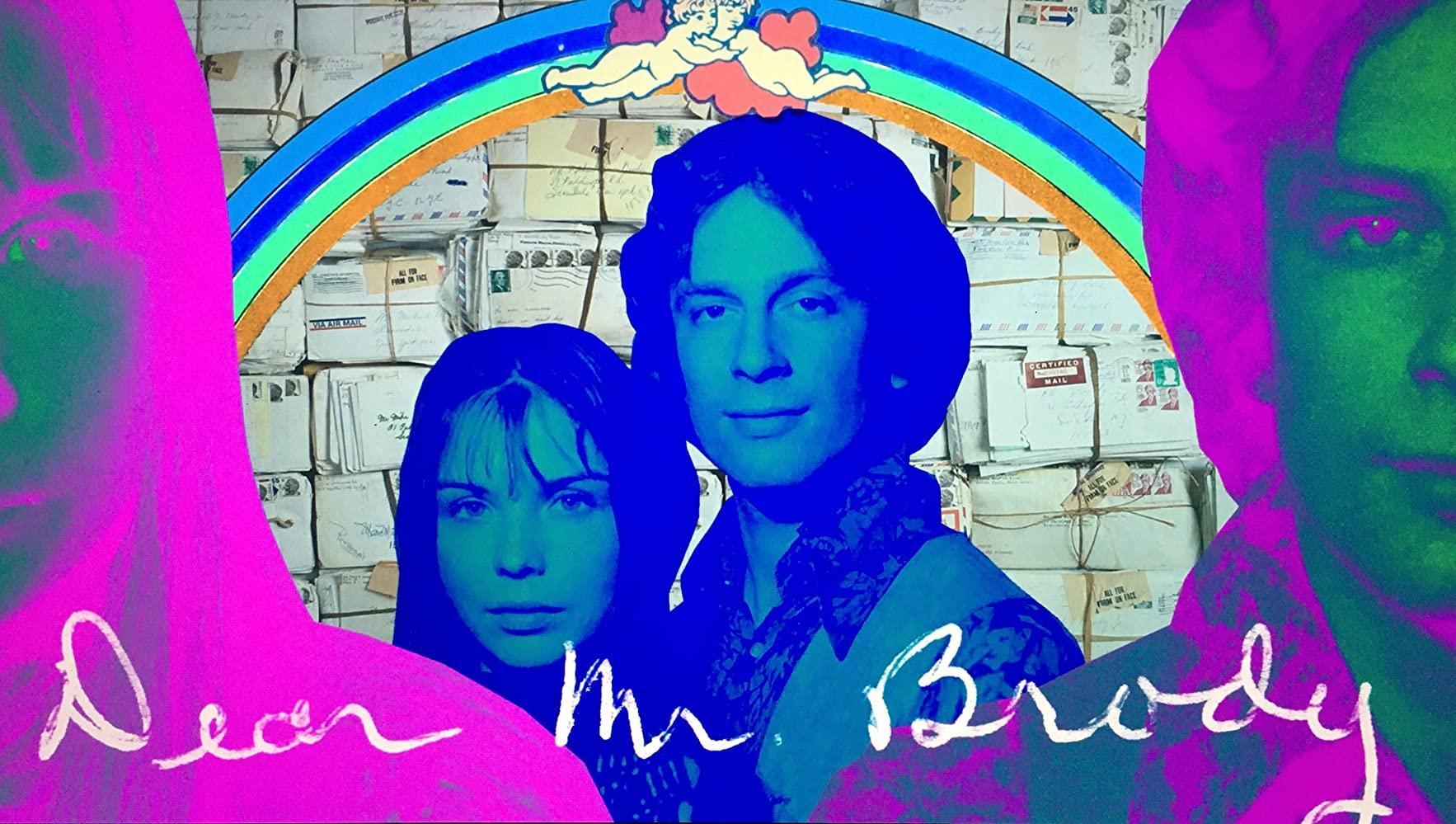
This poster depicts Michael Brody Jr. and his wife, Renee, as they appeared in 1970.

By Richard Ades

Dear Mr. Brody documents the story of a wealthy young man who captured the country’s attention in 1970 by promising to give away cash to all who needed it.

Michael Brody Jr. was the little-known heir to a margarine dynasty when he suddenly appeared on the national scene with his young bride, Renee, in tow. With his guitar, long hair and talk of peace and love, he made an immediate impression as the “hippie millionaire.” He even landed a recording contract and was invited to appear on The Ed Sullivan Show.

More importantly, he inspired thousands of people to queue up outside his Scarsdale home and Manhattan office in search of the promised handouts. Thousands of others simply wrote to him of their needs, which were often dire.

Then, as suddenly as it started, the phenomenon ended due to Brody’s increasingly bizarre behavior and apparent inability to follow through on his promises. The new documentary, written and directed by Keith Maitland, tries to figure out just what happened and what it all means.

It is not a happy story, for multiple reasons.

Due to tragic circumstances mentioned late in the film, Michael Brody himself does not appear except in vintage footage. But the present-day version of Renee does appear, coming across as someone who’s no more together than the lonely 20-year-old who agreed to marry Michael just one day after they met.

Also appearing is Michael and Renee’s grownup son, Michael James Brody III, who seems equally lost. Grossly obese, he lives his life surrounded by memorabilia from his dad’s 15 minutes of fame, including box after box of letters from folks begging the “hippie millionaire” for help.

Those folks, by the way, become as central to the story as the Brody family itself. In fact, it was producer Melissa Robyn Glassman’s discovery of a stash of their unopened letters that led to the film’s being made in the first place.

Many of those letters tell tales of desperation caused by lost jobs, health problems and growing debts. Others mention related problems such as domestic abuse, while still others are from individuals who are simply lonely and want someone to talk to.

Maitland and Glassman bring several of their stories up to date by tracking down the writers and asking them to comment on what they wrote all those decades ago. In one case, a woman is surprised to learn that at the same time she wrote to Brody, her mother also was asking him for help.

Dear Mr. Brody, then, is a devastatingly sad tale with no real villains but with countless victims. Brody himself was the first one, being a well-meaning idealist whose efforts were undermined by his own demons. Renee was another, being led by loneliness into a fraught relationship that still seems to haunt her.

And then there were the thousands of desperate people who begged Brody for help. The fact that they were forced to seek salvation from a complete stranger says much about the society they lived in—which, of course, we still live in today.

Rating: 4 stars (out of 5)

Dear Mr. Brody is available from sources such as Apple iTunes, Google Play and Vudu and can be seen beginning April 28 on Discovery+.

Documentary dissects Mayor Pete’s historic campaign

Pete Buttigieg takes a selfie that includes a crowd of supporters in a scene from Mayor Pete. (Photo courtesy of Amazon Studios)

By Richard Ades

Jesse Moss co-directed Boys State, which was probably the best 2020 documentary that wasn’t nominated for an Academy Award. Now he’s returned with Mayor Pete, another film that focuses on America’s political system. But while Boys State did so metaphorically, being set at a gathering of teenagers playing at being politicians, the new doc takes the direct approach.

Its subject is Pete Buttigieg, who, before becoming President Biden’s secretary of transportation, was the first openly gay person to run a major campaign for the presidency. Filmed in 2019 and early 2020, the documentary follows the then-mayor of South Bend, Indiana, as he takes his first plunge into the treacherous waters of the national political scene.

Though the result might not be quite as sublime as Moss’s earlier effort, it offers a behind-the-scenes look at a groundbreaking campaign that briefly seemed on the verge of upsetting a host of more-traditional candidates. The film makes it clear that Buttigieg accomplished this feat with help from advisers such as his communications director, Liz Smith, and even his husband, Chasten.

A graduate of Harvard and Oxford who speaks eight languages, as well as a former naval intelligence officer who saw active duty in Afghanistan, Buttigieg stood out from the field of candidates for reasons that went far beyond his sexual orientation. The film shows another difference: His calm and nuanced speeches were a far cry from the average politician’s promises and cliches. “I think you’re the real thing,” a middle-aged woman tells him after an early campaign appearance.

But the film also reveals that Buttigieg’s reluctance to divulge his emotions led some critics to paint him as cold and even robotic. As the first Democratic debate nears and Buttigieg prepares by taking part in practice debates, Smith can be seen pushing him to open up about his feelings. “He’s coming across as a f—ing tin man up there,” she complains, using an expletive that helps to earn the flick its “R” rating.  

Then, right before the debate, news arrives that a South Bend cop has shot and killed a Black man. Buttigieg holds a town meeting and invites residents to air their concerns, but the effort only succeeds in revealing the gulf between him and many members of the Black community. Though he’s later praised for his response to this issue when it inevitably comes up on the debate stage, his lack of minority support continues to dog him throughout the campaign.  

If there’s one element of Mayor Pete that may disappoint political junkies, it’s that it largely ignores the policy positions Buttigieg espoused and argued over with the other candidates. Instead, it focuses on the personal qualities that made him an unusual and historic candidate and will continue to set him apart if he ever decides to once again hit the campaign trail.    

Rating: 4 stars (out of 5)

Mayor Pete (rated R) will premiere Nov. 12 on Amazon Prime Video.

Actor’s colorful life revealed through his own home movies

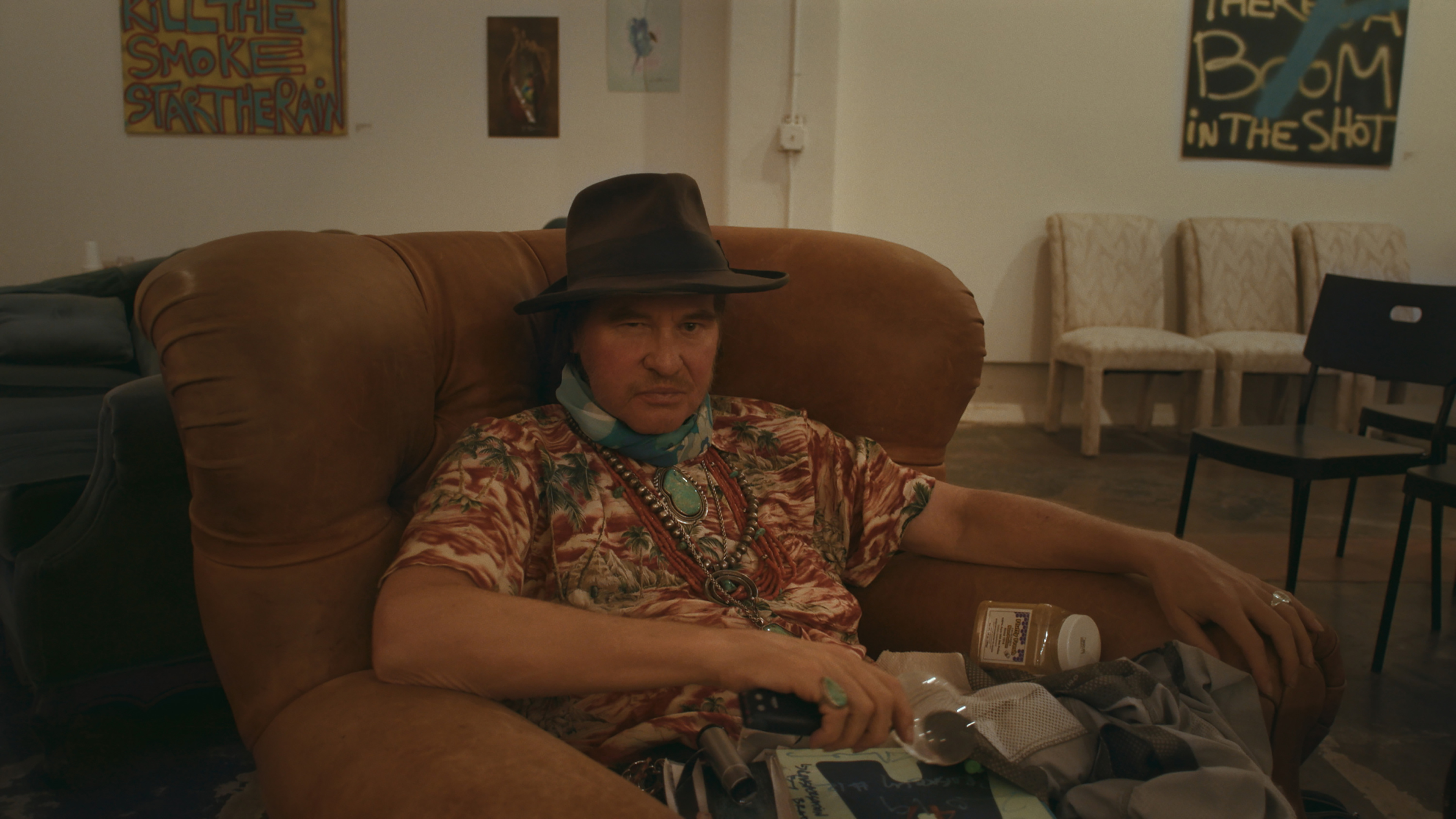
Val Kilmer as he appears today in Val (Photos courtesy of A24 Distribution, LLC)

By Richard Ades

At the beginning of the biographical documentary Val, Val Kilmer claims he’s “almost been fired” from all his movies. While that corresponds with the actor’s reputation as someone who’s hard to work with, the film ultimately portrays him as someone who may be eccentric and stubborn, but also thoughtful and dedicated to his craft.

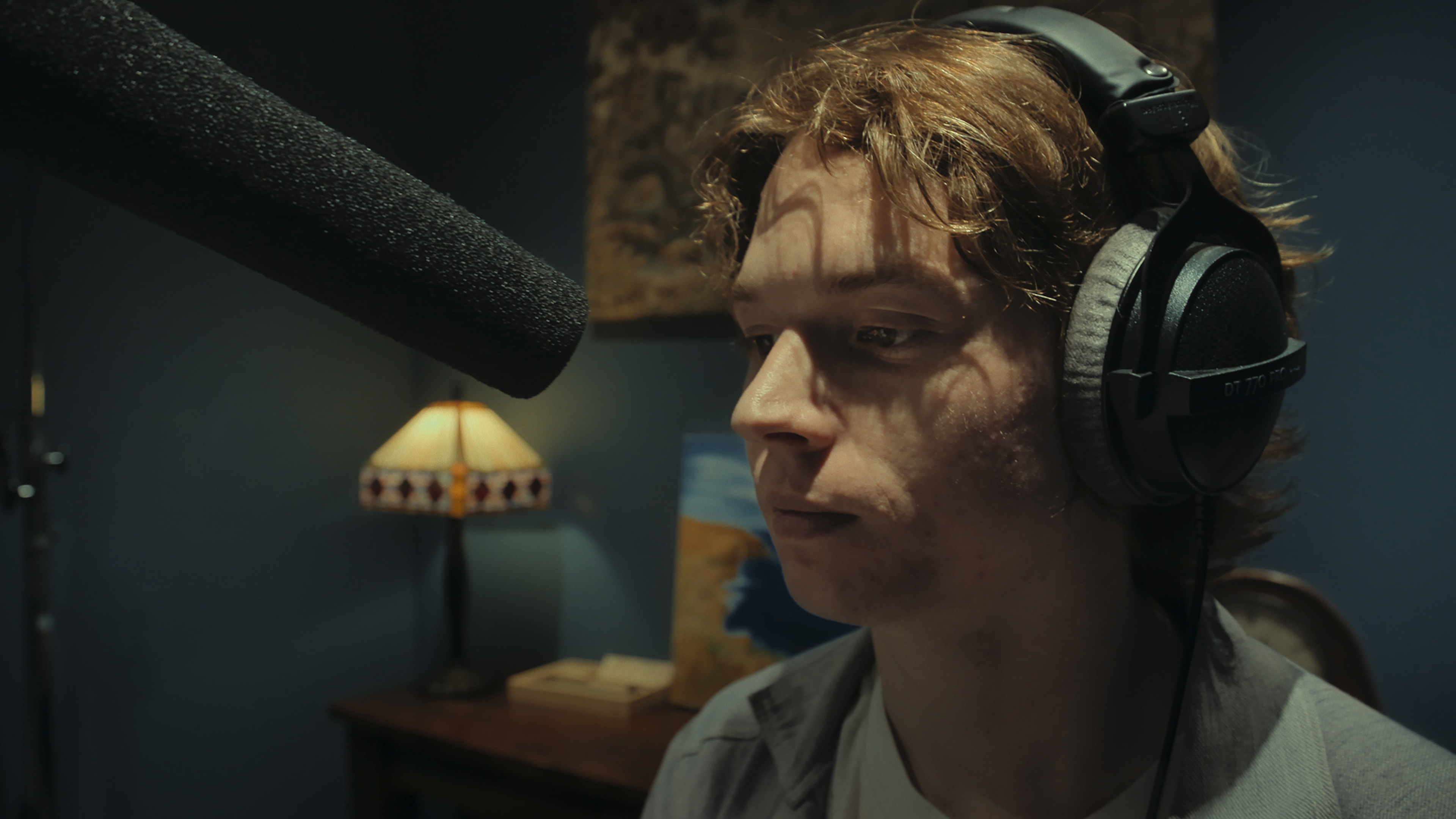
Kilmer is also very unlucky, we learn early on, as a 2015 bout with throat cancer has stolen the now-61-year-old actor’s most valuable asset: his voice. Two tracheotomies have left him unable to speak other than croaking out a few words in between gasps of breath. As a result, son Jack Kilmer has been given the task of narrating the story of his father’s life.

Fortunately, the task of illustrating that life has largely been taken care of, as Val Kilmer was an early and eager adopter of home videography. It’s probably no coincidence that first-time directors Ting Poo and Leo Scott previously worked primarily as editors, as their main job here was to pare down what must have been miles of old footage into a coherent documentary. (Tyler Pharo joins them as the flick’s third editor.)

Narrator Jack Kilmer substitutes his voice for the one his father lost to cancer.

For Kilmer fans, or just film fans in general, the result is intriguing. We see Kilmer landing his first professional off-Broadway role after losing the play’s leads to Kevin Bacon and Sean Penn. We see him making his mark in 1980s movies such as Willow and Top Gun. We see him filming his own auditions, at one point even firing off live ammunition to show his suitability for an action role.

As Kilmer’s popularity continues to rise in the 1990s, the doc shows him going all out to capture the part he sees as his destiny: rocker Jim Morrison in The Doors. It also shows him suffering through 1995’s Batman Forever, which forced him to wear a heavy bat suit that made it difficult to act or even to move. Not surprisingly, he turned down offers to repeat the iconic role.

Val eventually approaches the perverse attraction of a highway accident scene when it shows Kilmer on the troubled set of 1996’s The Island of Dr. Moreau. At one point, Kilmer expresses his frustration with the production’s problems by refusing to shut off his own video camera despite director John Frankenheimer’s pleas. Since Frankenheimer inherited the film, along with temperamental star Marlon Brando, from another director who left just days into the shooting, it’s hard to know who deserves our sympathy the most here.

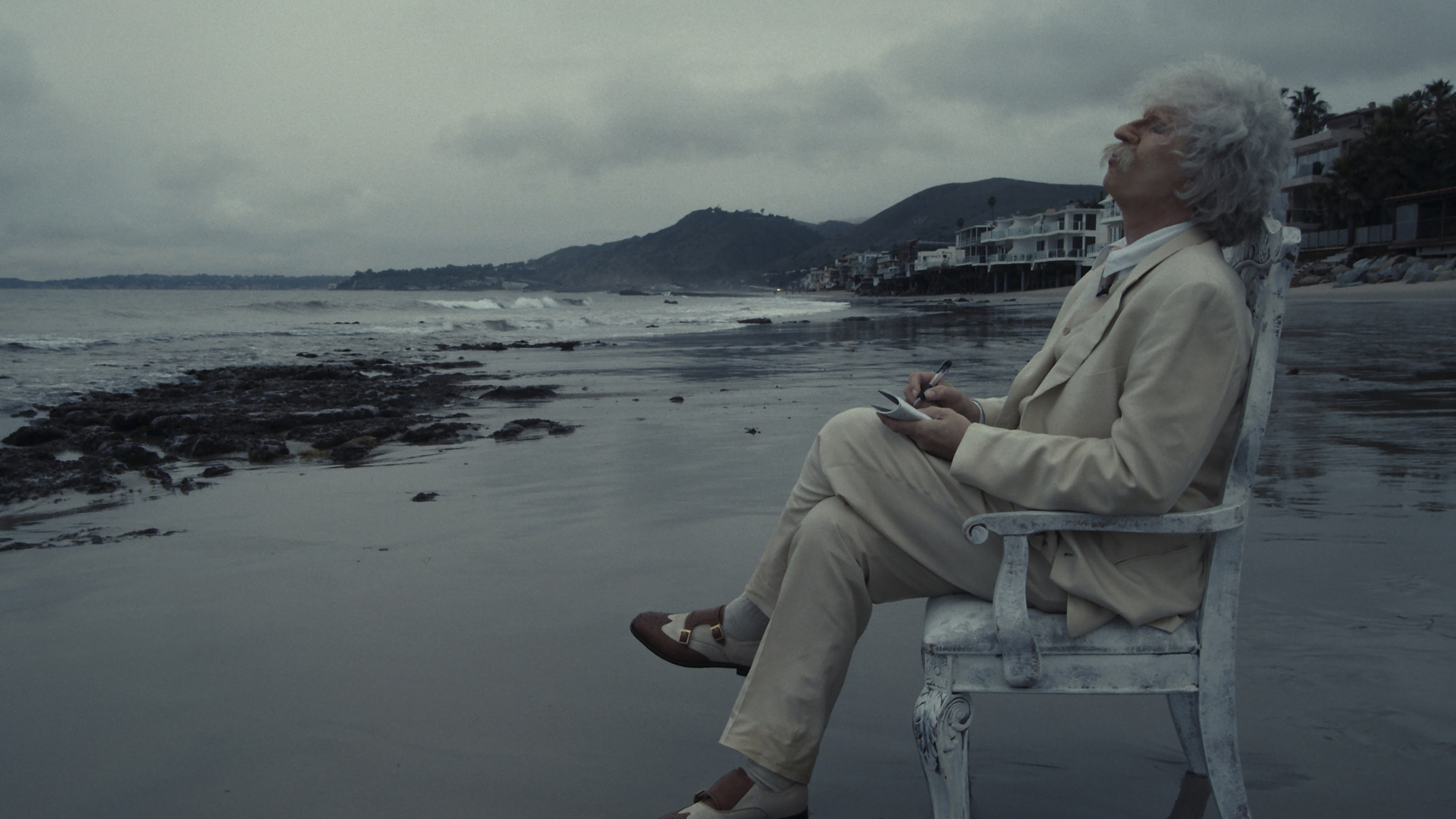
Val Kilmer rehearses as Mark Twain, a part he once had hopes of playing on the big screen.

That’s also true at other points in the documentary, especially when Kilmer complains about his 1996 divorce from actress Joanne Whalley and subsequent separations from their children, Jack and Mercedes. But in general, the actor comes across as a sympathetic figure.

Home movies from Kilmer’s childhood reveal family problems and tragedies that helped to shape him: a distant mother; a father whose business ventures didn’t always pan out; and especially the early loss of his creative younger brother, Wesley. Even more affecting is present-day footage that shows cancer survivor Kilmer being forced to live off his past triumphs by greeting fans at a Tombstone screening and a local Comic-Con.

A couple of quibbles: At times Val could have been organized in a more logical manner, and it never really delivers on Kilmer’s early promise to impart something profound about the craft of acting. Otherwise, the flick is well worth one hour and 49 minutes’ worth of any cinephile’s time.

Rating: 4 stars (out of 5)

Val (rated R) opens July 23 at select theaters, including Central Ohio’s Drexel Theatre, Gateway Film Center and Marcus Crosswoods Cinema. It will be available through Amazon Prime beginning Aug. 6.

Looking for the world’s loneliest whale

Joshua Zeman’s documentary revolves around his search for a renowned but unseen whale that can’t be understood by other whales.

By Richard Ades

As someone who cares about the environment and about those majestic creatures known as whales, I looked forward to watching The Loneliest Whale: The Search for 52.

The documentary has a fascinating premise: Aided by a group of oceanographers and other scientists, filmmaker Joshua Zeman sets out to find the mysterious whale that’s been dubbed “52,” so named because he sings his song at a frequency of 52 hertz. This separates him from other whales, who sing at various frequencies depending on their species, but never at 52 hertz.   

Whales, especially the males, sing to communicate with other whales that may be many miles away. However, 52’s unique pitch means he’s unable to communicate with anyone, as a result of which he’s been called the loneliest whale in the world.

The beginning of the documentary explains that 52’s existence was discovered years ago with the help of underwater listening devices originally deployed by the U.S. Navy to keep track of potentially hostile submarines. The unseen whale quickly became a source of fascination to people the world over, maybe because he symbolized the isolation many feel in modern society.

Apparently, one of those people was Zeman. So, after spending four years looking into the possibility of finding the illusive 52, he finally gathers a team and sets out to sea to do just that.

It’s at this point that all the film’s exposition begins to pay off—to an extent. Unfortunately, Zeman dilutes the excitement of the resulting “hunt” with more exposition. That is, he intersperses footage of the search for 52 with history lessons on the ways humans have made whales’ lives difficult down through the centuries.

From hunting them to the edge of extinction to polluting the ocean with mechanical noise that frustrates their attempts to communicate, we have not been good neighbors to our fellow mammals. If all this comes as news to you, then these digressions might seem worthwhile. Otherwise, you might wish Zeman had taken a more personal approach to his subject.

For one thing, what drives him to spend years of his life searching for a beast no one has ever seen? And what drives the scientists on his team to devote their entire careers to the ocean? Such topics are left largely unexplored.

At least the documentary satisfies our curiosity about the whale itself by answering questions such as: “Why is he so different from other whales?” And, “Is he really alone?” Before the film is over, we’re even treated to a surprise that wouldn’t be possible in, say, a flick about the Loch Ness Monster.

It’s a welcome moment, even if it doesn’t quite make up for all the lectures that preceded it.

Rating: 3 stars (out of 5)

The Loneliest Whale: The Search for 52 (rated PG) opened July 9 at Columbus’s Gateway Film Center. It will be available digitally beginning July 16.