‘Best of Burlesque’ strips out the plot, leaves the stripping

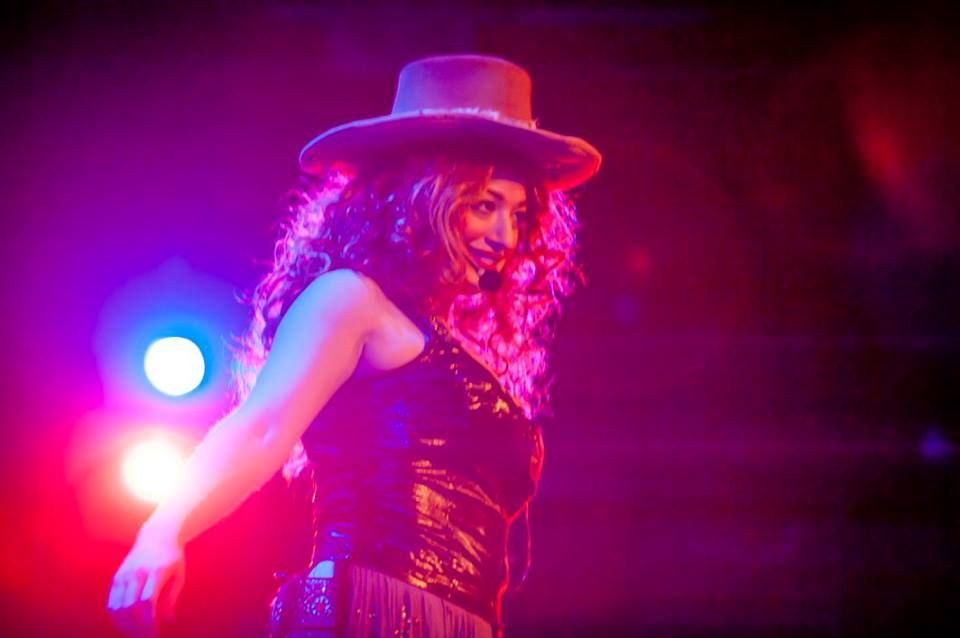
Leah Haviland, one of the featured performers in The Best of Shadowbox (Shadowbox Live photo)
Leah Haviland, one of the featured performers in The Best of Burlesque (Shadowbox Live photo)

By Richard Ades

Shadowbox Live’s annual Best of Shadowbox shows often benefit from honing—the honing that takes place once the players have enough performances under their belts to realize what does and doesn’t work.

You’d think the same would apply to the current Best of Burlesque show, which repeats the best skits and song/dance/striptease numbers from the three previous Burlesque shows. But it doesn’t, at least as far as the skits are concerned.

Since they’re based on actual routines that were performed in old vaudeville houses, director Stev Guyer and his cast probably don’t feel free to tweak the material. And since the acting is based on the over-the-top clowning that was practiced back in the day, Shadowbox doesn’t have much room to tweak that, either.

The result is that if you’ve seen these skits before, you won’t find much that’s fresh here. Of course, if you haven’t been to the previous Burlesque shows, you’ll likely enjoy the comedy, assuming you have a high tolerance for corny jokes about the kinds of things our grandparents or great-grandparents found amusing.

Fortunately, the rest of the show bases its appeal on something that’s more timeless: sex. Because The Best of Burlesque omits the loose storyline that tied its predecessors together, it can pack in more song-and-dance numbers that inevitably leave women stripped down to their pasties and/or men stripped down to their skivvies.

Not all of these numbers are equally inspired. But when the songs are strong, the costumes are colorful and the stripping is done with panache and attitude, you can’t help sitting up and taking notice.

One number that combines great singing and great stripping is Bang Bang, with lead vocals by a fearless Leah Haviland. Shadowbox wisely places it at the end of Act 1, which allows viewers to step outside and cool off during intermission.

Act 2 kicks back into high gear with The Mating Game, in which vocalist Amy Lay holds forth in an impossibly tall and feathery hat while fairy-like creatures cavort around her. That’s soon followed by a funny and sexy take on the Coasters song Little Red Riding Hood. Brandon Anderson handles the vocals while a raunchy version of the titular fairy tale is acted out by Nikki Fagin as Red, Stacie Boord as Grandma and Guillermo Jemmott as the lascivious Wolf.

A dark perversion of sexuality is represented by Sweet Dreams, sung by Fagin and Jemmott while Jack the Ripper (Andy Ankrom) saunters around in search of his next victim. It’s one of several numbers that owe much to Aaron Pelzek’s moody lighting.

Also memorable: You Look Like Rain, with lead vocals by Kevin Sweeney and tasty instrumentals by guitarist Matthew Hahn and his band.

As stated earlier, The Best of Burlesque dispenses with a storyline. Partially taking its place are video biographies of Gypsy Rose Lee and other iconic strippers of years past. These are scattered throughout and offer interesting tidbits of information, such as the fact that erotic dancers were sometimes featured at world’s fairs. I’d always assumed these were more family-friendly affairs.

The videos made me wonder whether Shadowbox might decide to re-create some of these ladies’ classic dances for future Burlesque shows. From a historic, nostalgic and, ahem, every other standpoint, they’d be a great addition.

The Best of Burlesque continues through April 17 at Shadowbox Live, 503 S. Front St., Columbus. Show times are 7:30 p.m. Wednesday-Thursday and 2 and 7 p.m. Sunday. Running time: 2 hours (including intermission). Tickets are $25, $20 student/senior/military. Special Valentine’s Day packages are available for Feb. 14 performances. 614-416-7625 or shadowboxlive.org.
Graczyk, Grossberg honored at Roundtable awards gala

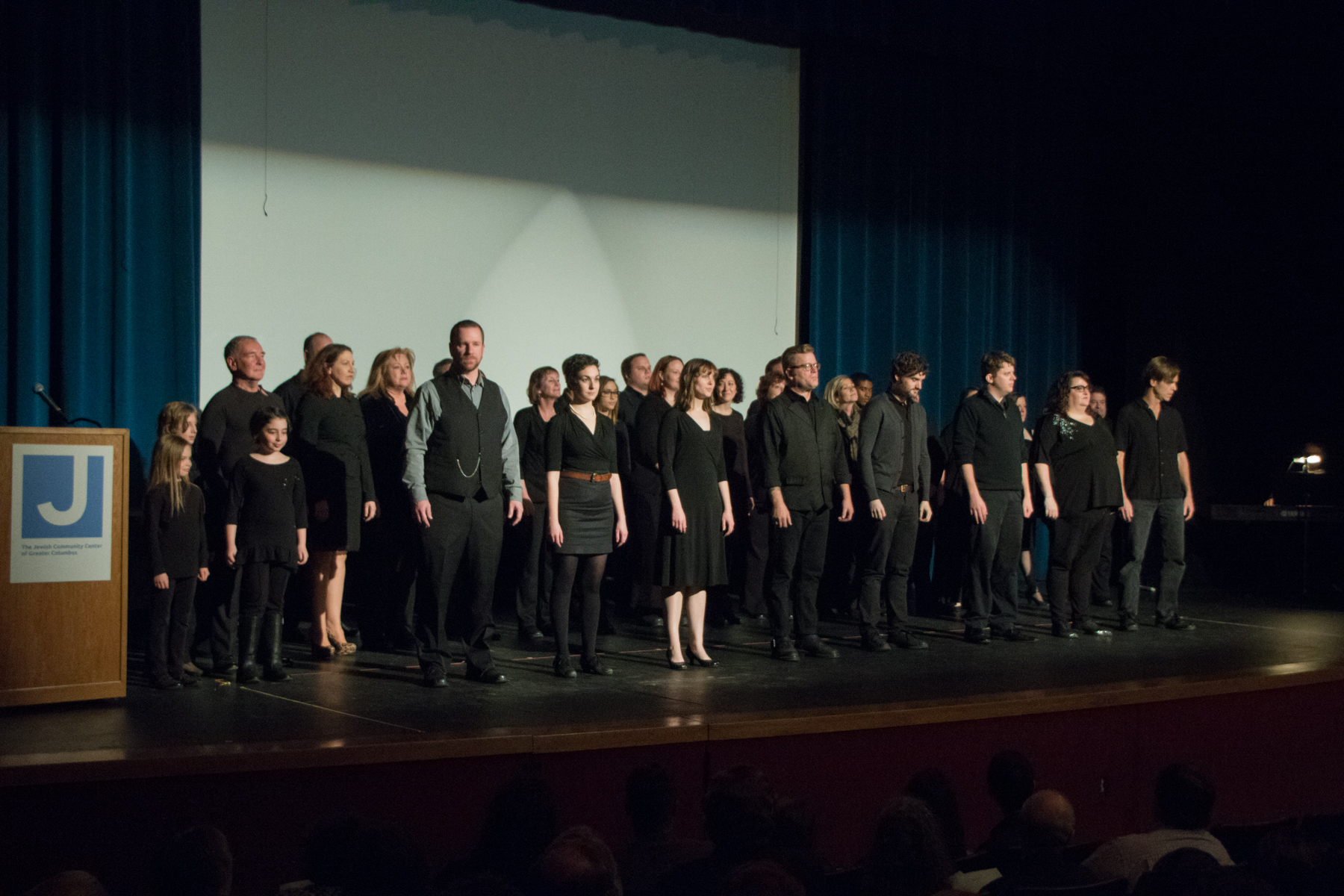
The cast of Gallery Players' production of Les Miserables sings One Day More at the Theatre Roundtable's 2016 Awards Night (photos by Jerri Shafer
The Theatre Roundtable’s 2016 Awards Night featured performances from nominated musicals, including Gallery Players’ 2015 production of Les Miserables (photos by Jerri Shafer)

By Richard Ades

At one point during the Theatre Roundtable’s annual Awards Night on Sunday, a presenter joked that it was just like the Oscars because we’d been there two hours and were only halfway through. He was exaggerating a little, but the show did run quite a bit longer than usual.

At least the weather was cooperative—unlike last year, when an incoming winter storm darkened the usually festive atmosphere. Besides, there were enough high points that most people probably didn’t mind sticking around.

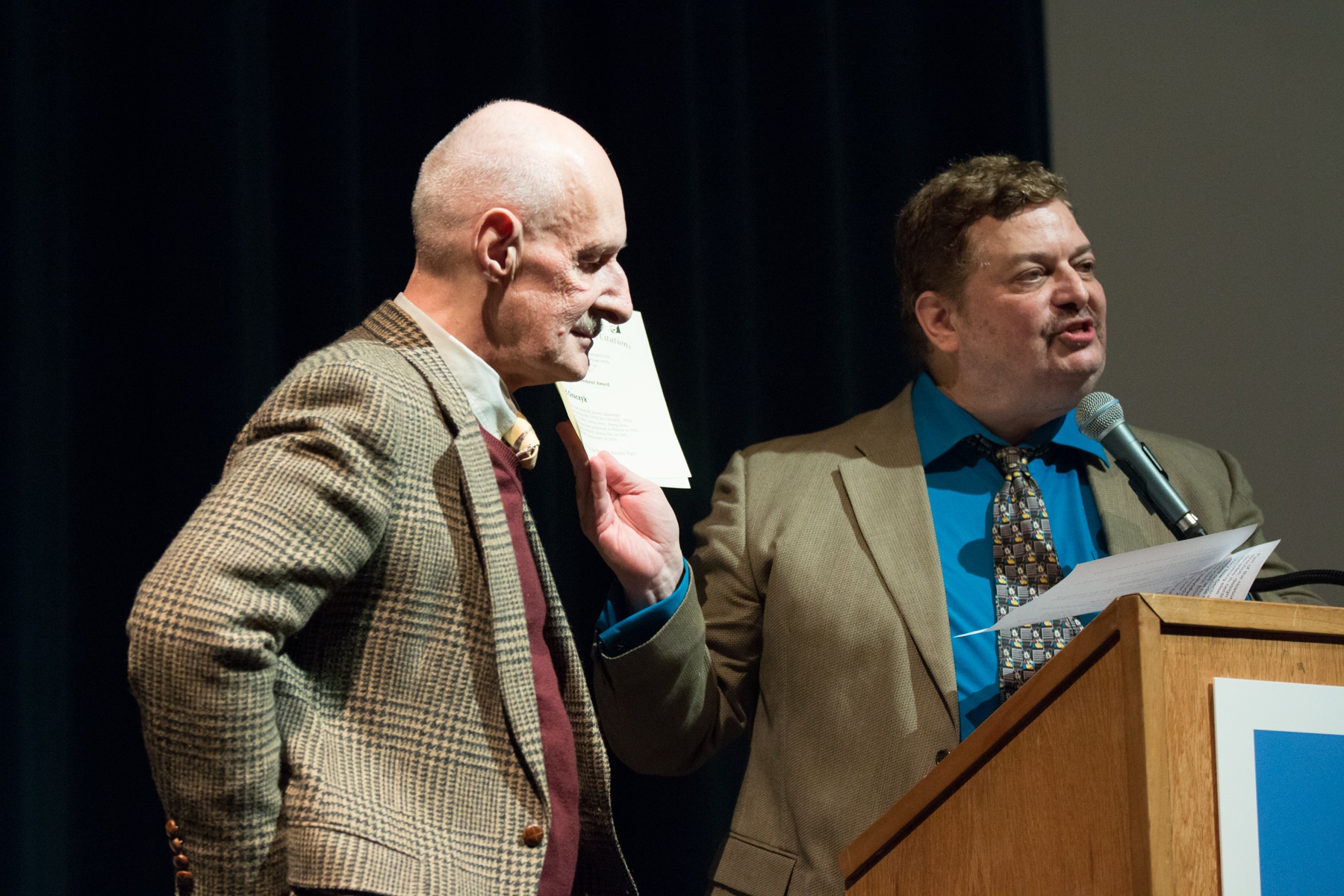
The Central Ohio Theatre Critics Circle provided one of the highest points: an appearance by Ed Graczyk. He received the circle’s Roy Bowen Lifetime Achievement Award for, among other things, leading Players Theatre Columbus for many years and writing the groundbreaking play Come Back to the 5 & Dime, Jimmy Dean, Jimmy Dean.

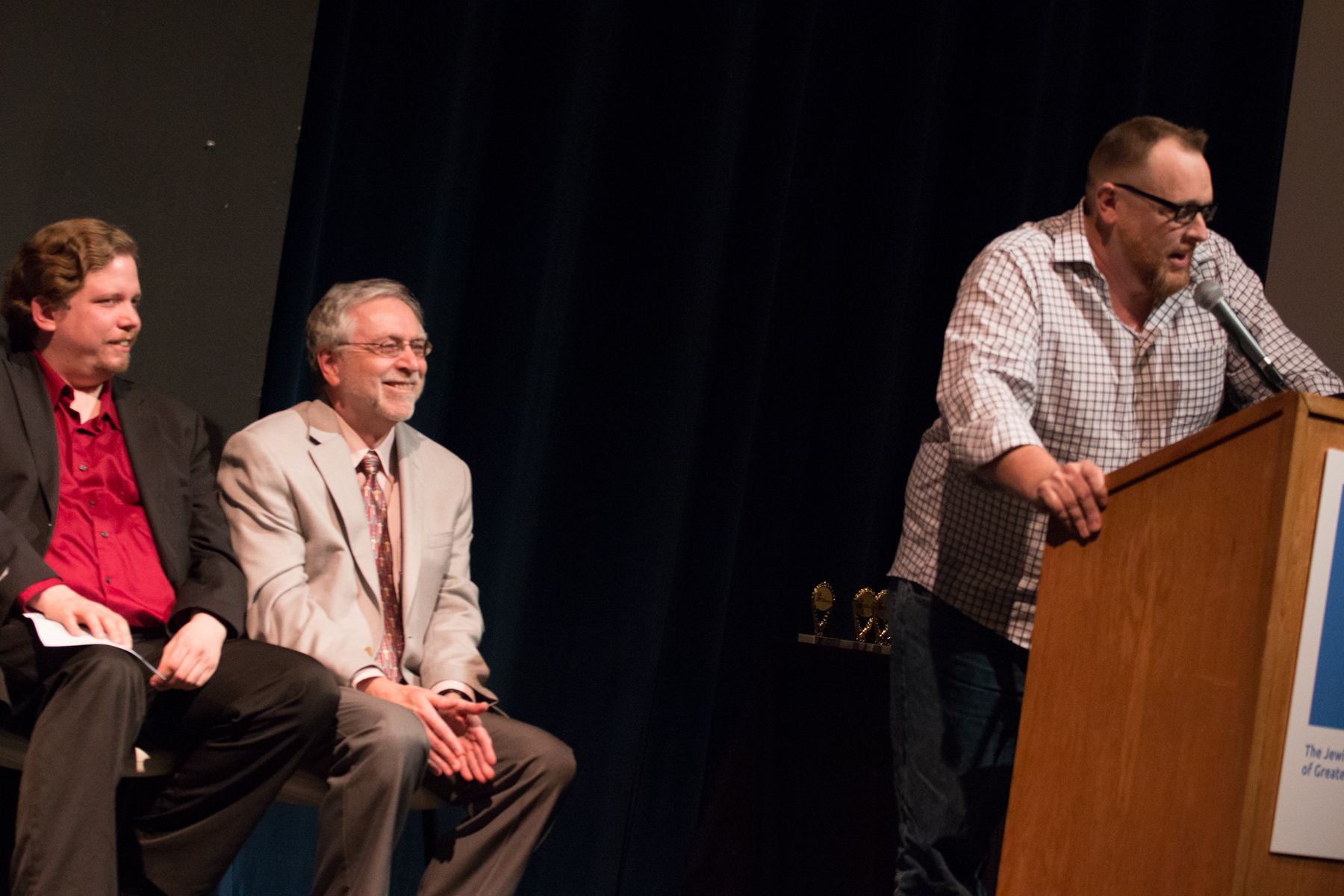
Taking part in the Theatre Roundtable’s 2016 Awards Night are critics (from left) Paul Batterson, Jay Weitz, Christina Mancuso, Michael Grossberg, Margaret Quamme, Richard Sanford and (at the podium) Richard Ades (photos by Jerri Shafer)
Taking part in the Theatre Roundtable’s 2016 Awards Night are critics (from left) Paul Batterson, Jay Weitz, Christina Mancuso, Michael Grossberg, Margaret Quamme, Richard Sanford and (at the podium) Richard Ades

Also honored by the critics were Evolution Theatre Company, Short North Stage, Shadowbox Live and MadLab’s former artistic director, Andy Batt. Before walking off with his citation, Batt delighted the audience by turning the tables on the critics, passing out both praise and pans to the people who’d long been judging his work as an actor and director.

Later—much later—in the evening, critic Michael Grossberg received an honor of his own: the Roundtable’s treasured Harold Award. The group probably chose to present it this year because Grossberg officially retired in 2015 when The Columbus Dispatch’s new owners made dozens of staff cuts. But fortunately for the local theater scene, the Dispatch is still counting on him to lead theater coverage, the only difference being that now he’s doing it as a freelancer.

The evening also included excerpts from 2015 musicals that were nominated for Roundtable awards. For me, the most exciting moment came when Gallery PlayersLes Miserables cast reassembled for a rendition of One Day More. It was a spectacular reminder of just how great that production really was.

For a list of Sunday’s nominees and winners, visit www.theatre-roundtable.org. It includes everything but the citations presented by the Central Ohio Theatre Critics Circle, which are listed below:

▪ To Evolution Theatre Company and managing artistic director Mark Schwamberger for a lineup of 2015 productions that entertained viewers while fulfilling the troupe’s refocused mission of advancing the understanding of gender issues and exploring gay and lesbian themes.

Andy Batt critiques the critics after accepting a citation for his longtime leadership of MadLab Theatre
Accepting a citation for his longtime leadership of MadLab Theatre, Andy Batt takes advantage of the opportunity to critique the critics

▪ To Andy Batt, who stepped down as MadLab’s artistic director at the end of 2015, for leading the troupe through 13 years of growth and development that included its 2012 launch of an annual festival for high school playwrights and its 2010 purchase and renovation of a performance space and gallery that has helped to nurture both the performing and visual arts in Downtown Columbus.

▪ To Short North Stage for making a major commitment to nurturing new musicals in 2015 with its successful world premieres of The Great One, The Last Night of Disco and Krampus: A Yuletide Fable.

▪ To Shadowbox Live for celebrating its 25th anniversary by stretching itself with inventive rock tribute shows and collaborations, both local and international.

Critic Michael Grossberg prepares to present a Roy Bowen Lifetime Achievement Award to Ed Graczyk

▪ A Roy Bowen Lifetime Achievement Award to Ed Graczyk, an accomplished director and nationally known playwright, who led Players Theatre Columbus from the 1970s into the early 1990s and wrote Come Back to the Five & Dime, Jimmy Dean, Jimmy Dean, a pioneering transgender comedy-drama that premiered at Players in 1976, ran on Broadway and became a Robert Altman film in 1982 and is celebrating its 40th anniversary in 2016.

Romeo, Romeo, wherefore art thou holding a whip and handcuffs?

Fifty ShadesBy Richard Ades

Given what they say about lightning striking twice, I had little reason to believe 50 Shades of Shadowbox would be as much fun as its 2015 predecessor.

That show, Sex at the Box, turned out to be my second-most-fun non-horizontal experience of the entire year. I knew it would be impossible to beat, but I hoped the new show would come close to matching its inspired lunacy.

Mostly, it doesn’t. But sometimes it does.

The skit that best reflects the show’s theme is 50 Shades of Romeo, in which star-crossed lovers Romeo (Robbie Nance) and Juliet (Amy Lay) find they share a penchant for kinky canoodling. Adding to the mock-Shakespearean atmosphere is the liberal use of Elizabethan suffixes (“musteth”).

Even funnier is The Ear Pod, featuring Tom Cardinal as a football fan who’s forced to miss the big game so he can attend couples counseling with his unhappy wife (Julie Klein). Miracle of miracles, it even has a punchline that’s both unexpected and amusing.

Maybe I’m being redundant there, as it’s hard for something to make us laugh if it isn’t unexpected. That’s the trouble with some of the evening’s weaker skits: They’re instantly predictable.

As soon as Kyle (JT Walker III) and his sexy girlfriend (Lay) walk into a room in The Jealous Boyfriend, it’s obvious she’s going to meet one ex-beau after another. It’s also obvious how Kyle will react, since the skit’s title gives it away.

Then there’s Spell Check, in which parents Katy Psenicka and Cardinal accuse their son of seeking out Internet porn. The punchline falls flat because it merely confirms what we knew all along.

The show gets off on the wrong foot with its first skit, Laid Off, about a boss (Klein) who decides to “fire” her lover (Cardinal) from the relationship. It’s disappointing because it tries to find laughs in heavy-handed double entendres rather than characterization or clever developments.

Thankfully, several of the other skits are more inventive, even if they aren’t absolute laugh riots. They include RiDickulous (about an app for girls deluged with photos of classmates’ not-so-private parts) and Sexy Nurse (about a hospital in which nurses dress just like they do in men’s lurid fantasies).

Also fairly amusing is Aw Fuk Me, about a 911 service for embarrassed victims of sexual shenanigans gone awry. However, at the performance I attended, it seemed to be cut short by a lighting miscue. It was a rare instance of imperfection for a troupe whose shows usually run like clockwork.

Shadowbox is such an expert at sketch humor that it’s likely director Stev Guyer and his cast will find ways to squeeze more humor out of the show as its run continues. But for now, the skits aren’t as reliably entertaining as the musical numbers.

The best cover songs include Bruno Mars’s Gorilla (sung by Noelle Grandison and Maurin Penn), Marvin Gaye’s Sexual Healing (sung by Grandison and Guillermo Jemmott) and Prince’s Little Red Corvette (sung by a very Prince-ly Walker).

Judiciously, Shadowbox saves the best for last: Meat Loaf’s Paradise by the Dashboard Light, with Kline and Lucas Tomasacci trading verses as the dueling leads. The show may not be epic, but it ends in a tunefully epic fashion.

50 Shades of Shadowbox continues through March 19 at Shadowbox Live, 503 S. Front St. Show times are 7:30 and 10:30 p.m. Friday-Saturday. Running time: 1 hour, 55 minutes (including intermission). Tickets are $20-$40. 614-716-7625 or www.shadowboxlive.org.

You say kabuki, I say ka-pokey…

Julie Klein, Nikki Fagin, Stacie Boord and Billy DePetro (from left) in The Tenshu (Shadowbox Live photo)

By Richard Ades

No one ventures outside its comfort zone more than Shadowbox Live.

The troupe could play it safe by sticking to its usual formula of skits and rock tunes, but it continually pushes beyond that SNL-like envelope by putting on ambitious, original shows. In recent years, those shows have largely been huge successes.

With The Tenshu, the kabuki-inspired tale that opened last week, Shadowbox pushes the envelope more than ever. Not only has it consulted with an international collaborator for the first time, but it’s completely redesigned its space—to the extent that its other current productions had to be placed on hold for the show’s three-week run.

What a shame that all of this effort has added up to a decidedly mixed success.

Visually, the show is striking, thanks to Britton Mauk’s Japanese-style scenery, Linda Mullin’s ornate costumes, David Mack’s macabre makeup and Aaron Pelzek’s lighting, along with puppets designed by Beth Kattelman and others.

Musically, the show is a bit less satisfying, though the original score is an interesting attempt to combine traditional Japanese sounds with rock beats.

But it’s in the drama department that the show really lags, suggesting that there’s a reason kabuki has never caught on in America. Adapted from a play written by Izumi Kyoka and translated from the Japanese by Hiromi Sakamoto, it lacks the unifying plot that Western viewers expect from a theatrical work.

Instead, it’s united by a single character and her mysterious home. All of the events occur in and around an ancient castle whose fifth floor is inhabited by a ghostly noblewoman named Tomihime (Stacie Boord) and her entourage.

Act 1 deals with Tomihime’s preparations for a visit from her friend Kamehime (Leah Haviland), as well as her use of supernatural powers to repel a band of samurai warriors led by the evil Lord Harima (Jimmy Mak). There are moments of enchantment and beauty, but much of the time is spent simply telling stories or exchanging gifts and pleasantries.

Act 2 finally gets to the meat of the tale: Tomihime’s potentially romantic encounter with a disgraced samurai named Zusho (JT Walker III). Unfortunately, the encounter proceeds so slowly that viewers’ patience may be put to the test.

Throughout, director Stev Guyer has the actors speak in a deliberate, declamatory manner. It’s probably meant to mimic the style of kabuki acting, but the approach makes it even harder for Western viewers to maintain interest in the slow-paced tale.

Shadowbox head writer Mak tries to make up for the script’s talkiness by adding action scenes reminiscent of Japanese samurai flicks or anime cartoons. Among them are two intricately choreographed swordfights and an attack by a huge, flying creature with glowing eyes.

Dancing also plays a role, courtesy of Katie Psenicka’s choreography. The most memorable dance represents a battle between a falcon (Nick Wilson) and a crane (Amy Lay).

The dance numbers are graceful, while the action sequences are thrilling. There just aren’t enough of them to make up for the show’s long stretches of lifeless dialogue.

The talent is all top-notch, both onstage and off-, but it’s not enough to sell the exotic story. Maybe what’s needed are subtitles—not to translate what happens but to explain why we’re supposed to find it compelling.

The Tenshu continues through Oct. 25 at Shadowbox Live, 503 S. Front St. Show times are 7:30 p.m. Wednesday-Thursday, 1 and 7:30 p.m. Friday, 2:30 and 7:30 p.m. Saturday, 2 and 7 p.m. Sunday. Running time: 2 hours, 20 minutes (including intermission). Tickets are $20-$40, $10 for ages 12 and under. An abridged version will be presented at 1 p.m. Friday (doors at noon). Running time: 45 minutes. Tickets are $10, $5 students/seniors/military. 614-416-7625 or shadowboxlive.org.
Funk Daddy Love shares bill with spirit of Janis Joplin

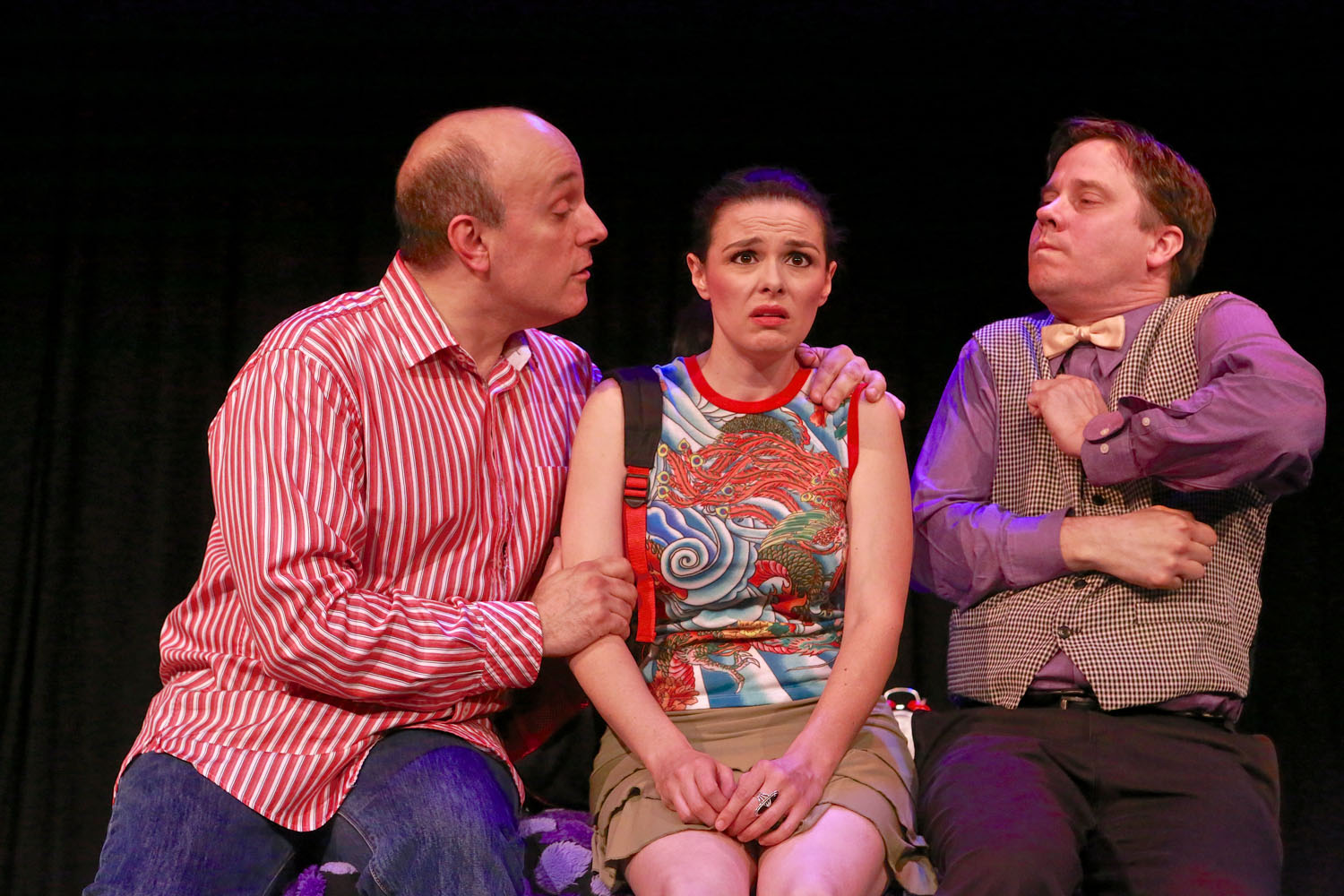
Two gay fathers (Tom Cardinal, left, and Jimmy Mak) suspect their daughter (Nikki Fagin) of being a closet Republican in Elephant in the Room, one of the skits featured in Best of Shadowbox (Studio 66 photo)

By Richard Ades

The annual Best of Shadowbox show basically amounts to summer reruns, consisting of selected songs and skits from previous shows. As a result, it isn’t always something I look forward to.

But this year’s version was different. So much of the material was awesome the first time around that I couldn’t wait to see it again.

Last Friday, I finally got the chance. It turned out to be just as good as I expected.

Lots of people deserve credit for the show’s success, but let’s start by acknowledging the contributions of Brandon Anderson. Not only does he bookend the first act by handling lead vocals on two of the most entertaining songs—Mama Told Me Not to Come and Bruno Mars’s catchy Uptown Funk—but he portrays the central character in the funniest Shadowbox skit in recent memory.

In Funk Daddy Love, Anderson plays a soul singer who’s on trial for the “crime” of being too sexy. As one witness after another explains how his crooning has affected them, Love repeatedly pulls out a microphone and launches into his unbelievably raunchy ballads.

Anderson is great in the role, but it’s all the little touches that really sell the comedy: the nightclub-style lighting that accompanies his warbling, Katy Psenicka’s turn as the uptight prosecutor, Robbie Nance’s portrayal of the awkward defense attorney, Tom Cardinal’s high-pitched attempts to keep order as the judge. In this and every other featured skit, directors Stev Guyer and Julie Klein make sure everything is honed to perfection.

Other welcome returnees include:

Life Duet: The night’s most romantic skit stars Jimmy Mak and Nikki Fagin as a couple whose decades-long relationship is defined by the songs they listen to on the radio.

Sneak a Peek—Dirty Movies: The best episode yet of the faux movie-review series finds hosts Klein and David Whitehouse sampling adult-rated flicks such as Saving Ryan’s Privates and the badly dubbed Samurai Frog Proctologist. The running joke is that the horny heroine inevitably has an equally horny sister who shows up at an opportune moment.

The Friend Zone: The Twilight Zone’s Rod Serling (Nance) narrates the horrifying tale of a hapless guy (Mak) who can’t get to first base because his favorite girl (Fagin) doesn’t even know he’s suited up and ready to play.

Holy Hell: A parishioner (Gabriel Guyer) goes to his priest (Cardinal) to confess a night of debauchery. The piece would be even funnier if the priest’s insistence on details weren’t so unlikely, but it deserves recognition as Shadowbox’s most explicitly sexual skit of all time.

Of the comedy bits I missed the first time around, my favorite is Gymnauseum, in which a substitute gym teacher (Whitehouse) is shocked to learn that dodgeball is considered too taxing for today’s mollycoddled students. Also appealing—at least, up until the weak ending—is Elephant in the Room. It’s about what happens when two gay fathers (Cardinal and a particularly funny Mak) are shocked to learn their daughter (Fagin) may be a closet Republican.

In honor of its 25th anniversary, Shadowbox is bringing back highlights from the troupe’s early years. In this show, the highlight is Steven Lynch’s Lullaby, a song last heard in 2006 at the now-defunct 2Co’s Cabaret. Cardinal again favors the piece with his sweet voice, setting the audience up for a humorous jolt when the lyrics take an unexpected turn.

Other musical selections of note include the two that bookend the second act: Portishead’s All Mine, sung by Stephanie Shull and accompanied by suitably spooky dancing featuring Nance, Fagin and Psenicka; and Queen’s Somebody to Love, harmonized by a gospel-like choir. Sandwiched between these two is the most notable number of all: Klein’s fervent re-creation of Janis Joplin’s Ball and Chain, complete with an extended a cappella section.

As if the show’s live entertainment weren’t enough, it’s punctuated by a collection of often-clever videos. The best is the last: Stev Guyer’s interview with the Columbus Zoo’s Jungle Jack Hanna. Hanna is such a treasure trove of unpredictable drollness that he inspires laughs without even trying.

Presumably, Shadowbox’s regular performers have to work at being as funny and tuneful as they are. Luckily for us, they made the effort.

Best of Shadowbox continues through Aug. 22 at Shadowbox Live, 503 S. Front St. Show times are 7:30 and 10:30 p.m. Friday-Saturday ( no shows July 3-4). Running time: 2 hours, 5 minutes (including intermission). Tickets are $20-$40. 614-416-7625 or shadowboxlive.org.
The fun really starts when Dorothy meets Pink Floyd

Another Brick in the Wall, one of the many Pink Floyd numbers featured in Shadowbox Live’s Which One’s Pink? (Studio 66 photo)

By Richard Ades

Far out! Excuse the hippie talk, but there’s no other way to describe Shadowbox Live’s most mind-blowing musical-tribute show yet.

You may have thought the Beatles retrospective Bigger Than Jesus was great, and it was. You may have thought Joe Cocker: Mad Dog and Englishman was a treat, and you were right.

But wait till you see Which One’s Pink? What director Stev Guyer and his cast and crew have pulled off is an out-and-out marvel.

I never was a Pink Floyd fan back in the ’60s and ’70s. Nor was I into psychedelic drugs. (I’m probably being redundant there.) Now, thanks to this new tribute show, I have some idea of what I was missing.

The show starts out with a look at the life of the band’s early front man, Syd Barrett. If you appreciate Barrett, or just brilliant but tormented souls in general, you’ll find this fascinating. And even if you don’t, you still get to bask in a collection of Pink Floyd numbers that augment the biographical details.

The singers and musicians are great as always, and Katy Psenicka’s choreography is more varied and expressive than ever. But what really sets the show apart is Shadowbox’s first collaboration with the Columbus College of Art & Design, whose talented students complement the songs with eccentric and psychedelic videos.

Act 1’s many highlights include:

Happiest Days of Our Lives/Another Brick in the Wall, everyone’s favorite anthem of youthful rebellion (and the band’s only hit single);
Mother, sung by Andy Ankrom and accompanied by a huge puppet of an overprotective “mom” with glowing eyes;
Young Lust, sung by Guyer alongside video images of nubile female silhouettes in the process of stripping off their underwear; and
Comfortably Numb, sung by Guyer as a drugged-out rock star and JT Walker III as his tormenter.

My only problem with the show’s focus on Barrett is that Pink Floyd’s greatest achievements actually arrived after his brief tenure with the band (1965-68). That includes all but one of the songs presented during the Barrett-centered first act. Another Brick in the Wall, for example, was written by subsequent front man Roger Waters as part of the 1979 rock opera The Wall. Here, however, it could be misinterpreted as the product of Barrett’s difficult childhood.

That quibble aside, the first act is consistently entertaining. Yet it pales next to Act 2, which may be Shadowbox’s most intricate and innovative creation to date.

After Pink Floyd released its 1973 album The Dark Side of the Moon, many fans claimed it synchronized perfectly with the classic 1939 film The Wizard of Oz. These fans could well have been under the influence of mind-altering drugs, but you don’t have to be similarly impaired to appreciate Shadowbox’s take on the phenomenon.

The troupe reimagines the fabled synchronization by combining (1) footage from the film, (2) interpretive video footage provided by CCAD students, (3) live re-enactments of scenes from Oz featuring Dorothy (Amy Lay) and other characters, and (4) live performances of the Pink Floyd music. The technical prowess it took to pull this off is nothing less than breathtaking.

More importantly, the end result is a total blast. It’s an experience like none other.

I may have misspoken in the beginning. There probably are several ways to describe what Shadowbox has wrought here, including “awesome” and “glorious.” But nothing sums it up quite as well as “far out!”

Which One’s Pink? runs through Aug. 2 at Shadowbox Live, 503 S. Front St., Columbus. Show times are 7:30 p.m. Wednesday-Thursday and 2 and 7 p.m. Sunday (no shows May 24, 27, 28, June 25, July 1, 2, 12, 19, 26 or 29). Running time: 2 hours, 15 minutes (including intermission). Tickets are $25; $20 for students, seniors (55-plus) and military. 614-416-7625 or shadowboxlive.org.

Shadowbox, JAG collaborate on joyful Cocker tribute

Shadowbox Live is setting aside most of its regular shows this week for its tribute to Joe Cocker, Mad Dog and Englishman
Shadowbox Live is setting aside most of its regular shows this week for A Tribute to Joe Cocker: Mad Dog and Englishman

By Richard Ades

Stev Guyer never attended Joe Cocker’s 1969-71 tour, Mad Dogs and Englishmen, but he saw a related documentary. Speaking on the opening night of Shadowbox Live’s new Cocker tribute show, the troupe’s executive producer said he took a lesson from the film that has shaped his thinking ever since.

The lesson: Performing is all about “the joy of doing the thing.”

That philosophy comes across in A Tribute to Joe Cocker: Mad Dog and Englishman. A departure from Shadowbox’s usual variety format, the show fills the entire front of the theater with singers and musicians, including four brass players borrowed from the Jazz Arts Group. Together, they pump out rock and blues with so much joy that the event could almost be mistaken for a religious revival meeting.

One tipoff that it isn’t: Rather than cajoling us to come to Jesus, the gospel-style chorus issues a more earthly invitation: Let’s Go Get Stoned. Really, though, who needs drugs when Cocker’s versions of tunes by the Beatles and others offer a natural high?

Honky Tonk Woman, Feelin’ Alright, She Came in Through the Bathroom Window: The first act alone is blessed with so many up-tempo, driving delights that the average viewer may well be exhausted by intermission. It comes as a relief that Shadowbox wisely starts Act 2 off on a more restrained note.

Halfway through the first act, the show includes a couple of numbers popularized not by Cocker, but by singer-songwriter Leon Russell. Before JT Walker III launches into a falsetto-spiced version of Tight Rope, we’re informed that Russell (who led the Mad Dogs and Englishmen band) actually deserves the credit for shaping the distinctive Cocker sound.

Whoever invented the sound, Shadowbox and its guests from JAG do a masterful job of re-creating it. All throw their hearts and souls into the music so totally that it’s probably unfair to choose an MVP, but I’ll do it anyway: Kevin Patrick Sweeney, whose limber keyboard work powers several songs, and whose lead vocals make Something and Sticks and Stones two of the evening’s highlights.

Walker, with his powerhouse voice and lithe dance movements, is another natural stand-in for the late Cocker (1944-2014). So is Guyer, whose many vocal contributions include his familiar rendition of Unchain My Heart.

Rounding out the male vocalists is his son, Gabriel Guyer, who brings his rich baritone voice to bear on the down-and-dirty Delta Lady and the inspiring Up Where We Belong (a nifty duet with Nikki Fagin).

Though Cocker’s lustier arrangements aren’t always a good match for female soloists, Shadowbox’s women excel on several numbers. Among them: Stacie Boord holds her own on Feelin’ Alright, with its series of calls and responses (Boord: “All right!” Chorus: “Uh-huh, uh-huh!”), then offers sweetly bluesy takes on The Ballad of Mad Dogs and Englishmen and Can’t Find My Way Home.

Another female-led highlight is Julie Klein’s rendition of Catfish, a blues number that tells an appropriately sad tale.

This is Shadowbox’s first collaboration with the Jazz Arts Group, and one can only hope it won’t be the last. Sax player Kris Keith is particularly prominent, but all four JAG musicians are given opportunities to shine.

With two percussionists (Matt “The Beast” Buchwalter and Brandon “Dreds” Smith) drumming simultaneously at center stage, guitarists wailing away at stage right and a smiling chorus singing with Pentecostal fervor at stage left, the Joe Cocker tribute is nearly as much fun to watch as it is to hear.

Frankly, it’s just fun, period. And, of course, joyful.

A Tribute to Joe Cocker: Mad Dog and Englishman continues through Sunday (March 8) at Shadowbox Live, 503 S. Front St., Columbus. Show times are 7:30 p.m. through Thursday, 7:30 and 10:30 p.m. Friday-Saturday, and 2 and 7 p.m. Sunday. Running time: 2 hours (including intermission). Tickets are $20-$40. 614-416-7625 or shadowboxlive.org.
Explicitly sexual and deliriously funny

A sampling of the characters and costumes featured in Sex at the Box (Shadowbox Live photo)

By Richard Ades 

Is your heart healthy enough for Sex at the Box?

This may not be Shadowbox Live’s sexiest show—that honor belongs to the midweek offering Burlesque Biographie—but it’s easily Shadowbox’s funniest show of recent memory. If you’re not sure whether your body is up to two hours’ worth of hearty guffaws, you’d better get your doctor’s approval before attending.

A few more distinctions held by the theme show:

  • Funniest Shadowbox skit in years.
  • Most explicit skit in the history of Sex at the Box.
  • Best Shadowbox cover song of all time.

Just in case you’re wondering whether you should bring your children or parents to Sex at the Box, I’ll start with the “most explicit” skit. Called Holy Hell, it stars Tom Cardinal as a priest and JT Walker III as Henry, an unmarried parishioner who seeks forgiveness for what he describes as the best sex he’s ever had. When the priest demands details, Henry provides them at length and with great specificity.

Should you bring your kids or parents to the show? Unless the former are very mature or the latter are very broadminded, absolutely not.

Most Shadowbox theme shows have at least one or two good skits like this one. What sets Sex at the Box apart is that just about every skit is top-drawer from beginning to end. Other winners include:

  • In a Bar: A squeaky-voiced would-be Lothario (Brandon Anderson) has no luck attracting the opposite sex until he’s aided by the “In a world…” tones of a movie-trailer announcer (Walker).
  • The Friend Zone: The Twilight Zone’s Rod Sterling (Robbie Nance) narrates the spooky tale of a man (Jimmy Mak) whose amorous feelings are strangely invisible to the woman he desires (Amy Lay).
  • Life Duet: Mak and Lay silently portray a couple whose changing relationship is defined by the music they play on the car radio.
  • Sneak a Peak—Dirty Movies: In the funniest episode yet of the faux movie-review show, hosts Shelly and John (Julie Klein and David Whitehouse) look at various porno scenes that invariably climax in the appearance of the heroine’s sexy sister.

As it plans to do throughout its 25th-anniversary season, Shadowbox also brings back a vintage skit. The Pyramid Game, a TV-style competition pitting a geeky Upper Arlington couple (Mak and Katy Psenicka) against a pair of South Siders (Whitehouse and Lay), is cute, but it’s not as consistently funny as some of the newer sketches.

And nothing is as funny as Funk Daddy Love, in which the titular soul singer is put on trial for the “crime” of being too sexy. Anderson gives a hilarious portrayal of Love, who breaks into one of his down-and-dirty ballads whenever the mood hits him.

Musically, Sex at the Box offers an embarrassment of riches. The best covers and their lead singers include Just Like Heaven (Anderson), Sex and Candy (Walker) and Glorybox (Lay). The BillWho? band provides its usual spot-on accompaniment, as when it backs up Lay’s vocals with unmistakably Portishead-like sounds.

The most surprising cover is the last: Queen’s gospel-style Somebody to Love, sung by an eight-person chorus. The most familiar is The Way You Make Me Feel, which finds Noelle Grandison returning to Michael Jackson mode while lithe dancer Nick Wilson accompanies her with Jackson-like moves.

What’s the best cover of all—in fact, perhaps the best cover tune ever heard on a Shadowbox stage? No contest. It’s Klein’s flawless and passionate take on Janis Joplin’s Ball and Chain.

Even if your heart is healthy enough for Sex at the Box, your voice might not survive the hootin’ and hollerin’ you’ll want to do once this gem is finished.

Sex at the Box continues through March 21 at Shadowbox Live, 503 S. Front St. Show times are 7:30 and 10:30 p.m. Friday-Saturday (no shows March 6, 7 or 14). Running time: 2 hours (including intermission). Tickets are $20-$40. 614-416-7625 or shadowboxlive.org.

It’s not yet beginning to feel a lot like Christmas

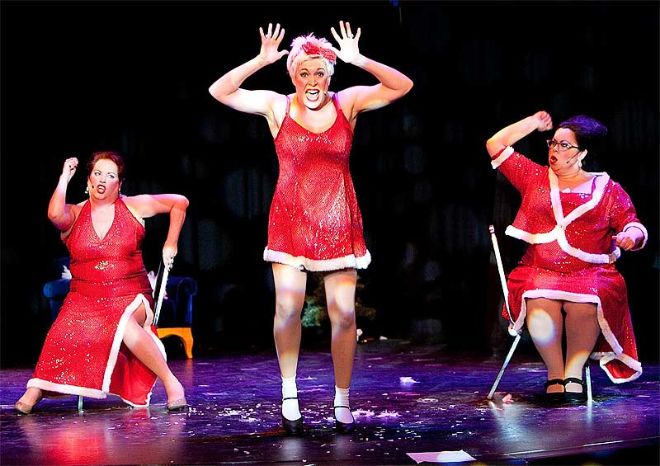
Santa Babies (from left) Dixie (Julie Klein), Dolly (Stacie Boord) and Dorothy (Stephanie Shull) return for Holiday Hoopla 2014 (Shadowbox Live photo)

By Richard Ades

The audience for Holiday Hoopla’s opening night may have been a bit small, but what it lacked in size, it made up in lack of spirit.

Skit after skit drew only titters, leading me to wonder whether it was simply too early for folks to get in the Christmas spirit. After all, we hadn’t even made it to Thanksgiving yet.

Then again, maybe the patrons were already suffering from seasonal affective disorder, courtesy of an early blast of wintry weather.

Of course, one can’t discount the possibility that the main problem was the material, which is neither great nor fresh. Much of the show is very familiar, and the skits that aren’t familiar are short on comedy.

The biggest dud is Cookie Party, the tale of a holiday family get-together. You could call this the classic example of a piece with more funny characters than funny lines except that the characters aren’t all that hilarious.

Slightly more success is enjoyed by the three skits featuring Santa Claus (David Whitehouse). The best of them is Elf Reflection, in which St. Nick’s helpers watch a Lord of the Rings movie and come to the conclusion that they aren’t talented enough to be real elves. It’s a clever premise, but it needs more laughs to make it a winner.

Another Santa skit, Naughty Appeals, also fits into the more-clever-than-funny category. But at least it’s better than Santa Breaks Down, which relies on forced jokes such as a woman confusing “origami” with “orgasm.”

One of most familiar skits is Kidsmas Carol, in which a harried teacher (Stephanie Shull) tries to shepherd a cast of grade-schoolers through a performance of A Christmas Carol. The few chuckles it generates are mostly provided by Julie Klein’s spunky portrayal of the girl playing Scrooge. Maybe we’ve seen this chestnut once too often.

Yet familiarity doesn’t always breed contempt. The biggest laughs on opening night were produced by the Santa Babies, a comically bad lounge act featuring Klein, Stephanie Shull and Stacie Boord. True, they offer little variation on the shtick they’ve been doing for years, but that seems to be good enough for many. And it was plenty good enough for a group of kids sitting near me, who cracked up every time the flirtatious Dolly (Boord) showed off her spankies.

Personally, I wish the Santa Babies would vary their routine more from year to year. Meanwhile, I like them best when they play it straight, cranking out harmonies worthy of that swing-era act known as Andrews Sisters.

Even without those rare moments, Hoopla has an abundance of good music. And unlike the comedy, it doesn’t lose its effectiveness when it’s been heard in previous incarnations of the show.

Children Go Where I Send Thee (sung by Klein), The Old Man (sung by Stev Guyer), The Hounds of Winter (sung by Leah Haviland), Oi to the World (sung by Amy Lay and Haviland): It wouldn’t be Hoopla without these returning classics.

Other entertaining tunes include James Taylor’s version of Jingle Bells (sung by JT Walker III), the BillWho? band’s metal version of Sugar Plum Fairy (from The Nutcracker), Lullay Lullay (sung by Nikki Fagin) and I’ve Longed for Christmas (sung by Boord).

Speaking of which, Holiday Hoopla 2014 should go over better once the audience actually starts longing for Christmas. But it wouldn’t hurt if Shadowbox worked on improving the product in the meantime.

Holiday Hoopla continues through Dec. 27 at Shadowbox Live, 503 S. Front St. Show times are 7:30 p.m. select Tuesdays-Thursdays, 7:30 and 10:30 p.m. select Fridays-Saturdays, plus 7:30 p.m. Dec. 22 (no shows Nov. 25-27 or Dec. 24-25). Running time: 2 hours (including intermission). Tickets are $20-$50. 614-416-7625 or shadowboxlive.org.

Revised musical drops its pedantic personality

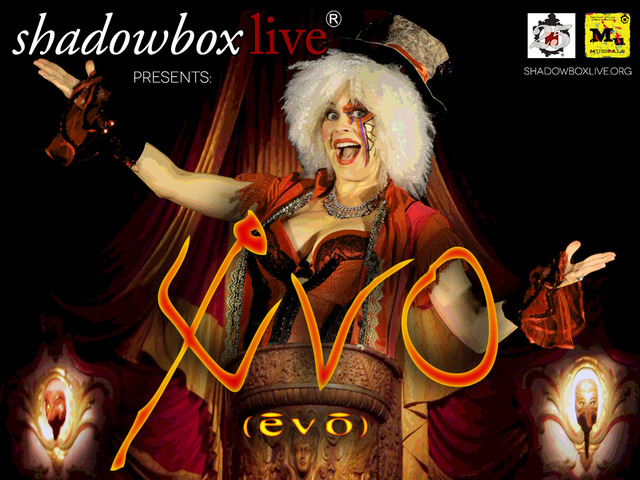
Stacie Boord as the Ringmaster in Evo (Shadowbox Live photo)
Stacie Boord as the Ringleader in Evo (Shadowbox Live photo)

By Richard Ades

Over the past 25 years, Shadowbox Live has settled into a comfortable role as the troupe that plies viewers with skits, food, booze and rock tunes.

It wasn’t always this way. Back in the early days, Shadowbox head honcho Stev Guyer was determined to create big, important works about big, important topics. The result was a series of original musicals such as 1995’s Evolution.

Like the others, Evolution was loud, flashy and ambitious. Sometimes, particularly in the dance sequences, it was impressive.

More often, though, it came across as a lecture set to music. How could it seem otherwise, when it methodically introduced each topic before discussing it with billboard-style dialogue and lyrics?

Now, apparently, Guyer wants to take another crack at creating important art. With help from Shadowbox head writer Jimmy Mak and musical director Matthew Hahn, he’s revisited Evolution and renamed it Evo.

Thankfully, the new version has lost more than a portion of its name. It’s also lost the pedantic attitude that made viewers of Evolution feel like they deserved college credit just for sitting through it.

Guyer and his fellow Shadowboxers have learned a lot about showmanship in the past quarter-century, and they’ve funneled it all into Evo.

The new show still addresses some of the same questions about human beings and our relationships with ourselves, each other and society: Why are we so prone to violence? Is “justice” just another word for “revenge”? And, most basically, what is the point of our existence?

Sex, love, parenting and old age also are taken up.

The most obvious change from the previous version is that all of these topics are introduced by the Ringleader, a flawed character energetically portrayed by Stacie Boord. Her presence helps to put a recognizably human face on the proceedings.

Another difference is that the show often makes effective use of humor to get its points across.

Often the humor is of the darker variety, as it is in a segment on parenting and the complications it creates in romantic relationships. When “Mr. Know It All” (Billy DePetro) and “Mrs. Don’t Tell Me What to Think” (Katy Psenicka) are asked which part each wants to play in a knife-throwing act, the latter eagerly grabs a handful of blades. It seems she has a wealth of pointed comments that she’s been dying to aim at her hubby.

As in the original Evolution, music and dance are at the center of the action.

From the first notes of Risking It All, with its ever-changing time signatures, the music is an interesting combination of melodies and intricate rhythms. The heavy percussion often carries echoes of traditional African drumming, reminding us of the continent where human evolution likely has its roots.

The dancing, choreographed by Psenicka, is as varied as the show’s many moods. Though it can be frenetic and exciting, it also can be sensitive and graceful. In a particularly lovely segment, Guyer and Boord sing a song about aging desire while JT Walker III and Nikki Fagin act it out through dance.

Throughout the show, Scott Aldridge’s dramatic lighting is a key component. So are the colorful and flowing costumes (designed by Linda Mullin, Myah Shaffer and Lyn Walker), which help to establish the circus-like atmosphere.

Occasionally, the show still carries a whiff of the classroom. One example is a section that delves into the ancient practice of taking aged tribe members out into the wilderness to die. It seems like a needless digression since society now treats its oldsters a bit more humanely.

But most of the show is entertaining and engrossing, and it’s consistently so after intermission. Even when Evo preaches, as it does in the section titled Revenge, it drains the self-righteousness from the sermon by delivering it with a comedic touch.

Shadowbox clearly has evolved for the better through the years by learning from its past mistakes. If only we could say the same for the rest of humankind.

Evo will be presented at 2 and 7 p.m. Sundays through Nov. 2. Running time: 1 hour, 50 minutes (including intermission). Tickets are $25, $20 for students and seniors. 614-416-7625 or shadowboxlive.org.