Reviews

Polish prostitutes find danger in exotic surroundings

Prospective prostitutes recruited by Emi (Paulina Galazka) board a plane to entertain wealthy clients.

By Richard Ades

Women who seek success in a way that’s both sexy and shady are courting disaster, and they inevitably find it. That’s the usual message of movies about such exploits.

One of the latest is the Polish film Girls to Buy, based on the true story of a young woman who was seduced into the world of high-class prostitution. Directed in a flashy style by Maria Sadowska, the flick delivers its cautionary tale with lots of eye candy and ear candy, even if its dramatic appeal is diluted by its lack of relatable characters.

The protagonist is Emi (Paulina Galazka), who lives in a small town with her hard-working single mom. Frustrated by their poverty, Emi has adapted by using sex appeal to get what she wants. Then she meets Dorota and Marianna (Katarzyna Figura and Katazyna Sawczuk), a mother and daughter who introduce her to the seemingly glamourous life of a call girl.

It’s not really selling yourself, the two assure her. It’s just getting paid for something you’d be doing anyway.

Emi (Paulina Galazka, right) plays a poker game with high stakes. At her side is Marianna (Katazyna Sawczuk).

Emi catches on and soon surpasses her tutors in ambition and smarts. Things really take off after she forms a strategic alliance with Sam (Giulio Berruti), who procures women to entertain wealthy Arab businessmen and royalty. Soon it’s Emi who’s recruiting women who are willing to use sex appeal to get ahead, though she isn’t always forthcoming about what they’ll be expected to do for the money.

Eventually, even Emi finds herself in over her head when Sam introduces her and her band of prostitutes to increasingly powerful men and increasingly dangerous situations.

As portrayed by Galazka and screenwriters Mitja Okorn, Lucas Coleman, Peter Pasyk, Emi earns admiration for her intelligence and determination but none for her scruples, which are nearly nonexistent. It’s easier to feel pity for her recruits, especially the naïve Kamila (Olga Kalicka). On the other hand, it’s hard to relate to most of these women, who often come off as starry-eyed children in the midst of opulence that they hope will rub off on them.
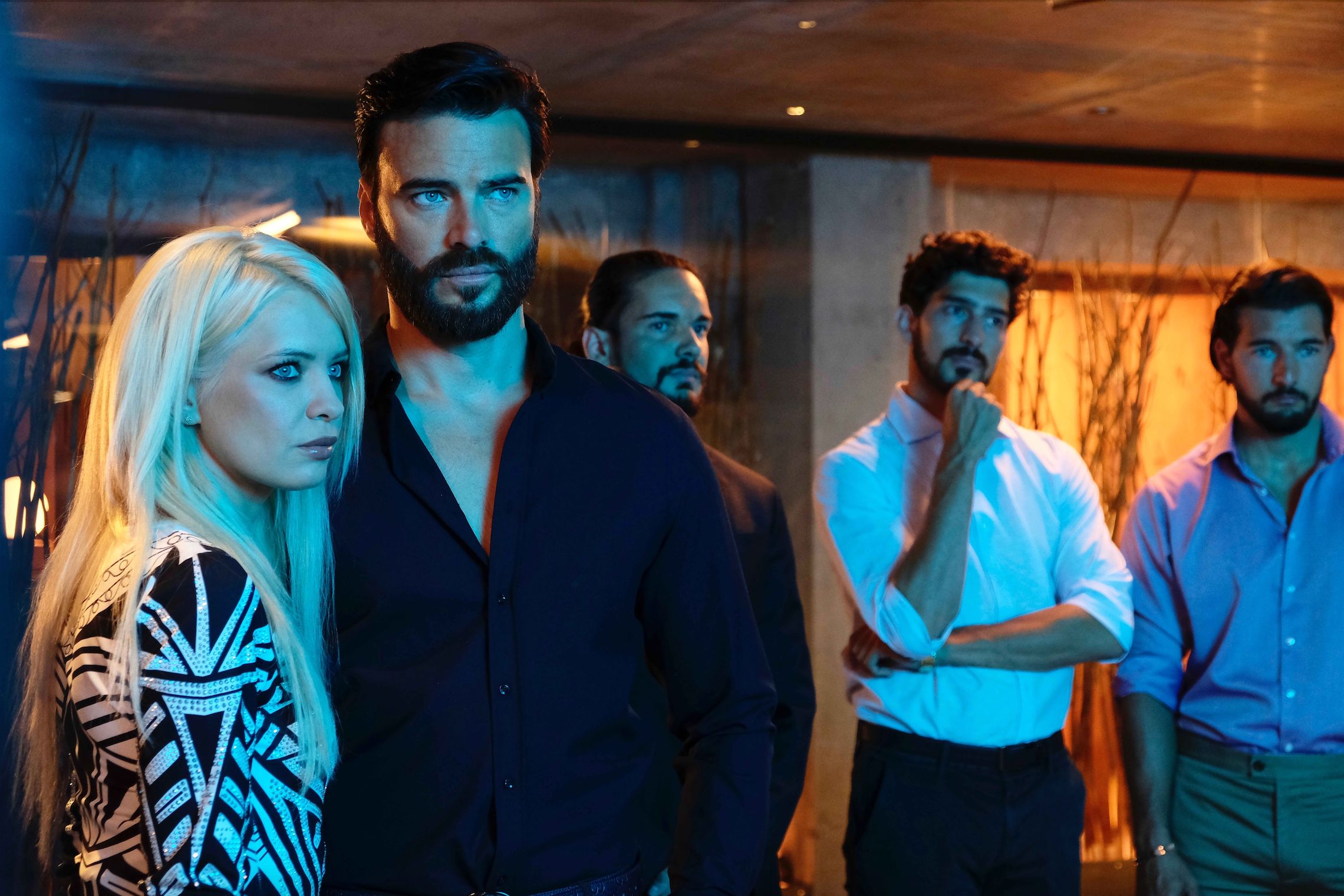
Emi (Paulina Galazka) forms a precarious alliance with Sam (Giulio Berruti).

As Dorota, Figura exudes classlessness and excessive confidence in her charm and guile. As Sam, Berruti is a puzzle. He seems to genuinely like Emi, but he’s willing to complicate her life when she unwittingly disappoints his employers.

Though Girls to Buy has an exuberant style all its own, it’s hard not to compare it to previous flicks with similar themes. It’s better than Molly’s Game (2017), Aaron Sorkin’s drab tale of a woman who hosts high-stakes card games, but not as interesting as Hustlers (2019), starring Jennifer Lawrence as a stripper who drugs and fleeces well-to-do customers. Best of all is 2020’s Zola, the scary and bracingly original account of a dancer who stumbles into a prostitution ring.

Girls to Buy could use a little more heart and a little less predictability, but it gets its message across, and it does so with glitz and energy.

Rating: 3½ stars (out of 5)

Girls to Buy (not yet rated; contains nudity and sexual content) opens July 15 in select theaters and through VOD outlets.

Determination trumps inexperience in fun fairway tale

Maurice Flitcroft (Mark Rylance) is a golf novice when he lands a chance to play in the 1976 British Open.

By Richard Ades

Maurice (Mark Rylance) seems unphased when he learns he’s finished dead last in the qualifying round at the British Open. After all, he explains cheerfully, it’s the first round of golf he’s ever played.

The Phantom of the Open, which tells the story of a rank amateur’s participation in the prestigious golf tournament, would seem far-fetched if it weren’t based on fact. In 1976, a working-class Brit named Maurice Flitcroft really did stumble into the tournament, where he played so abominably that officials realized he never should have been allowed on the fairway.  

How did he get there in the first place? And why?

Actor Rylance, working under Craig Roberts’s direction, depicts Maurice as a naive shipyard worker who fails to recognize his own limitations. After learning his job might not last forever, he happens upon a news story about the Open’s 1975 winner and the hefty purse he took home. Thinking this is a sign that golf will be his new career, Maurice decides to enter the 1976 tournament despite the fact that he’s never even picked up a club.

Simon Farnaby’s script, based on a book by Scott Murray, tells the seemingly tall tale in a homey, funny and good-natured way. Flashbacks explain that Maurice married single mom Jean (Sally Hawkins) and provided the fatherly support that helped her son Michael (Jake Davies) grow up to be a successful professional. He also supported the couple’s twin sons James and Gene (Jonah and Christian Lees) in their decidedly less-practical quest to become world-class disco dancers.

Indeed, “support” could be the family’s watchword, which is why no one questions Maurice’s decision to enter a major golf tournament despite his lack of experience. Eventually, though, the more worldly Michael pushes back against his stepdad’s pie-in-the-sky ideas, leading to a father-son argument that threatens their happy home.

Committed performances by Rylance, Hawkins and others help to sell characters defined not only by their decency but by absurd levels of optimism and naivete. Along with Roberts’s savvy direction, they also help to sell a script that sometime slices into predictable territory in service of its upbeat sentimentality.  

Once the hazards are crossed and the scorecards are added up, the flick emerges as an irresistible tribute to a real-life Brit who became a hero simply by refusing to take “no” for an answer.

Rating: 4 stars (out of 5)

The Phantom of the Open (PG-13) opens June 24 in select theaters.

Otherworldly trip through a futuristic Africa

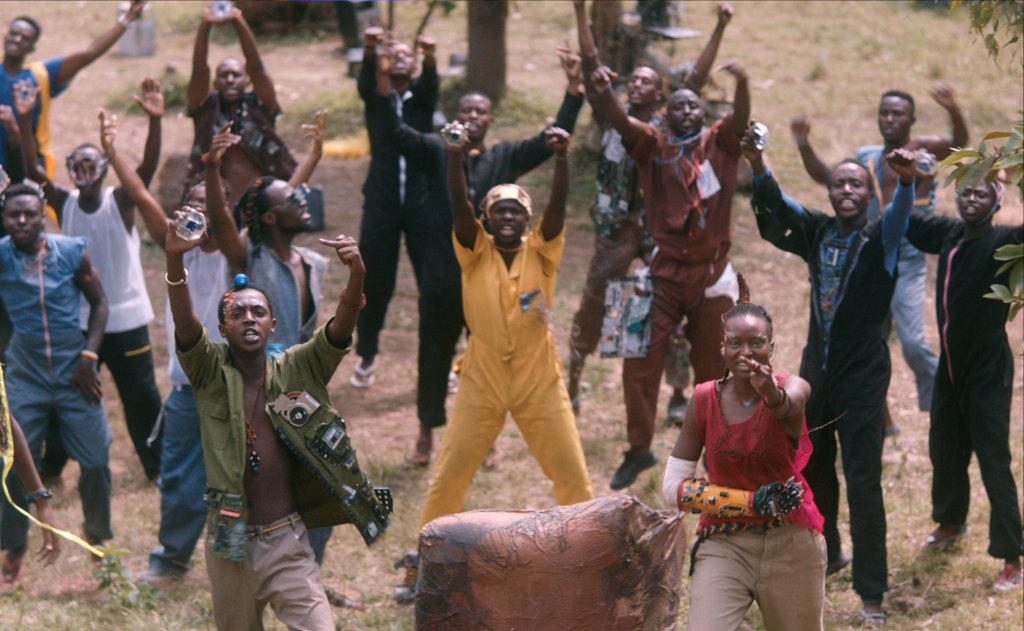
Cheryl Isheja as a transformed Neptune in Neptune Frost (Photos courtesy of Kino Lorber)

By Richard Ades

Neptune Frost may be the most mesmerizing film of recent years. It’s also one of the most beautiful. And, frustratingly, one of the most puzzling.

Set in a futuristic version of Rwanda, the sci-fi musical introduces us to Neptune (Elvis Nagabo), who cryptically announces through a narrator, “I was born in my 23rd year.” Then, while we’re still pondering that bit of information, the film switches its attention to Matalusa (Bertrand “Kaya Free” Ninteretse), who works in the local coltan mine. (Coltan is a mineral used in high-tech products, a fact whose significance soon becomes clear.)

After each of their lives is waylaid by an act of violence, Neptune and Matalusa separately take to the road and begin wandering through a countryside damaged by war and oppressed by authoritarianism. Eventually, they cross paths in an enclave of technologically minded rebels, but not before Neptune undergoes a transformation that leaves the masculine-looking individual looking decidedly more feminine (and played by a different actor, Cheryl Isheja).

The script by Saul Williams, who also composed the beautiful score, is obscure and sometimes blatantly symbolic. Characters with names such as “Memory” and “Psychology” discuss mysterious topics such as “binary crime theory” and make statements along the lines of “The motherboard is bleeding.” Furthermore, the standard greeting is “Unanimous goldmine,” and the standard answer to the everyday question “How are you?” is “Shining!”

All of this creates an eccentric world that might have been a chore for viewers to navigate if co-directors Williams and Anisia Uzeyman hadn’t filled the screen with hauntingly surreal and dreamlike images—and if composer Williams hadn’t punctuated the action with music that ranges from infectious rhythmic chants to ethereal ballads. Imaginative makeup, costumes and sets add to the otherworldly atmosphere.

Despite the ambiguities, it eventually becomes clear that the film has two overarching themes: It opposes the colonial-type exploitation that continues to plague Africa now that natural resources such as coltan have made it indispensable to modern technology. And it supports the freedom of every individual—including unconventional individuals such as the intersexual Neptune—to live the life they were meant to lead.

These themes add up to a moral structure that helps to ground the flick despite the fact that it doesn’t fit into any recognizable pattern.

As intriguing as it is, Neptune Frost is almost the definition of a film that’s not for everyone. For some, its refusal to explain itself makes it a frustrating challenge. But for those who are content to lose themselves in its unfamiliar world of images and sounds, it’s a fascinating journey.

Rating: 4 stars (out of 5)

Neptune Frost opens June 3 in New York and expands to other selected theaters June 10.

Vintage doc tells sad tale of pioneering labor struggle

Poster for The Wobblies

By Richard Ades

“There is power, there is power in a band of working men…” (Lyrics from “There Is Power in a Union” by Joe Hill)

Though unions have had a few recent victories in their efforts to unionize companies such as Amazon and Starbucks, they’ve long since passed their heyday. So maybe it’s the right time to re-release The Wobblies, a 1979 documentary about one of the labor movement’s early champions.

The homespun flick tells the story of the Industrial Workers of the World (IWW), a union that sought to unite and represent unskilled workers in the early 20th century. Such laborers made up an increasingly important segment of the work force in an American economy that was once agrarian but was fast becoming industrialized.

Whether they were installing bolts on an assembly line or sawing down trees in the Pacific Northwest, the doc states, they were prime targets for exploitation from corporations whose only loyalty was to their stockholders. That is, until the IWW (nicknamed “the Wobblies”) began organizing and fighting back.

Directors Stewart Bird and Deborah Shaffer recount the union’s struggles with the help of vintage film footage and interviews with a host of aging former members. Supplying the musical accompaniment are a variety of folksy protest songs, by Joe Hill and others, that IWW members sang to keep their spirits up when things got tough.

And make no mistake about it. Things did get tough, as corporations fought back against the IWW with propaganda, arrests and even outright violence. But the union also got tough, responding not only with strikes but with sabotage and, occasionally, with violence of its own.

Spoiler alert: This old film about an even older struggle does not have a happy ending. Even so, many will find The Wobblies educational and inspiring, as it shows what a few determined people can accomplish when they refuse to kowtow to threats, public opinion or the status quo. It’s a lesson that bears repeating—often.

Rating: 4 stars (out of 5)

The Wobblies (no MPAA rating) is available through VOD outlets beginning May 31.  

COVID-19 drives the plot in Indian-American romcom

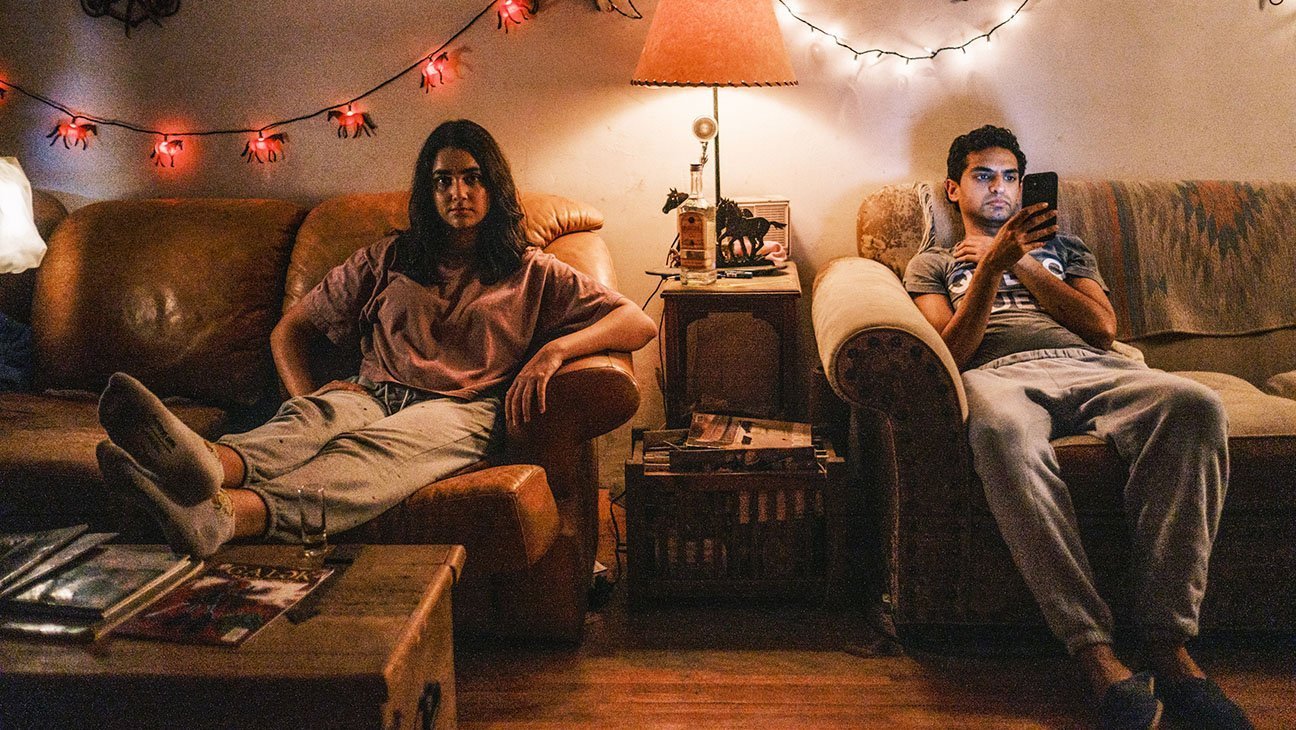
The COVID pandemic turns Rita (Geraldine Viswanathan, left) and Ravi (Karan Soni) into unwilling housemates in 7 Days.

By Richard Ades

“Meeting cute” is a time-honored romcom tradition. Set in the early days of the pandemic, 7 Days offers a new variation in the form of “meeting COVID.”

When Indian-Americans Ravi and Rita (Karan Soni and Geraldine Viswanathan) hold their first date, we’re informed that it takes place in March 2020. Viewers will instantly know why that’s significant: March 2020 was the month that Everything Stopped.

Actually, their date takes place about five minutes before Everything Stopped. The two are taking precautions such as wearing masks (a historical inaccuracy, as the average person didn’t have access to masks until months later), but they’re still able to travel and meet other people. However, that soon changes.

By the time the date comes to its awkward end and they return to Rita’s nearby home, they learn that Ravi is stuck there because the agency that was to supply his rental car has shut down. Reluctantly, Rita offers to let him spend the night on her couch. As you might surmise from the flick’s title, that night stretches into a week’s worth of sheltering in place.

The first directorial effort of Roshan Sethi, who co-wrote the script with Soni, 7 Days is set firmly in the world of Indian-American courtship. Like many stories involving the children of immigrants, it involves a clash between the traditional and the modern.

Ravi belongs to the traditional camp, eschewing meat, alcohol and premarital fooling around, and he assumes Rita is the same. After all, he met her through a traditional dating website. Soon after becoming her houseguest, though, he learns she was only putting on an act to satisfy her mother, who pays her rent. In fact, Rita is the exact opposite of the kind of wife he’s looking for.

At times, 7 Days is like a romcom version of The Odd Couple, pitting the neat mama’s boy Ravi against the sloppy, rebellious Rita. (When he first sees Rita’s messy home, Ravi assumes she has roommates, only to learn she lives alone.) But as the story progresses and the two are forced to face an unexpected challenge, such easy humor is replaced by something deeper and more subtle. At the same time, the two leads—particularly Suni—add nuance to their comedic portrayals.

Do opposites attract? That happens a lot in run-of-the-mill romcoms, but 7 Days may have something else in mind. With the help of brief interviews of actual married couples that are shown in the early moments, it examines the possibility that love is something that’s built with the help of empathy and familiarity rather than being a magical force that appears out of thin air.

If that’s true, then just maybe the conservative Ravi and the free-thinking Rita have a chance to become a couple in spite of themselves.

Rating: 4 stars (out of 5)

7 Days (no MPAA rating) is available through VOD outlets beginning April 26.

The ‘hippie millionaire’ who (briefly) took the country by storm

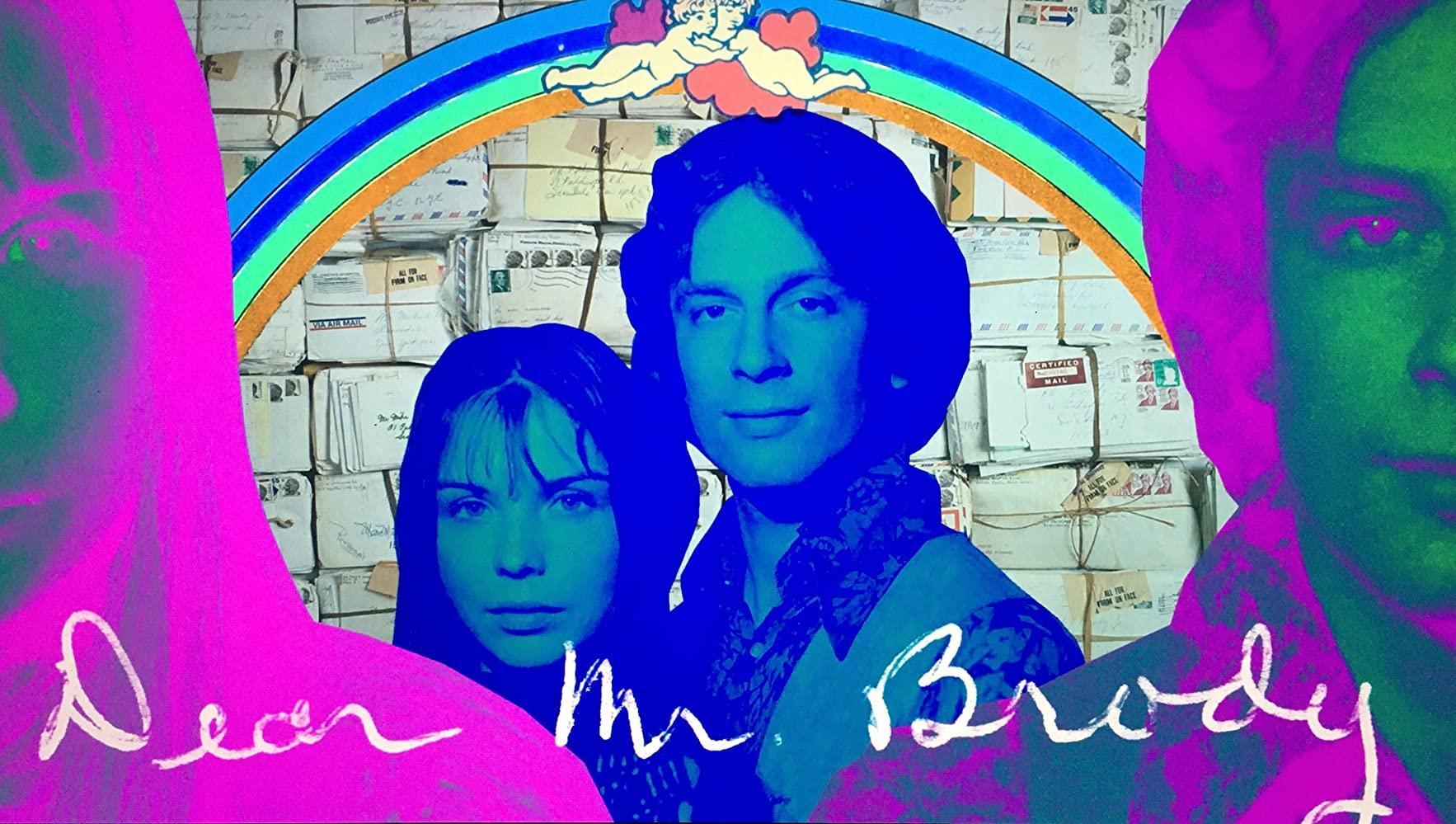
This poster depicts Michael Brody Jr. and his wife, Renee, as they appeared in 1970.

By Richard Ades

Dear Mr. Brody documents the story of a wealthy young man who captured the country’s attention in 1970 by promising to give away cash to all who needed it.

Michael Brody Jr. was the little-known heir to a margarine dynasty when he suddenly appeared on the national scene with his young bride, Renee, in tow. With his guitar, long hair and talk of peace and love, he made an immediate impression as the “hippie millionaire.” He even landed a recording contract and was invited to appear on The Ed Sullivan Show.

More importantly, he inspired thousands of people to queue up outside his Scarsdale home and Manhattan office in search of the promised handouts. Thousands of others simply wrote to him of their needs, which were often dire.

Then, as suddenly as it started, the phenomenon ended due to Brody’s increasingly bizarre behavior and apparent inability to follow through on his promises. The new documentary, written and directed by Keith Maitland, tries to figure out just what happened and what it all means.

It is not a happy story, for multiple reasons.

Due to tragic circumstances mentioned late in the film, Michael Brody himself does not appear except in vintage footage. But the present-day version of Renee does appear, coming across as someone who’s no more together than the lonely 20-year-old who agreed to marry Michael just one day after they met.

Also appearing is Michael and Renee’s grownup son, Michael James Brody III, who seems equally lost. Grossly obese, he lives his life surrounded by memorabilia from his dad’s 15 minutes of fame, including box after box of letters from folks begging the “hippie millionaire” for help.

Those folks, by the way, become as central to the story as the Brody family itself. In fact, it was producer Melissa Robyn Glassman’s discovery of a stash of their unopened letters that led to the film’s being made in the first place.

Many of those letters tell tales of desperation caused by lost jobs, health problems and growing debts. Others mention related problems such as domestic abuse, while still others are from individuals who are simply lonely and want someone to talk to.

Maitland and Glassman bring several of their stories up to date by tracking down the writers and asking them to comment on what they wrote all those decades ago. In one case, a woman is surprised to learn that at the same time she wrote to Brody, her mother also was asking him for help.

Dear Mr. Brody, then, is a devastatingly sad tale with no real villains but with countless victims. Brody himself was the first one, being a well-meaning idealist whose efforts were undermined by his own demons. Renee was another, being led by loneliness into a fraught relationship that still seems to haunt her.

And then there were the thousands of desperate people who begged Brody for help. The fact that they were forced to seek salvation from a complete stranger says much about the society they lived in—which, of course, we still live in today.

Rating: 4 stars (out of 5)

Dear Mr. Brody is available from sources such as Apple iTunes, Google Play and Vudu and can be seen beginning April 28 on Discovery+.

Seeing life through the eyes of a dairy cow

An English cow named Luma is at the center of Andrea Arnold’s Cow, an IFC Films release. (Photos courtesy of Kate Kirkwood)

By Richard Ades

If you’re the kind of person who doesn’t suffer vegans gladly, join the club. After being harangued by a one at a party—and by Joaquin Phoenix at the 2020 Academy Awards—I decided to avoid them at all costs.

But my feelings have softened a bit after seeing Cow, Andrea Arnold’s documentary about the life of a British bovine. I’m still not ready to give up cheese or other milk-based products, but it’s convinced me that dairy farming is not as benign as I’d believed.

Made over a period of four years on what appears to be a good-sized English farm, the film introduces us to Luma, a black-and-white cow with soulful eyes. Luma leads a monotonous existence: Eat, sleep and get milked, all of which occur in a huge, dank barn shared with dozens of other cows. And, whenever necessary, she’s impregnated so that she can give birth and continue to produce milk.

Does Luma realize what a boring, limiting existence she leads? She often appears to, as when she pauses before joining the other cows as they trudge dutifully toward their twice-daily milking. Or are we simply seeing our own thoughts reflected in her luminous eyes? Cinematographer Magda Kowalczyk’s intimate and sensitive photography makes it so easy to identify with her plight that it’s hard to tell.

On the other hand, it’s impossible to misinterpret Luma’s feelings toward calves, particularly her own. Dairy farming requires cows to be separated from their offspring so that most of their milk can be processed and sold. But Luma doesn’t understand market forces; all she knows is that what’s happening is an attack on her maternal instincts. When her calf is taken away shortly after its birth, she responds by bellowing loudly and repeatedly.

As brilliantly photographed as Arnold’s documentary is, it may be hard for some to watch due not only to its enveloping sadness but to its slow, cow-like pace. One of the few times the somber routine of eating, sleeping and milking is interrupted occurs when good weather allows the cows to be released into the surrounding fields. There they kick up their heels in excitement before settling down to the rare pleasure of grazing on grass and sleeping under the stars.  

Spoiler alert: It must be noted that Luma’s routine also is interrupted in the final moments of the film, when her life is suddenly ended. Why, it’s not clear, though it’s obvious that her udders have become swollen and possibly infected. Is she being put down because she’s ill and in pain, or because she’s outlived her usefulness? The film doesn’t reveal the reason, leaving us to reach our own conclusions.  

Some activists will see Cow as evidence that legislation is needed to protect the welfare of farm animals. Vegans, of course, will see it as proof that they were right all along.

As for average viewers—if they can get past the film’s deliberate pace and final ambiguity—they’ll find Cow a consciousness-raising experience and a chance to see the world through the eyes of an animal that is familiar, and yet a stranger.

Rating: 4 stars (out of 5)

Cow opens April 8 in select theaters and on demand.

A kinder, funnier look at TV’s first power couple

Lucille Ball and Desi Arnaz, stars of the hit TV sitcom I Love Lucy, in a photo taken around 1953

By Richard Ades

Last year, Aaron Sorkin dramatized the lives of Lucille Ball and Desi Arnaz in Being the Ricardos. Now Amy Poehler is revisiting the television icons in the documentary Lucy and Desi.

The first thing you should know about the new flick is that it’s nothing like Being the Ricardos. While Sorkin’s tale is awash in interpersonal conflict, marital strife and political controversy, director Poehler takes a gentler approach that creates an affectionate yet clear-eyed portrait of the famous couple.

Being a comic herself, Poehler also recognizes something that apparently escaped Sorkin: If you’re doing a film about famously funny people, you really should include a few good laughs. In fact, Lucy and Desi has many laugh-out-loud moments, thanks largely to excerpts from Ball and Arnaz’s groundbreaking 1950s sitcom, I Love Lucy.

The doc begins by looking back on the pair’s early lives with the help of archival footage and interviews with people who knew them, including their daughter, Lucie Arnaz Luckinbill. We learn that both Ball and Arnaz faced financial struggles in their younger years.

Arnaz was born into wealth, but his Cuban family lost everything and was forced to flee following the island’s 1933 revolution. When he arrived in the U.S., the film points out, he was not an immigrant but a refugee.

Ball was raised by a loving grandfather who fell on hard times due to an unjust lawsuit. The family’s dire situation led her to leave home in her mid-teens and head for New York, where she struggled to break into show business until a lucky break sent her to Hollywood.

The doc covers some of the same territory as Sorkin’s drama, though it’s able to fill in more details because it doesn’t rely so much on breathless flashbacks.

This 1940 photo shows Desi Arnaz carrying his bride, Lucille Ball, over the threshold of his Roxy Theatre dressing room in New York. The couple had eloped and gotten married in Greenwich, Conn.

How did Ball and Arnaz meet? How did they become the first couple of television comedy? How did they branch out from TV stars into big-time producers? And, finally, what drove them apart at the height of their success? These questions and others are addressed, which should delight anyone who’s ever enjoyed I Love Lucy or any of the many other shows the pair helped to create.

In the process, the doc is decidedly more discreet and even-handed than Sorkin’s dramatized account, which spends much of its time trying to figure out whether Arnaz was faithful to his talented wife. Director Poehler, writer Mark Monroe and their interviewees are clearly less interested in casting blame than they are in understanding Ball and Arnaz and paying homage to the devotion they felt toward each other even after their divorce.

As Arnaz wrote in a tribute that was read when Ball was honored by the Kennedy Center only five days after his death, “I Love Lucy was never just the title.”

Rating: 4½ stars (out of 5)

Lucy and Desi (PG) is available beginning March 4 on Prime Video.

Poirot and his mustache tackle another mystery

Hercule Poirot (Kenneth Branagh, right) joins the wedding party of Simon and Linnet (Armie Hammer and Gal Gadot) in a scene from Death on the Nile. (Photos courtesy of 20th Century Studioes/Walt Disney Studios)

By Richard Ades

In the average murder mystery, viewers are challenged to answer the question: “Who is the killer?” In Kenneth Branagh’s Death on the Nile, they’re challenged to answer the question: “Who is Hercule Poirot and how will this affect him?”

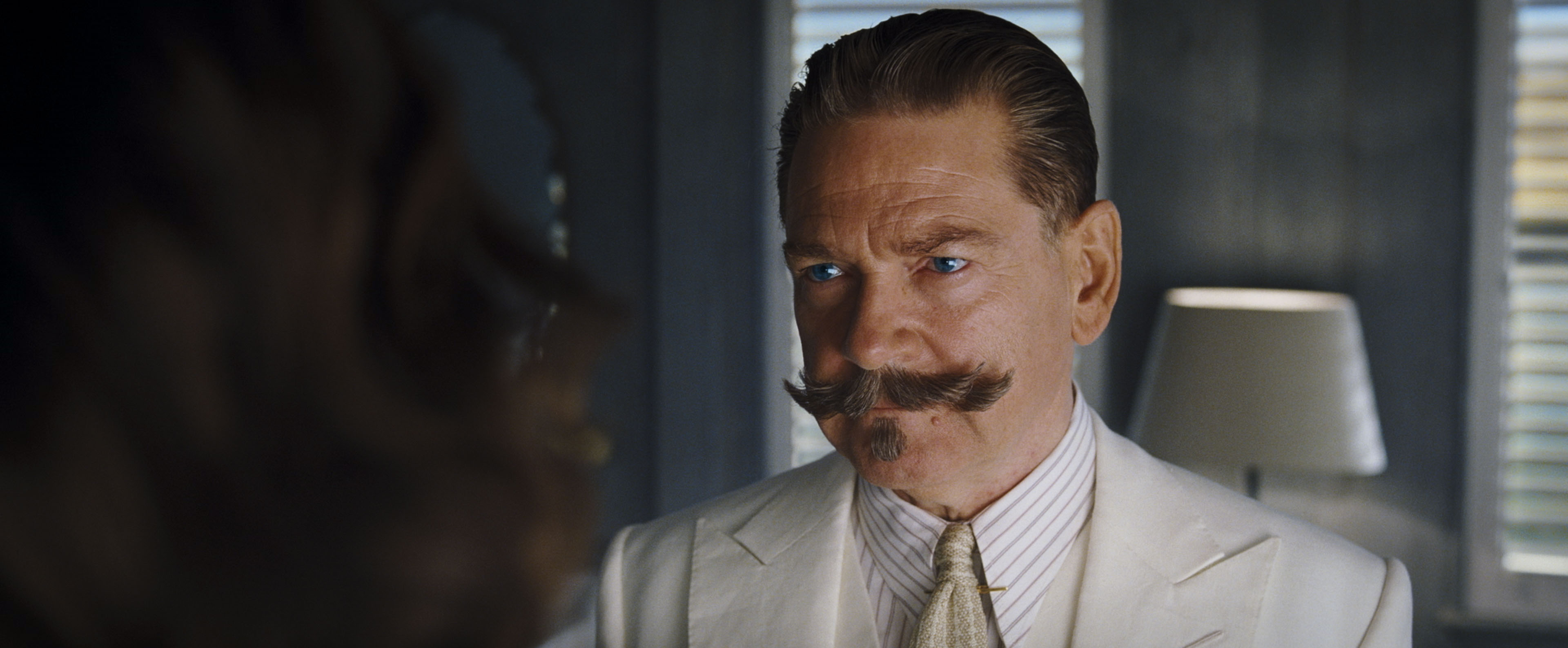
Agatha Christie’s ace Belgian detective, played by director Branagh himself, becomes the center of attention long before there’s a murder (about an hour before, actually, since the killing doesn’t take place until halfway through the film). In fact, we meet him before we meet the victim or any of the suspects, thanks to a 1917-style prologue that finds him serving as a young soldier in the trenches of World War I. The point of this digression, apparently, is to allow us to get better acquainted with the future detective and to finally answer the question: “Why does he have such a big mustache?”

As in his previous Christie adaptation, 2017’s Murder on the Orient Express, Branagh’s version of Poirot is clearly the dominant figure here. Whether the actor-director is serving his own ego or simply looking for a new angle on a tale that’s all too familiar, the result is that the murder mystery itself almost seems like an afterthought.

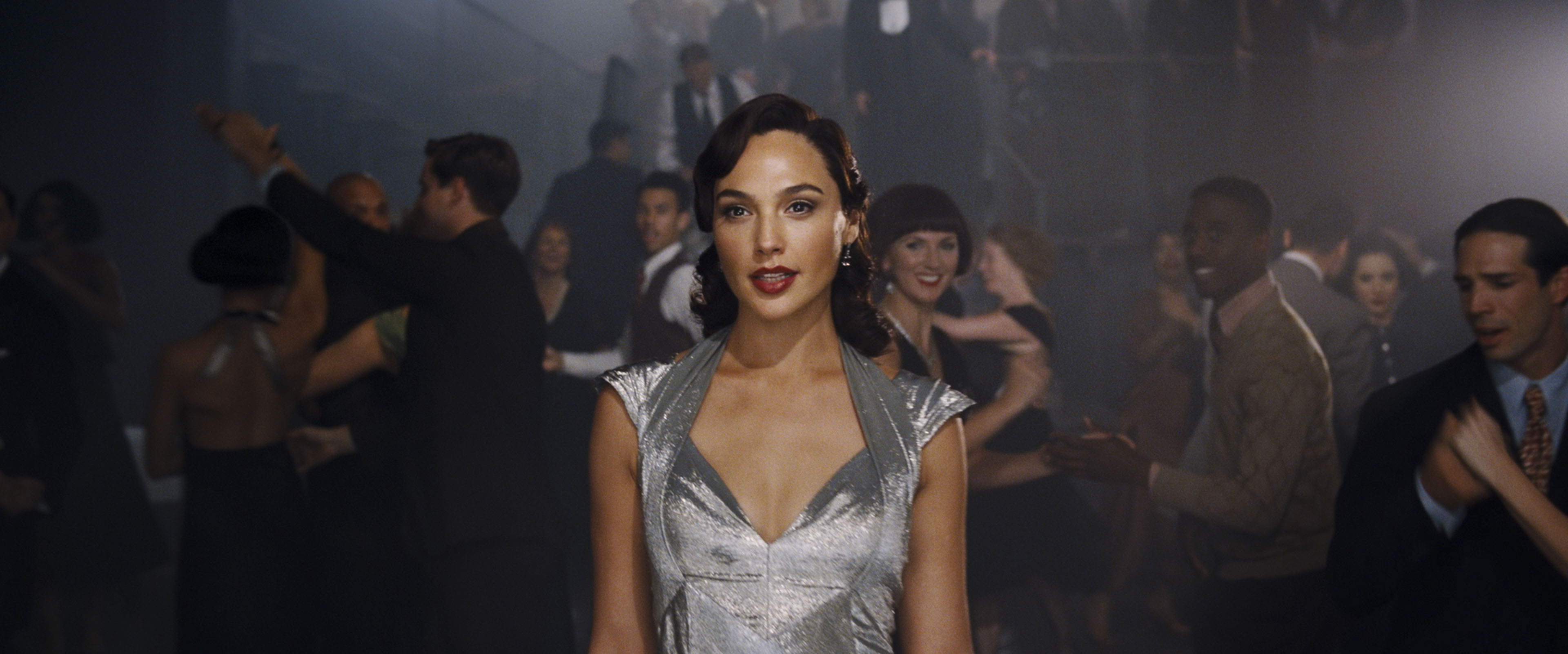
A big-name cast does succeed in creating a bit of intrigue, especially around the love triangle at the plot’s center. It features Gal Gadot as the wealthy Linnet Ridgeway; Emma Mackey as her old friend, Jacqueline; and Armie Hammer as Jacqueline’s financially struggling fiancé, Simon, who soon becomes Linnet’s employee and, shortly after, her husband. This shocking turn of events leaves Jacqueline so distraught that she crashes the new couple’s Egyptian wedding celebration and makes vague threats about what she’s going to do with the ornate pistol she’s so eager to display.

Gal Gadot as Linnet

It’s in an attempt to ditch Jacqueline that the newlyweds invite their entire wedding party—including Poirot, who’s there for reasons yet to be revealed—onto a luxurious steamboat for a trip down the Nile. Naturally, the distinguished crowd includes a plethora of possible future suspects, including a doctor who carries a torch for Linnet (Russell Brand); a leftist godmother who disapproves of the newlyweds’ lavish lifestyle (Jennifer Saunders); and an accountant for Linnet’s company who may not have her best interests at heart (Ali Fazal).

Among the others are an artist and her ne’er-do-well son (Annette Bening and Tom Bateman); an American blues singer (Sophie Okonedo) who’s there to entertain the crowd; and Rosalie (Letitia Wright), the singer’s niece and an old schoolmate of the hostess.

Once the murder occurs (finally!), Poirot leaps into action by questioning each member of the party in turn, suggesting possible motives and providing evidence to support his suspicions. This should be the most interesting part of any murder mystery, but it falls flat here because the motives sometimes seem thin and the detective often appears to pull the evidence out of his hat (or, perhaps, out of that huge mustache). More than once, viewers are left to wonder, “How did he know that?”

Kenneth Branagh as Hercule Poirot

But the main reason the investigation lags is that, beyond the central love triangle, we seldom get to know anyone well enough to form a clear opinion of them. This is partly because director Branagh and screenwriter Michael Green are so focused on Poirot that they fail to give most other characters a chance to distinguish themselves.

Another problem is that Branagh’s directorial style often becomes a distraction. Between composer Patrick Doyle’s bombastic score and cinematographer Haris Zambarloukos’s travelogue-style images of CGI-enhanced Egyptian landmarks, it’s all a bit much. Even in the more-intimate investigation scenes, the relentlessly circling camera quickly becomes obtrusive.

Branagh has shown he can direct a film discreetly and appropriately with 2021’s Belfast, which has deservedly garnered Oscar nominations for Best Picture and Best Director, among others. Maybe it’s time for him to admit he’s more effective on one side of the camera or the other, but not both.

Rating: 2½ stars (out of 5)

Death on the Nile (PG-13) opens Feb. 11 in theaters nationwide.

Musical remembers the day air travel came to a halt

Air passengers grounded by 9/11 discover Canadian hospitality in Come From Away. (Photo by Matthew Murphy)

By Richard Ades

Sometimes you need a reminder that human beings are capable of kindness. Come From Away—a touring production of which is now playing Columbus’s Ohio Theatre—is just such a reminder.

The Irene Sankoff/David Hein musical is a breezy and heartwarming account of what happened in Gander, Newfoundland, following the Sept. 11, 2001, terrorist attacks.

When commercial airlines were ordered to land their planes out of fear that more could be commandeered and turned into flying bombs, the small Canadian community was forced to accept 38 or them. That nearly doubled its population and presented it with the sudden need to feed and house 7,000 strangers, many of whom didn’t even speak English.

As the musical reveals, the Newfoundlanders responded with ingenuity and generosity, providing food, shelter, clothes and other necessities. Even more importantly, they made the waylaid passengers feel safe and welcome in a world that suddenly seemed more dangerous than ever.

Director Christopher Ashley, who won the musical’s sole Tony Award after it opened on Broadway in 2017, stages five days’ worth of events in a fast-paced production that seldom even stops for applause. It’s a marvel of efficiency thanks partly to Beowulf Boritt’s set and Howell Binkley’s lighting, both of which are versatile enough to allow locations and moods to be changed in the blink of an eye.

Adding to the efficiency are 12 busy cast members who portray a multitude of both locals and visitors with the help of costume tweaks and an array of accents. While this is essentially an ensemble piece, several characters and the actors who play them are given a chance to stand out. Among them:

• Janice (Julia Knitel), a newbie TV reporter who’s overwhelmed by what undoubtedly will be the biggest story of her career.

• Nick and Diane (Chamblee Ferguson and Christine Toy Johnson), an Englishman and Texan who turn to each other for friendship and perhaps more.

• Kevin T. and Kevin J. (Jeremy Woodard and Nick Duckart), a gay couple who stress over how open to be about their relationship in this isolated community.

• Hannah (Danielle K. Thomas), a passenger who’s desperate to learn whether her son, a New York firefighter, is safe.

• Bonnie (Sharone Sayegh), director of the area SPCA, who takes it on herself to seek out and care for the cats, dogs and other animals trapped in the cargo areas of the grounded planes.

Members of the band cut loose during one of the musical’s more raucous moments. (Photo by Matthew Murphy)

Note: Bonnie’s real-life counterpart, Bonnie Harris, appeared at a local preview event late last year to help publicize Gander’s connection to Central Ohio. Namely, two of the endangered great apes known as bonobos (referred to in the play as “bonobo chimpanzees”) were among the animals, and one of them was a female destined for the Columbus Zoo. The audience greeted this bit of information with applause on opening night, accidentally covering up the additional announcement that the zoo named her first son “Gander” in honor of the town that had served as her temporary refuge.

Despite the musical’s strengths, it must be said that one point near the beginning seems briefly off. When Gander officials and residents learn of the Sept. 11 attacks, they instantly begin planning how to deal with the diverted flights. Considering what a shocking event 9/11 was for America and the world, didn’t anyone stop long enough to say, “Terrorists did what?” Overall, though, Come From Away does an admirable job of condensing five days’ worth of individual trauma and communal kindness into an inspiring and uplifting 100 minutes.  

And it does it with a collection of tunes that are nicely sung by the actors and energetically accompanied by the offstage band. Though the songs mainly serve the plot and characters and rarely stand out, they become more and more infectious as the evening goes on. Best of all is the Irish-flavored “Finale” that accompanies the final bows and continues long after the actors have left the stage.

In other words, don’t plan on making a quick exit.

Broadway in Columbus and CAPA will present Come From Away through Feb. 13 at the Ohio Theatre, 39 E. State St., Columbus. Showtimes are 7:30 p.m. through Thursday, 8 p.m. Friday, 2 and 8 p.m. Saturday, 1 and 6:30 p.m. Sunday. Running time: 1 hour, 40 minutes (no intermission). Tickets start at $39 and can be purchased at the CBUSArts Ticket Office (39 E. State St.), online at capa.com or by phone at 614-469-0939.