
By Richard Ades
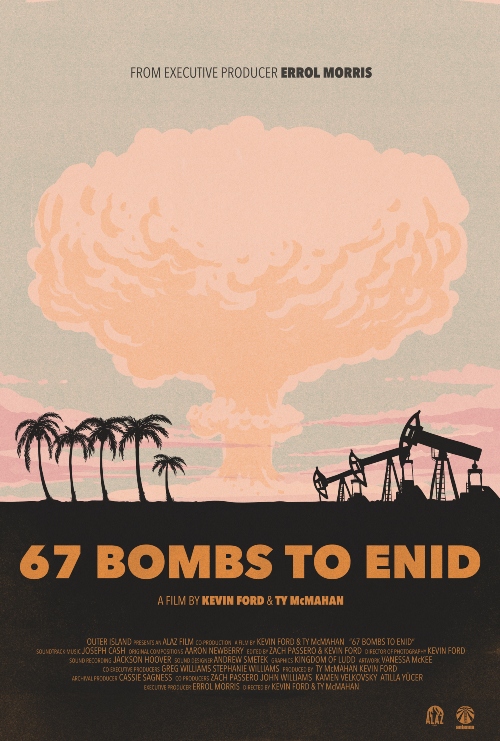
In 1946, the United States began testing nuclear weapons in the Marshall Islands, a tiny country in the Northwest Pacific. The fallout from those tests (both literal and figurative) is the subject of a new documentary called 67 Bombs to Enid.
The title refers to (1) the number of bombs that were detonated before the tests ended 12 years later, and (2) a rural Oklahoma city where many Marshallese settled after the testing left much of their homeland uninhabitable.
Co-directors Kevin Ford and Ty McMahan spend part of the film interviewing these immigrants, some of whom face serious health issues due to their exposure to nuclear fallout. The directors also interview some of the immigrants’ children and grandchildren, who were born in the U.S. but often feel more Marshallese than American.
Why was this island country subjected to such an environmental disaster? Vintage newsreels reflect the attitude that was prevalent at the time: The nuclear tests were seen as vital to U.S. security, while the damage they inflicted was considered an unfortunate but acceptable price that had to be paid.
Driving the price even higher, the documentary suggests, authorities often displayed scant regard for inhabitants’ safety. Indeed, some Marshallese apparently had little or no warning about what was coming.
One survivor of the testing period recalls witnessing a massive detonation that made it appear the world was coming to an end. “It was really scary,” he says.
Recognizing the high price the Marshallese paid in the name of American security, the U.S. eventually established a compensation fund, as well as welcoming refugees from the devastated country to communities like Enid. The documentary demonstrates how that welcome plays out in real life.
At one point, the local school district hosts an “Islander Night” that allows its Marshallese students to share food, music and dance that represent their culture. The film also introduces us to a high school graduate who has lost his father but, thanks to district support and a football scholarship, faces a promising future.
On the other hand, comments from random Enid residents reveal that not all the locals are equally understanding or welcoming toward the island refugees. Moreover, the newcomers often face economic challenges exacerbated by their ongoing health problems.
Though put together in a way that sometimes seems haphazard and repetitive, the documentary paints a comprehensive portrait of an immigrant community trying to recover from a devastating past. Still, the filmmakers fail to consider one important issue:
The Trump administration’s single-minded focus on deporting immigrants often causes it to target populations that previously were protected due to dangerous homeland conditions (i.e., the Haitians) or past services (people who risked their lives to aid the U.S. military). Given this tendency, how secure is America’s support of the Marshallese?
Though never raised specifically by the film, it’s a question that doubtless will be on many viewers’ minds.
Rating: 3½ stars (out of 5)
“Roadshow” screenings of 67 Bombs to Enid began Oct. 1. Regular theatrical screenings will begin Nov. 6, followed by digital access beginning Nov. 17.


